
Introduction
Losing a loved one is difficult, and dealing with paperwork afterwards can feel overwhelming. A government-issued death certificate is often required to settle legal and financial matters after a death in Ontario. This guide explains what a death certificate is, how deaths are registered in the province, who can apply, what information you will need, the application options, and common issues to avoid.
What is a Death Certificate?
A death certificate is an official document issued by the Government of Ontario that confirms a person has died. It records key details such as the deceased person’s full name, date of death and place of death. The death certificate is a permanent vital record used for legal, financial and administrative purposes.
Note that a Statement of Death provided by a funeral home or similar document is not the same as an official death certificate and may not be accepted for all legal or government transactions.
Why You May Need a Death Certificate
- To settle an estate and administer a will
- To claim life insurance, pension or survivor benefits
- To close bank accounts and transfer property or assets
- To update records with government agencies and financial institutions
- For genealogy and official record-keeping
How Death Registration Works in Ontario
Before a death certificate can be issued, the death must be registered with the province. In most cases the registration is completed by the funeral director or the person in charge of the body. Registration is based on information provided by the attending physician or coroner and additional details supplied by a family member or the person arranging the funeral.
Once the death has been registered in the provincial vital statistics system, an application for an official certified copy of the death certificate can be submitted.
Who Can Apply for a Death Certificate?
Generally, immediate family members and legal representatives apply for certified copies of a death certificate. This includes executors or administrators handling an estate. Organizations or institutions that have a legal need for the certificate—for example, financial institutions or government agencies—may also request certified copies if they can demonstrate an entitlement to the information.
Information and Documents Typically Required
The exact requirements can vary, but applicants should be prepared to provide the following information and documentation:
- Full name of the deceased (including any maiden or alternate names)
- Date and place of death
- Deceased person’s date of birth and, where known, parent names
- Approximate last address or usual place of residence
- Your relationship to the deceased and reason for requesting the certificate
- Proof of your identity (government-issued photo ID) and, when required, proof of legal authority such as probate documents
Be ready to provide additional supporting documentation if requested by the vital statistics office to verify entitlement or identity.
How to Apply for a Death Certificate
After a death is registered you can request a certified copy of the death certificate. Common application options include:
- In person at a provincial service or vital statistics location where available
- By mail using the appropriate application form and copies of required ID and documentation
- Through any online service the province offers for ordering vital records (where available)
Funeral homes sometimes assist families by ordering certified copies on their behalf, but this depends on the arrangements and the funeral provider’s practices.
Check the provincial vital statistics office for current application procedures, acceptable forms of identification, fees and processing times before you apply.
Processing Times and Fees
Processing times and fees for certified copies vary and may change. Confirm the latest schedule with the provincial vital statistics office or the service location where you plan to apply. If you need the certificate quickly, inquire about expedited options if they exist.
Common Problems and How to Avoid Them
- Missing or incorrect information on the registration: Provide accurate details to the funeral director or the person registering the death to reduce delays.
- Insufficient proof of identity or legal authority: Ensure you have valid ID and any documents proving your right to request the certificate (for example, executor paperwork).
- Assuming a Statement of Death is sufficient: For many transactions you will need an official certified death certificate, not a Statement of Death.
- Not checking current requirements: Procedures, fees and accepted ID can change, so verify requirements before applying.
Conclusion
Obtaining a death certificate in Ontario begins with registering the death with the provincial vital statistics authority, usually handled by a funeral director. After registration you, a family member, or an authorized representative can apply for a certified copy for legal, financial and administrative needs. Preparing the necessary information and identification, and checking current application procedures and processing times, will streamline the process during a difficult time.
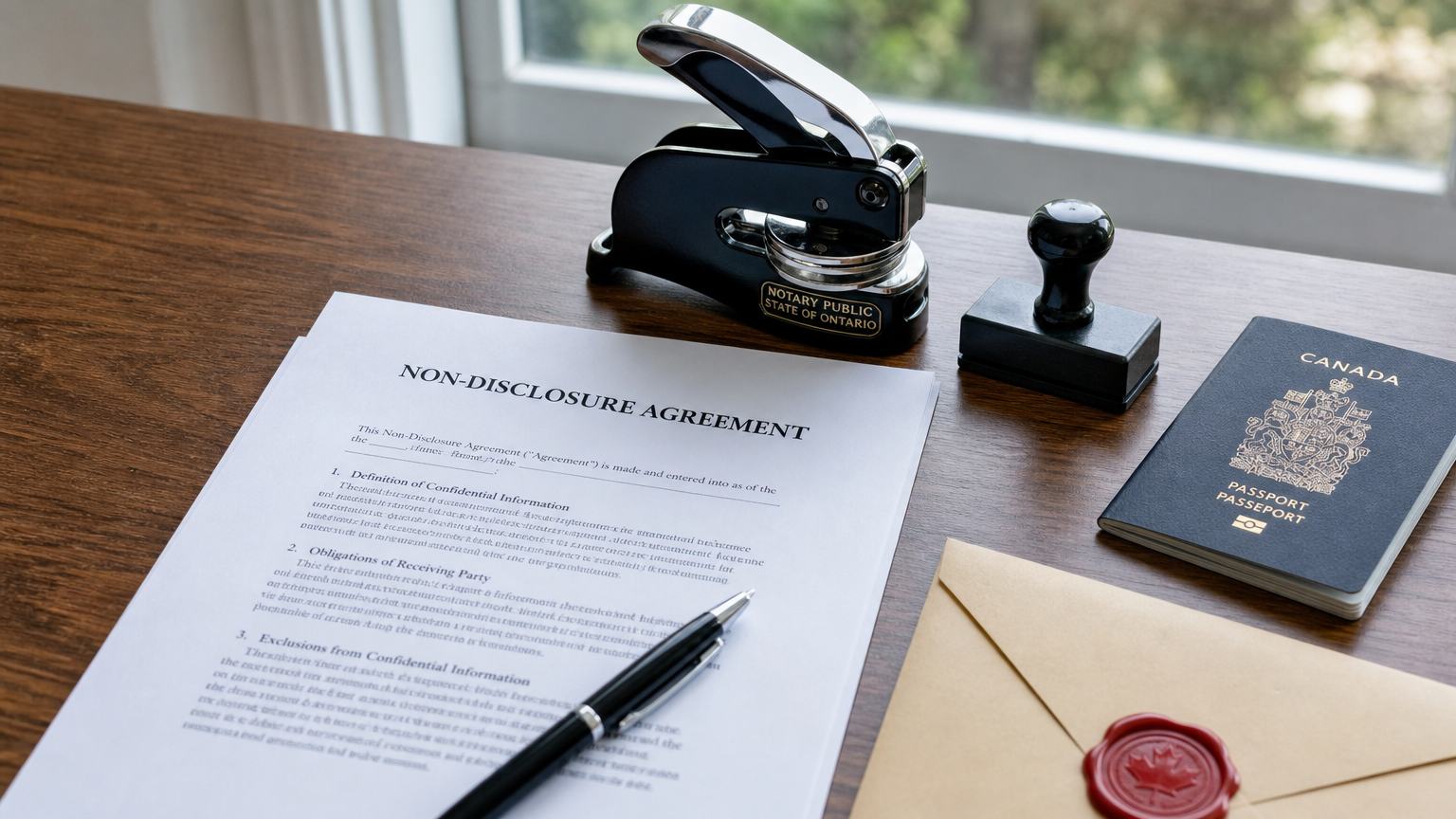
Essential guidance on NDA notarization in Ontario: when it’s required, how the process works, and how to prepare for a smooth notarization.
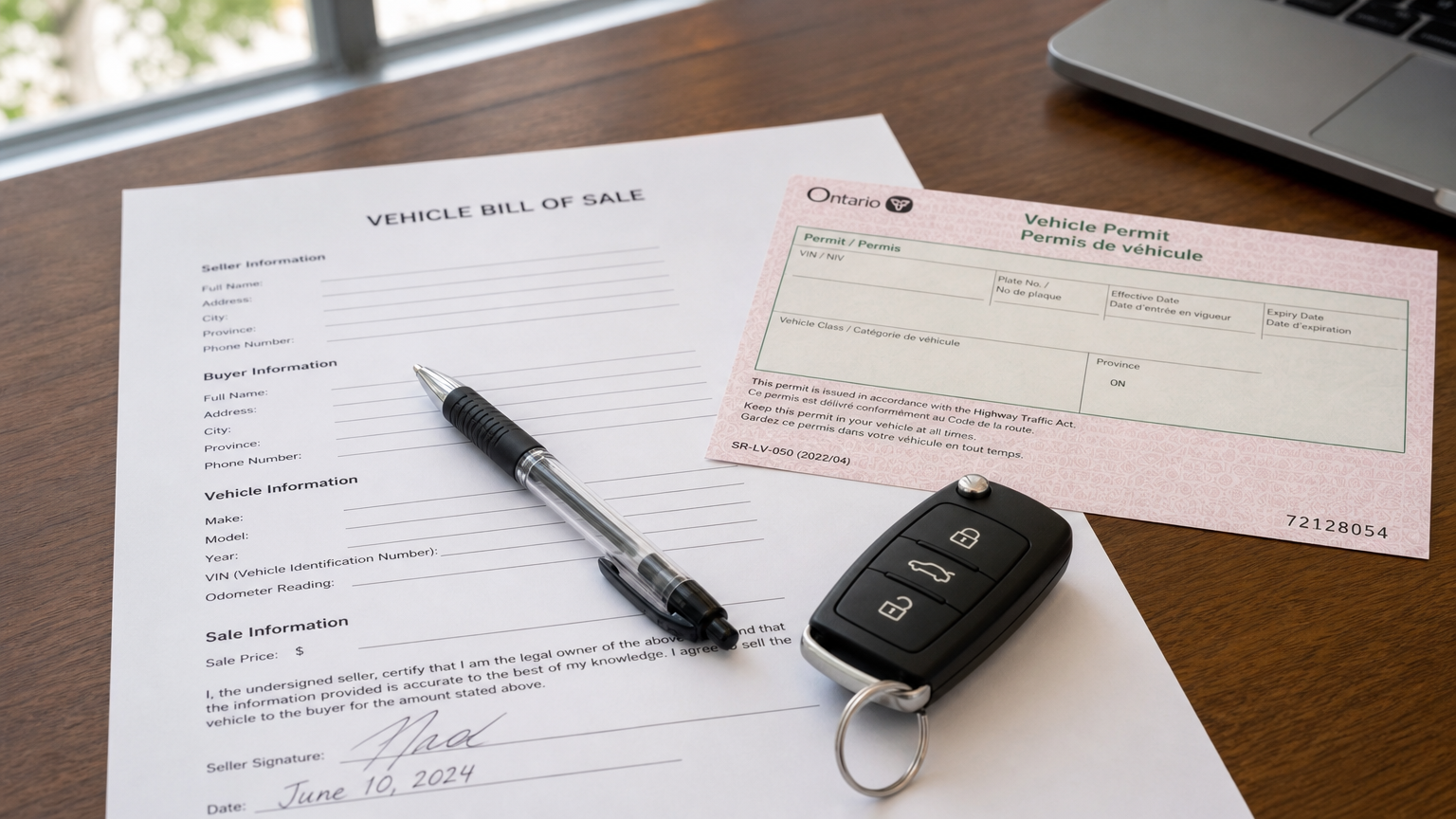
Essential vehicle transfer guidance for Ontario buyers and sellers, plus when notarization and statutory declarations are required.