
Introduction
If you need to use a Canadian birth certificate in another country, you will likely have to complete an attestation process so foreign authorities accept the document. Attestation confirms a certificate was issued by a recognized government office and that signatures or seals are genuine. This guide explains what attestation means, why it is required, the typical Canadian workflow, translation needs, and practical tips to avoid delays.
What is Birth Certificate Attestation?
Definition
Birth certificate attestation is the formal verification that a birth record is an authentic public document issued by a provincial or territorial vital statistics office. The attestation process does not validate the factual details recorded on the certificate (for example, date of birth or parentage); it confirms the document’s origin and the authenticity of any signatures, stamps, or seals.
How Verification Works
- A recognized government authority issued the document.
- The signature or official seal on the certificate is genuine.
Why Attestation Is Required for International Use
Foreign governments, consulates and other official bodies often require verified documents before accepting them for immigration, visa, residency, employment, education or civil-status procedures. Without proper authentication and any required legalization, a Canadian birth certificate may be rejected for official use abroad.
- Immigration and residency applications
- Visa processing
- Employment and credential recognition
- Marriage registration, adoption, or family law matters
- Education enrollment and credential assessment
Typical Attestation Steps for Canadian Birth Certificates
1. Obtain a Certified Copy from Vital Statistics
Start by requesting a certified or long-form copy of the birth certificate from the provincial or territorial vital statistics office that issued the original record. Most foreign authorities require a certified copy rather than a photocopy.
2. Federal Authentication
After you have the certified copy, a federal-level authentication confirms the signature and seal of the issuing office. In Canada this step is handled by the federal authority responsible for authenticating provincial documents.
3. Legalization by the Destination Embassy or Consulate (When Required)
Many countries require one additional step: legalization by the embassy or consulate of the destination country. This step confirms that the federal authentication was properly performed and allows the document to be accepted under that country’s rules.
Apostille vs Legalization
The Hague Apostille Convention provides a simplified single-step authentication known as an apostille for participating countries. Canada is not a party to the Apostille Convention, so the standard Canadian route is federal authentication followed, where necessary, by embassy or consular legalization. Requirements vary by destination: some countries accept documents with an apostille from other countries that are party to the convention, while many countries require the full authentication-plus-legalization procedure.
4. Certified Translation (If Required)
If the destination country’s official language differs from the language on the birth certificate, you will usually need a certified translation performed by a qualified translator. Translations themselves may require certification or notarization and, in some cases, the same authentication/legalization steps as the original document.
Processing Times and Fees
Processing times and costs depend on several factors: the issuing province or territory, the federal authentication office’s workload, the embassy or consulate’s processing times, and whether a certified translation is needed. Expect the overall process to take anywhere from several days to several weeks. Always check current processing estimates well before any deadline.
Practical Checklist Before You Start
- Order a certified (long-form) copy from the issuing provincial or territorial vital statistics office.
- Confirm whether the destination country requires authentication, an apostille, or embassy legalization.
- Arrange federal authentication once you have the certified copy.
- Book embassy or consular legalization if the destination requires it.
- Obtain a certified translation if the destination authority requires documents in a different language.
- Allow extra time for postal services, in-person appointments, and any requested corrections.
Conclusion
Attesting a Canadian birth certificate for use abroad ensures the document is recognized by foreign authorities and prevents delays in immigration, visa, employment, education, and civil-status matters. The usual path is to obtain a certified copy from the provincial or territorial office, complete federal authentication, and then secure embassy or consulate legalization when required. Confirm the exact requirements for your destination country and plan ahead for translations and processing time.
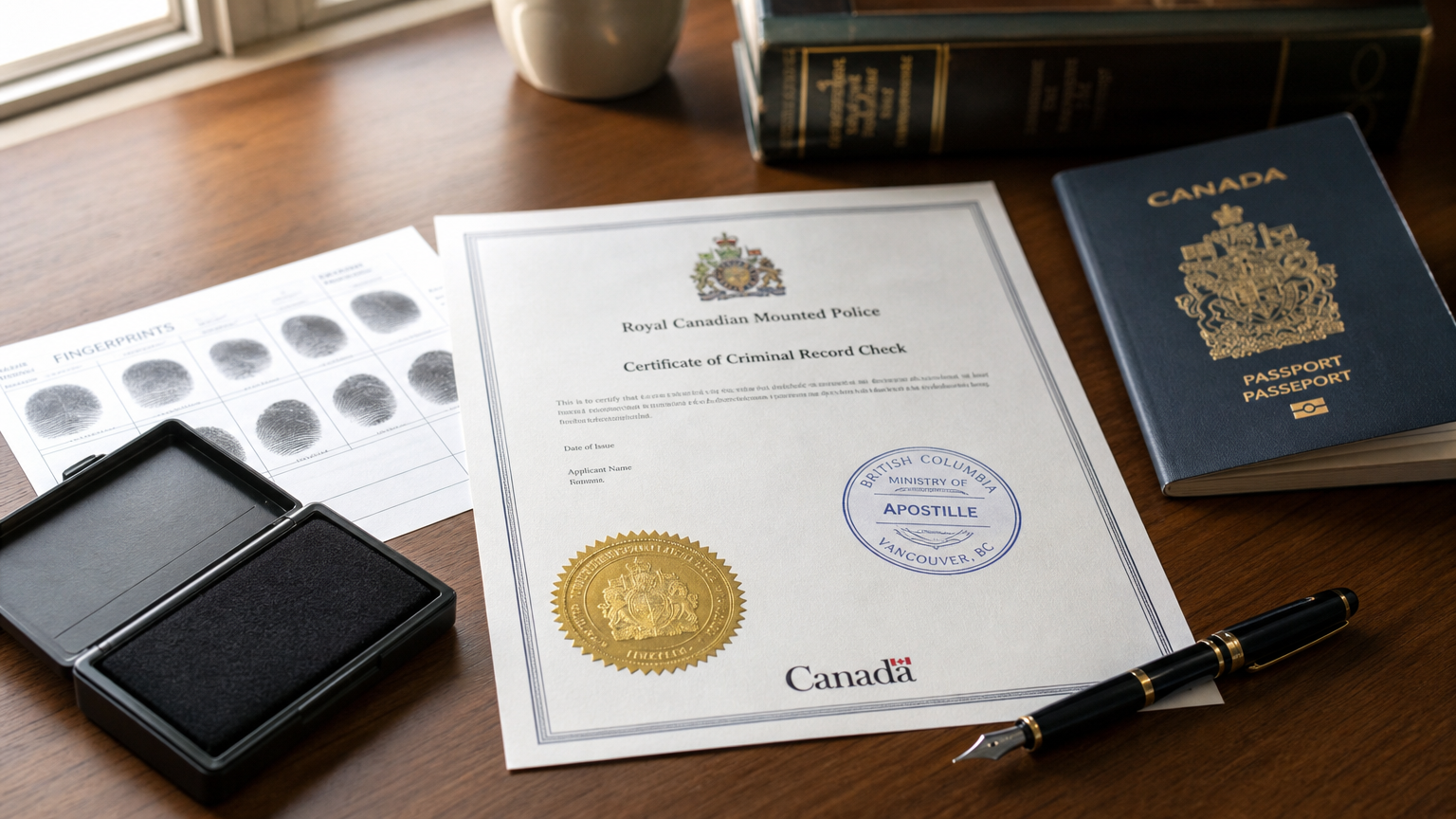
Step-by-step guide to getting an apostilled RCMP fingerprint-based criminal record check in Canada after joining the Hague Convention on Jan 11, 2024.

How Ontario common‑law couples can use a cohabitation agreement to protect property, clarify debts and limit spousal support risks.

Explain types of statutory declarations used to prove common‑law relationships in Canada, what they require and how to prepare them.

Overview of remote and online notary services across Canadian provinces, rules, ID requirements, and how to book—updated June 16, 2026.