
On this page
Using official public documents outside the country often requires proof that those documents are authentic and issued by the proper authority. Many governments, schools, employers, and legal institutions will not accept foreign documents unless they have been formally certified. The Hague Apostille Convention created a streamlined international method for certifying public documents so they are recognized in other countries.
Canada officially joined the Hague Apostille Convention on January 11, 2024, replacing its older authentication and legalization system with a modern, internationally recognized apostille process. This guide explains what an apostille is, how the Convention works, which documents commonly require certification, and how Canadians can prepare their documents for international use.
What Is an Apostille?
Definition and purpose
An apostille is a standardized certificate attached to a public document that confirms:
- The authenticity of the signature
- The authority of the person who signed it
- The identity of any seal or stamp on the document
It does not validate the content of the document; it simply verifies that the document was issued or certified by a recognized authority.
The apostille acts as a universal “trust mark” that countries participating in the Hague Apostille Convention agree to recognize. Once a document has an apostille, it can be used in any member country without further certification.
How Apostilles Simplify International Document Use
Before Canada joined the Convention, Canadians had to follow a multi‑step process:
- Notarization (if required)
- Authentication by Global Affairs Canada
- Legalization at the destination country’s embassy
This process often took weeks or months. But now that Canada has joined the Hague Apostille Convention, Canadians can experience the smooth-lined apostille system.
With the apostille system:
- Only one certificate is required
- No embassy visit is needed
- Processing is faster and more predictable
- Documents are automatically recognized by all Convention countries
This is a major improvement for Canadians who need documents accepted abroad.
Canada and the Hague Apostille Convention
Canada became a full member of the Hague Apostille Convention on January 11, 2024. This change was announced by Global Affairs Canada in May 2023 and implemented the following year.
What This Means for Canadians
- Canadian documents destined for apostille‑member countries now receive apostilles, not authentication/legalization
- The apostille is issued by designated Canadian authorities
- Embassy legalization is no longer required for Convention countries
- Processing times are significantly shorter
Who Issues Apostilles in Canada?
Canada uses a decentralized system:
Federal Level
- Global Affairs Canada issues apostilles for federally issued documents (e.g., citizenship certificates, federal police certificates)
Provincial/Territorial Level
- Provinces and territories issue apostilles for documents they create, such as:
- Birth certificates
- Marriage certificates
- Death certificates
- Court documents
- Corporate records
- Educational documents
This mirrors the structure used in many other Convention countries.
Which Documents Commonly Need Apostilles or Certification?
When dealing with immigration, education, employment, business transactions, or legal matters abroad, a wide range of public documents may require formal certification. Common examples include:
Vital Statistics Documents
|
Academic Documents
|
Legal and Judicial Documents
|
Corporate and Business Documents
|
Other Documents
|
|
The exact requirements depend on the destination country and the purpose of the document.
Countries That Accept Apostilles vs. Countries That Require Legalization
Countries That Accept Apostilles
Over 120 countries accept apostilles, including:
- United States
- United Kingdom
- Australia
- Most of Europe
- Japan
- South Korea
- Mexico
- Brazil
You can find the full list here. Documents going to these countries only need an apostille.
Countries Still Require Legalization
Some countries are not part of the Hague Convention. Documents going to these countries still require the older authentication + legalization process. Examples include:
- China
- UAE
- Qatar
- Kuwait
- Saudi Arabia
- Vietnam
- Pakistan
- Most MENA countries
For these destinations:
- Apostilles are not accepted
- Embassy legalization is still required
Preparing Canadian Public Documents for Use Abroad
Step 1: Confirm the Destination Country’s Requirements
Before preparing any document, confirm:
- Whether the country accepts apostilles
- Whether notarization is required
- Whether translations are required
- Whether the document must be issued within a certain timeframe
This prevents unnecessary steps and ensures your documents are prepared correctly
Step 2: Obtain the Correct Version of the Document
Many countries require:
- Long‑form versions of vital records
- Certified copies issued within the last 3–6 months
- Official transcripts sealed by the institution
- Court documents bearing a judge’s signature and court seal
Photocopies or uncertified duplicates are almost always rejected.
Step 3: Notarization (If Required)
Some documents must be notarized before they can receive an apostille. This is common for:
- Powers of attorney
- Affidavits
- Consent letters
- Certified true copies
- Corporate resolutions
Step 4: Apostille Issuance
Provincial Apostilles
Provinces issue apostilles for documents they create. For example:
- Ontario issues apostilles for birth certificates, marriage certificates, court documents, and corporate records
- British Columbia issues apostilles for vital statistics documents and educational records
Federal Apostilles
Global Affairs Canada issues apostilles for:
- Citizenship certificates
- Federal police certificates
- Federal court documents
- Documents notarized by federally appointed notaries
Apostilles are typically attached as a separate certificate or printed directly onto the document.
Step 5: Legalization (Only for Non‑Apostille Countries)
If the destination country is not part of the Hague Convention, the apostille system does not apply. Instead, documents must be:
- Authenticated
- Legalized at the destination country’s embassy
This process is slower and may require additional steps such as translations (see below) or supporting documents.
Translation Requirements
Many countries require documents to be translated into their official language. Requirements may include:
- Certified translations
- Translator accreditation
- Translator’s affidavit
- Authentication of the translator’s signature
If translations are required, ensure they are completed by a recognized translator. Some countries require the translation to be apostilled or legalized along with the original document.
Processing Times, Fees, and Delays
Processing times vary depending on:
- The issuing authority
- The province
- The federal authentication office
- The embassy’s workload
- Translation requirements
Typical timelines:
- Document issuance: 1-4 weeks
- Apostille issuance: 1-3 weeks
- Authentication (non‑apostille countries): 2-8 weeks
- Legalization: 1-6 weeks
Delays are common during peak immigration seasons or when embassies have limited staff.
Practical Tips and Common Pitfalls
- Start early: authentication, certification and translation can take weeks, especially if additional government steps are needed
- Verify whether an apostille is accepted by the destination country before initiating the process to avoid unnecessary steps
- Keep original certified copies safe; many institutions will not accept photocopies or uncertified duplicates
- Use accredited translators for any required translations and keep certificates of translation with the translated documents
The Hague Apostille Convention offers a standardized way to confirm the authenticity of public documents for international use. With Canada’s adoption of the apostille system in 2024, Canadians now benefit from faster, simpler, and internationally recognized certification for documents destined for Convention countries. Whether you need birth certificates, marriage licences, academic records, court documents, or corporate paperwork, confirming the destination country’s rules and following the correct provincial or federal steps will help ensure your documents are accepted without delays.
FAQ
1. What is an apostille and why is it needed?
An apostille is an internationally recognized certificate that verifies the authenticity of a public document. It confirms the signature, the authority of the person who signed it, and the seal or stamp on the document. Countries that are part of the Hague Apostille Convention accept apostilled documents without requiring additional embassy legalization, making cross‑border document use faster and more predictable.
2. Does Canada issue apostilles now?
Yes. As of January 11, 2024, Canada officially issues apostilles for documents destined for Hague Convention member countries. This replaces the older authentication and legalization process for those destinations. Canadians now benefit from a single‑step certification process for most international document needs.
3. Who issues apostilles in Canada?
Canada uses a decentralized system:
- Provincial and territorial authorities issue apostilles for documents they create, such as birth certificates, marriage certificates, court documents, and corporate records.
- Global Affairs Canada issues apostilles for federally issued documents, including citizenship certificates, federal police certificates, and documents notarized by federally appointed notaries.
4. Do all countries accept apostilles?
No. Only countries that are part of the Hague Apostille Convention accept apostilles. Documents going to non‑member countries still require the traditional authentication and legalization process. Countries such as China, UAE, Qatar, Kuwait, and Saudi Arabia do not accept apostilles and require embassy legalization. You can view the Hague Apostille Convention members here.
5. Do I still need notarization if Canada issues apostilles?
Sometimes. Notarization is still required when:
- The document is not an original government‑issued record
- You need a certified true copy
- You are submitting affidavits, declarations, or powers of attorney
- The destination country requires notarization before apostille issuance
6. Do apostilles expire?
The apostille itself does not expire. However, some countries require documents to be issued within a certain timeframe (often 3-6 months). Vital statistics documents, police certificates, and academic records may need to be recent depending on the purpose of the application.
7. How long does it take to get an apostille in Canada?
Processing times vary by province and document type. Below is the average amount of time it takes:
- Provincial apostilles: 1-3 weeks
- Federal apostilles: 1-3 weeks
- Document issuance (e.g., new birth certificate): 1-4 weeks
8. Can I apostille a photocopy of a document?
Not usually. Most countries require original documents or certified true copies notarized by a notary public. Photocopies without certification are almost always rejected.
9. Can corporate documents receive apostilles?
Yes. Corporate documents such as articles of incorporation, certificates of good standing, partnership agreements, and corporate resolutions can receive apostilles. Depending on the province, these documents may need to be notarized or certified by a corporate registry before the apostille is issued.
10. Do academic documents need special preparation?
Often, yes. Many countries require:
- Official transcripts sealed by the institution
- Diplomas issued by the registrar
- Letters of enrollment or graduation
- Notarized copies of degrees
Some institutions require the document to be sent directly to the apostille office to maintain chain‑of‑custody integrity.
11. How can I avoid delays or rejections?
- Confirm the destination country’s requirements before starting
- Use long‑form or certified copies of vital records
- Ensure translations are done by accredited translators
- Avoid photocopies unless they are certified
- Check whether notarization is required first
- Prepare documents early; processing can take weeks
Proper preparation ensures your documents are accepted the first time!
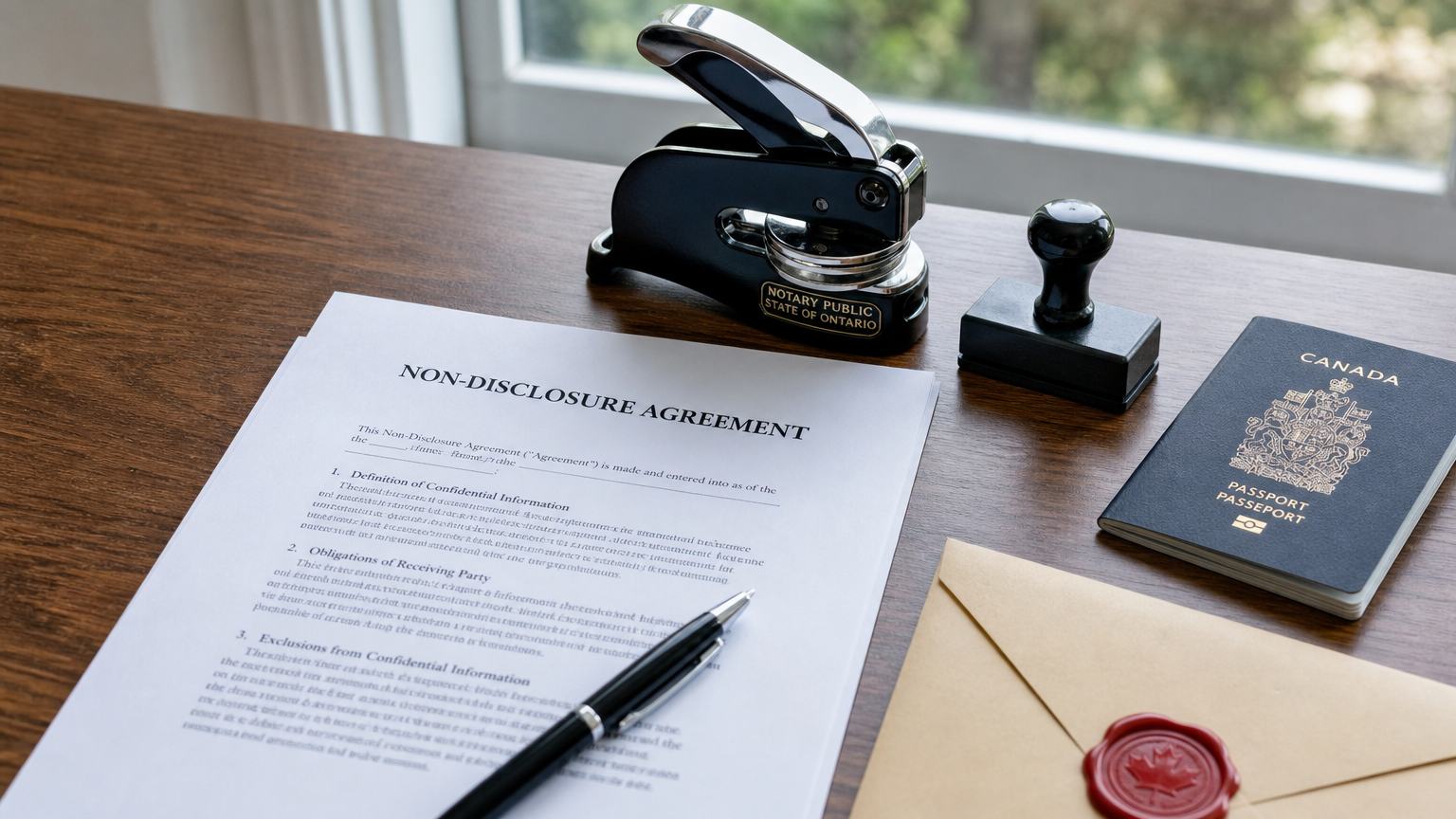
Essential guidance on NDA notarization in Ontario: when it’s required, how the process works, and how to prepare for a smooth notarization.
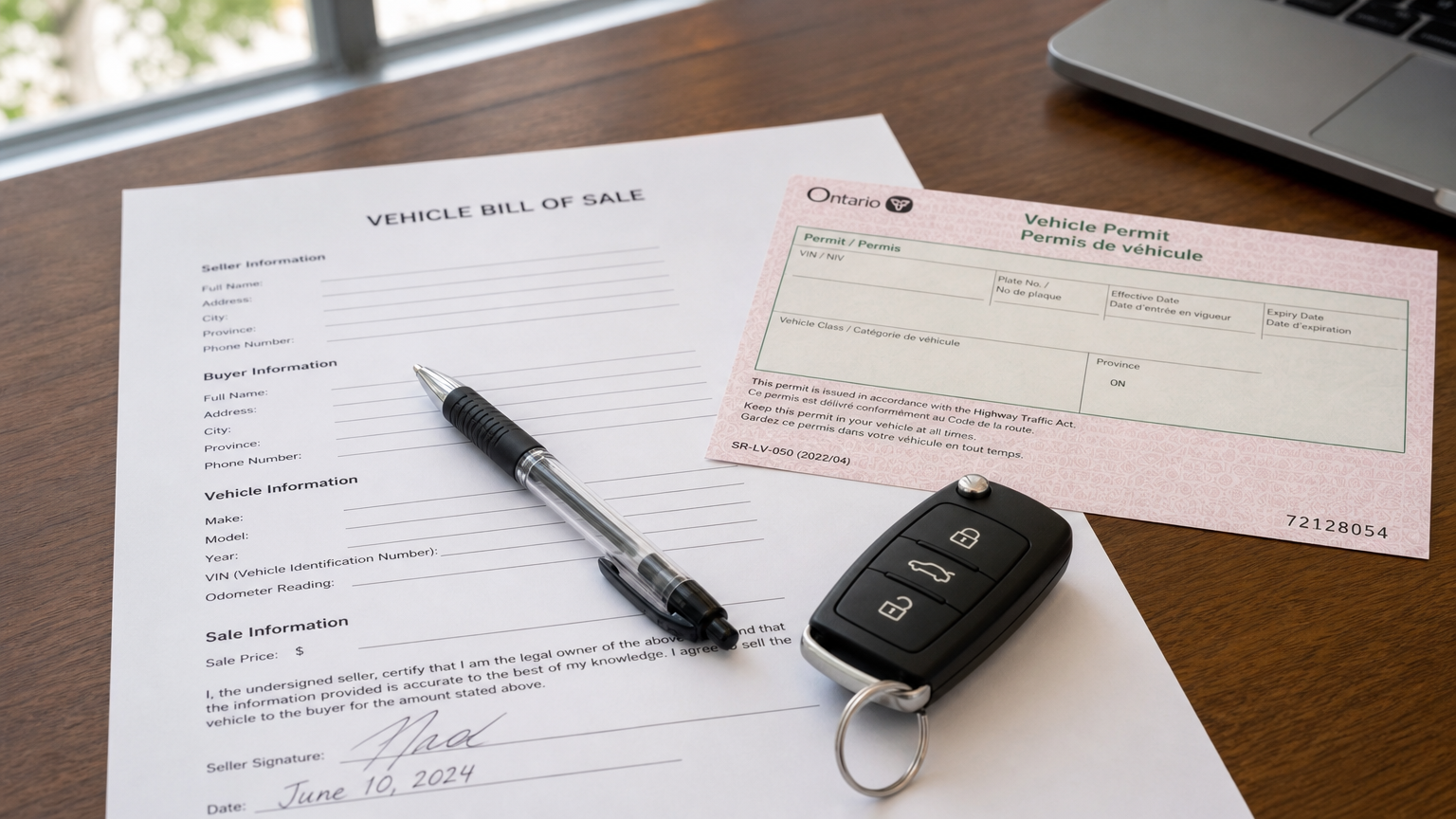
Essential vehicle transfer guidance for Ontario buyers and sellers, plus when notarization and statutory declarations are required.