
On this page
Legal paperwork often comes with unfamiliar requirements: signatures must be witnessed, seals applied, or documents validated for use outside Canada. Many people are unsure whether they need a notary, authentication, or embassy legalization, and choosing the wrong process can lead to delays or rejected documents. Understanding how notarization works, and how it differs from international validation, helps ensure your notarized documents are accepted wherever they need to go.
What are “Notarized Documents”?
A notarized document is one that has been certified by a notary public. The notary acts as an impartial official who confirms the identity of the signer, witnesses the signing when required, and attaches an official seal or certificate. However, notarization does not guarantee the truth of the document’s content; it verifies the authenticity of the signature and confirms that the signer is who they claim to be.
Typical steps in a notarization
- Presenting a valid government-issued identification to confirm identity
- Confirming the signer understands the document and is signing voluntarily
- Witnessing the signing or acknowledging an already‑signed document, as permitted by law
- Applying the notary’s official seal and completing a notarial certificate to record the act
The Role of the Notary Public in Canada
In Canada, a notary public is typically a legally licensed practitioner, often a lawyer, appointed by provincial authorities. Provinces such as Ontario, British Columbia and Alberta authorize and regulate notaries to perform specific acts that carry legal weight. Unlike a regular witness, a notary must follow strict professional and statutory obligations.
Responsibilities of a Canadian notary
- Confirming the identity of signers through acceptable ID documents
- Ensuring signers understand the nature of the document
- Refusing to notarize if there are concerns about coercion, fraud, or lack of capacity
- Keeping accurate records and issuing a proper notarial certificate
Common Documents That Require Notarization
Notarization is frequently requested for documents used in legal, financial and international contexts. Examples include:
- Powers of attorney
- Affidavits and statutory declarations
- Real estate transaction documents and property deeds
- Certified copies of identity or academic credentials
- Consent letters for travel
- Business agreements and corporate resolutions
- Immigration forms
- Documents intended for foreign authorities
These documents often require notarization because institutions need assurance that the signature is authentic and properly witnessed.
Notarization vs. International Authentication and Legalization
Notarization is a domestic certification of identity and signature. If a notarized document must be used in another country, additional steps may be needed.
Canada is not a part of the Hague Apostille Convention, so many foreign jurisdictions require authentication and legalization instead of an apostille.
Authentication
Authentication is performed by a federal office such as Global Affairs Canada. This step verifies that the notary’s appointment, signature, and seal are legitimate. It does not validate the content of the document, only the authority of the notary.
Legalization
Legalization is completed by the embassy or consulate of the destination country. The embassy confirms that the authenticated document meets their requirements and is acceptable for use abroad.
Why These Steps Matter
Different countries have different rules. Some require:
- Translations
- Additional certifications
- Specific formats
- Country‑specific forms
- Appointment‑only legalization services
Failing to follow the correct process can result in rejected applications, delayed visas, or invalid legal filings.
Examples of Documents That Often Require Authentication/Legalization
- Birth certificates used abroad
- Marriage certificates for international applications
- Powers of attorney for overseas property
- Academic credentials for foreign employment
- Corporate documents for international business transactions
How to Prepare for a Notary Appointment
Proper preparation helps ensure your notarization is completed smoothly and without delays.
- Bring original documents and valid government-issued photo ID
- Please ensure that your ID is valid and NOT expired
- Do not sign the document beforehand unless explicitly instructed otherwise; many notarizations require the notary to witness the actual signing
- Know whether the document will be used domestically or internationally so the notary can advise on further steps
- Ask the notary whether you need a certified true copy, affidavit, or another specific notarial act
- Bring all pages of the document, even those without signatures
If the document is intended for use outside Canada, it’s helpful to check the destination country’s requirements in advance. Some embassies require appointments, fees, or translations before they will legalize a document.
Why Proper Notarization Matters
Notarization provides official assurance about the identity of signers and the authenticity of signatures. This is essential for many legal and international transactions. Because rules differ by province and by destination country, it’s important to confirm the specific requirements that apply to your document and seek guidance from a qualified notary public when in doubt.
Proper notarization helps prevent:
- Rejected applications
- Delayed processing
- Legal complications
- Additional fees for re‑submission
FAQ
1. Is notarization the same as authentication?
No. Notarization verifies your identity and signature. Authentication verifies the notary’s authority. Legalization confirms the document is accepted by a foreign country.
2. Do all documents used abroad need authentication and legalization?
Not always. Some countries accept notarized documents alone, while others require additional steps. Requirements vary widely.
3. Can a notary refuse to notarize a document?
Yes. A notary must refuse if there are concerns about fraud, coercion, or lack of capacity.
4. Can I sign my document before the appointment?
Only if the notary confirms it is allowed. Many notarizations require the notary to witness the signing.
5. What ID do I need?
Valid government‑issued photo ID such as a passport, driver’s licence, or provincial ID card. Check here for more vaild IDs.
6. Do notarized documents expire?
The notarization itself does not expire, but institutions may require documents signed within a certain timeframe.
7. Can a notary certify copies of documents?
Yes. Notaries can create certified true copies of original documents, which are often required for academic, immigration, or legal applications.
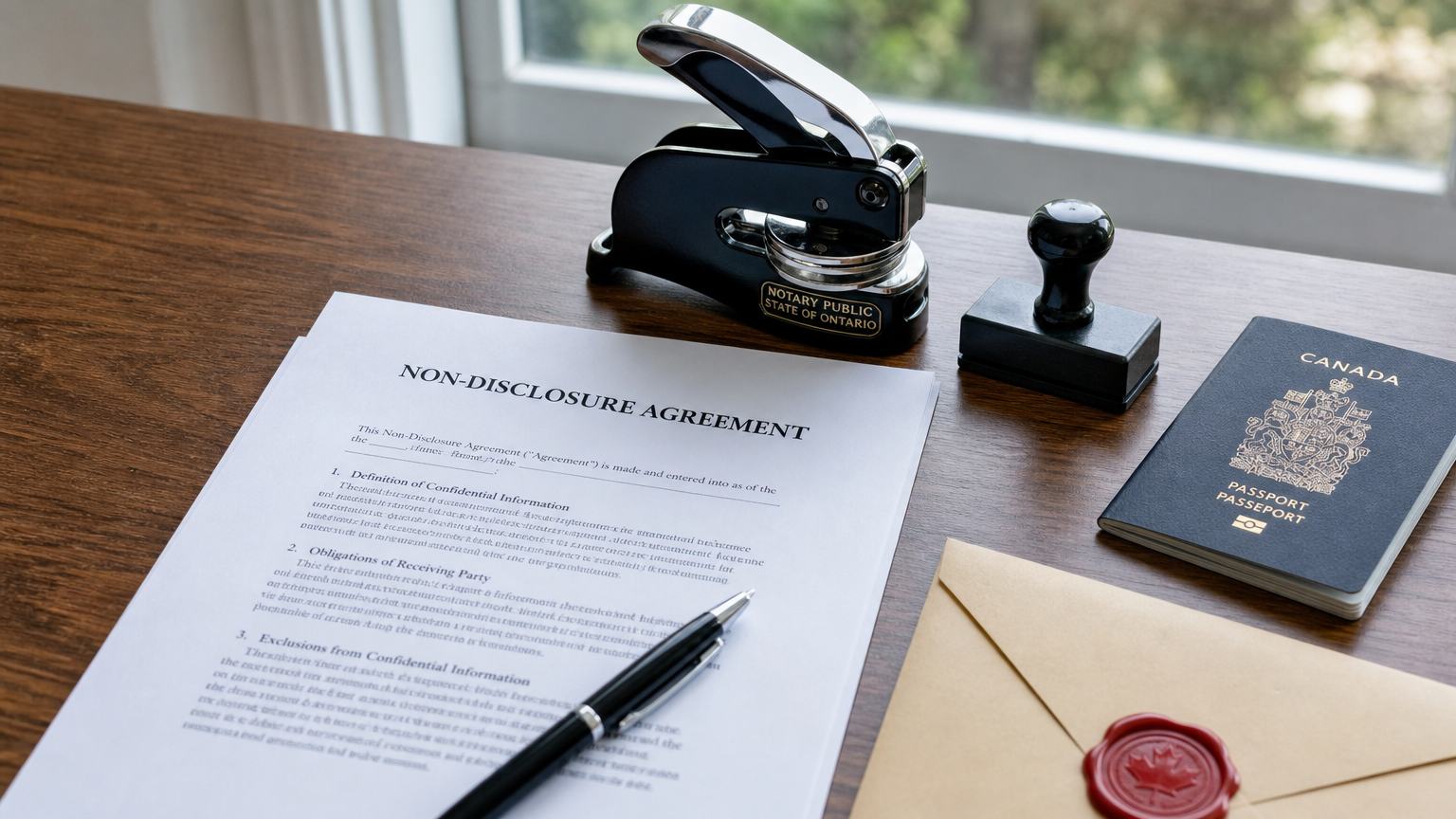
Essential guidance on NDA notarization in Ontario: when it’s required, how the process works, and how to prepare for a smooth notarization.
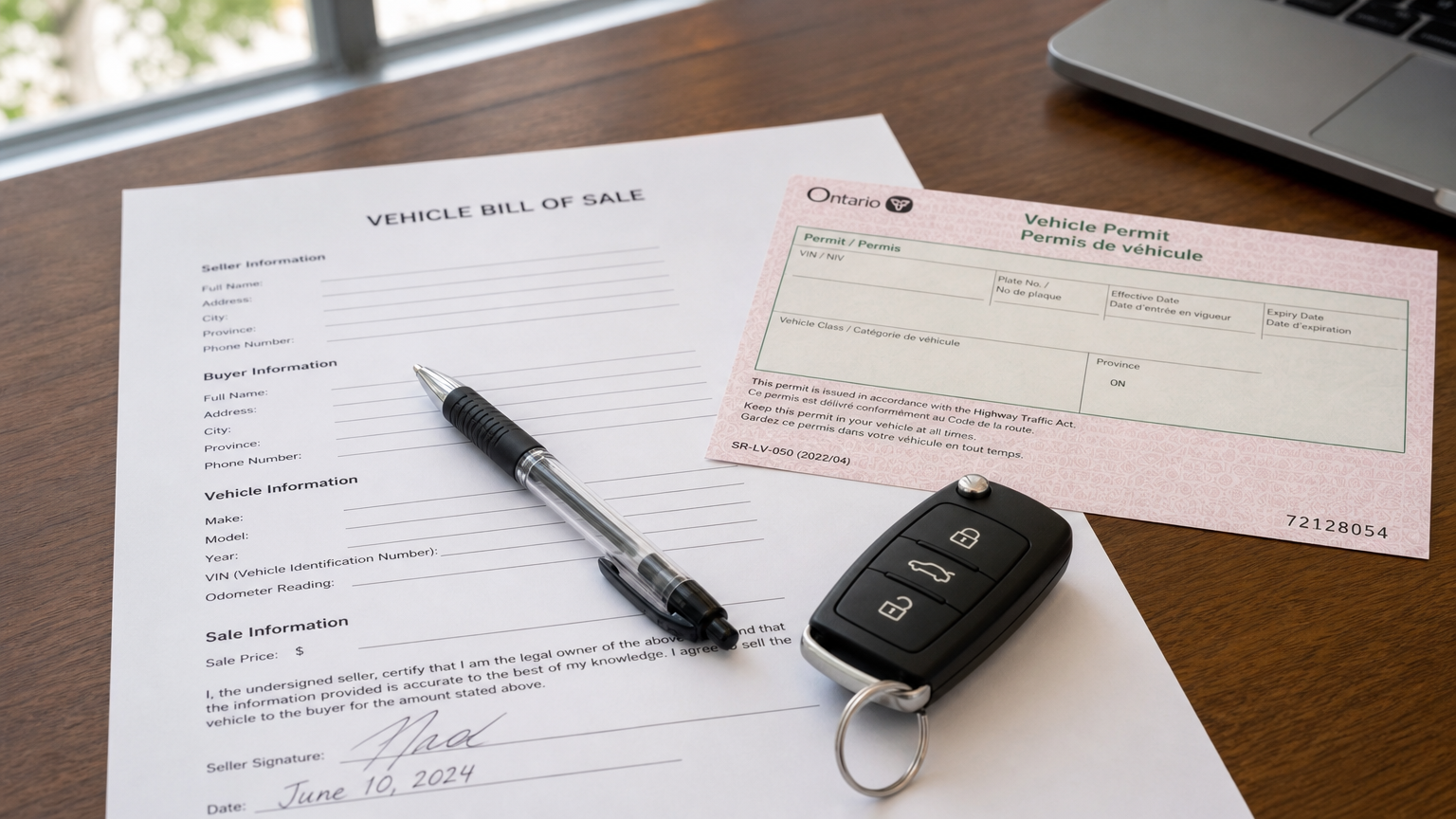
Essential vehicle transfer guidance for Ontario buyers and sellers, plus when notarization and statutory declarations are required.