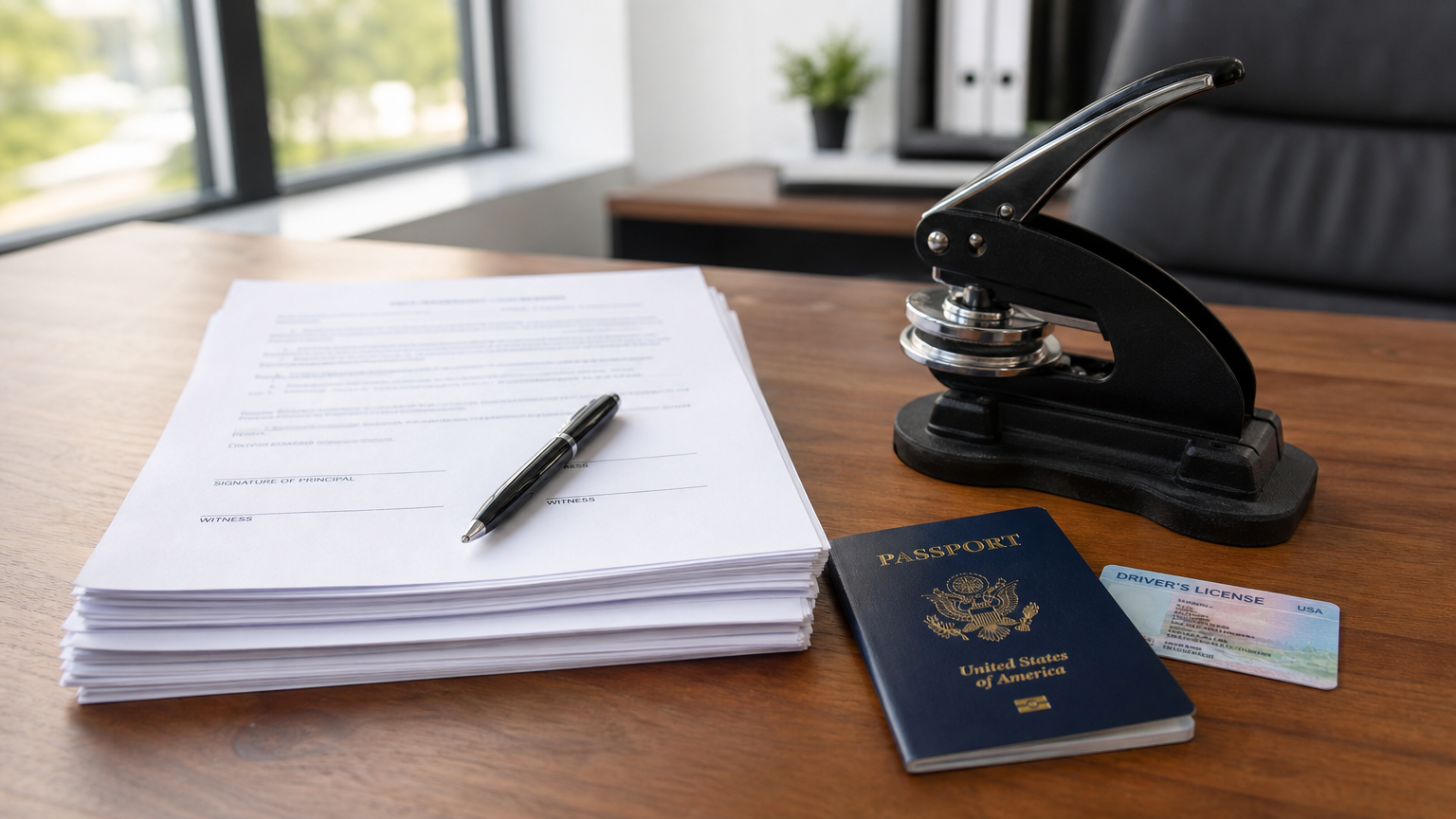
Introduction
Affidavits are sworn statements used widely in legal, administrative and transactional matters. If you need to prepare or sign an affidavit in Ontario, it helps to know who can make the statement, who can witness it, and the steps required to have it properly sworn or affirmed. This guide explains the essentials and was updated on April 23, 2026.
Key Takeaways
- An affidavit must be sworn or affirmed by the person who has direct knowledge of the facts.
- In Ontario, affidavits must be signed in the presence of an authorized official such as a commissioner of oaths or a notary public.
- Bring government-issued photo identification to the signing; some affidavits intended for international use may need additional steps.
What Is an Affidavit?
An affidavit is a written statement of facts that the signer declares to be true under oath or affirmation. It is a formal document often used in court proceedings, real estate transactions, administrative hearings and various government or business processes.
What Is the Purpose of an Affidavit?
The primary purpose of an affidavit is to provide a verified account of facts when a person cannot appear in person to give oral evidence or where a written record is required. Because the statement is made under oath or affirmation, making false statements can carry legal consequences.
When Do You Need an Affidavit?
- Court matters where factual statements must be placed on the record.
- Property and land transactions that require sworn declarations.
- Applications for government benefits, licences or permits requiring sworn confirmation of facts.
- Situations requiring proof of identity, residence or events when documentary evidence alone is insufficient.
Who Can Sign an Affidavit in Ontario?
Any adult who has direct, personal knowledge of the facts in the affidavit can be the deponent (the person swearing or affirming). The deponent must understand the contents of the document and be able to declare that the information is true. The actual signing must occur in the presence of an authorized official who can administer an oath or affirmation.
Who Can Administer Oaths or Affirmations?
In Ontario, authorized officials commonly include commissioners for taking affidavits and notaries public. These officials witness the deponent sign the affidavit, administer the oath or affirmation, and then complete any required certificate, stamp or seal confirming the document was sworn or affirmed before them.
Age and Mental Capacity
The deponent should be legally capable of understanding the nature of an oath or affirmation. Where there are concerns about age or capacity, legal advice should be sought. Some matters may require a guardian, trustee or representative to act on behalf of someone who cannot competently swear an affidavit.
Difference Between a Notary Public and a Commissioner of Oaths
Both roles permit an official to witness signatures and administer oaths or affirmations, but there are practical distinctions in scope and recognition:
- A commissioner of oaths commonly handles affidavits and sworn statements for use within the province.
- A notary public provides similar services and may be required for certain documents intended for use outside the country or for matters where a notarized seal is specifically requested.
Which official you need depends on the document’s intended use and any instructions from the receiving authority.
Does an Affidavit Need to Be Commissioned?
An affidavit must be sworn or affirmed before an authorized official to be valid. This formal commissioning — where the official certifies that the oath or affirmation was properly administered — is what gives the affidavit its legal weight.
How to Get Your Affidavit Commissioned in Ontario
- Prepare the affidavit text, ensuring the facts stated are accurate and based on your direct knowledge.
- Do not sign the affidavit before you meet the authorized official. The signature must be made in their presence.
- Bring valid government-issued photo identification that verifies your name and signature.
- Appear before a commissioner of oaths or notary public. The official will administer the oath or affirmation, witness your signature, and complete the required attestation or seal.
- If the affidavit will be used outside Canada or in a jurisdiction that requests additional verification, ask the receiving authority what further steps (such as legalization) are required.
Common Mistakes to Avoid
- Signing the affidavit before meeting the authorized official.
- Using someone who is not authorized to administer oaths or affirmations.
- Failing to bring appropriate identification.
- Including statements that are not based on personal knowledge or that contain speculation.
Conclusion
Signing an affidavit in Ontario requires that the deponent have personal knowledge of the facts and sign the statement in the presence of an authorized official such as a commissioner of oaths or a notary public. Confirm the intended use of the affidavit so you choose the correct official and follow any additional steps required for use outside the province or country. This information is current as of April 23, 2026.
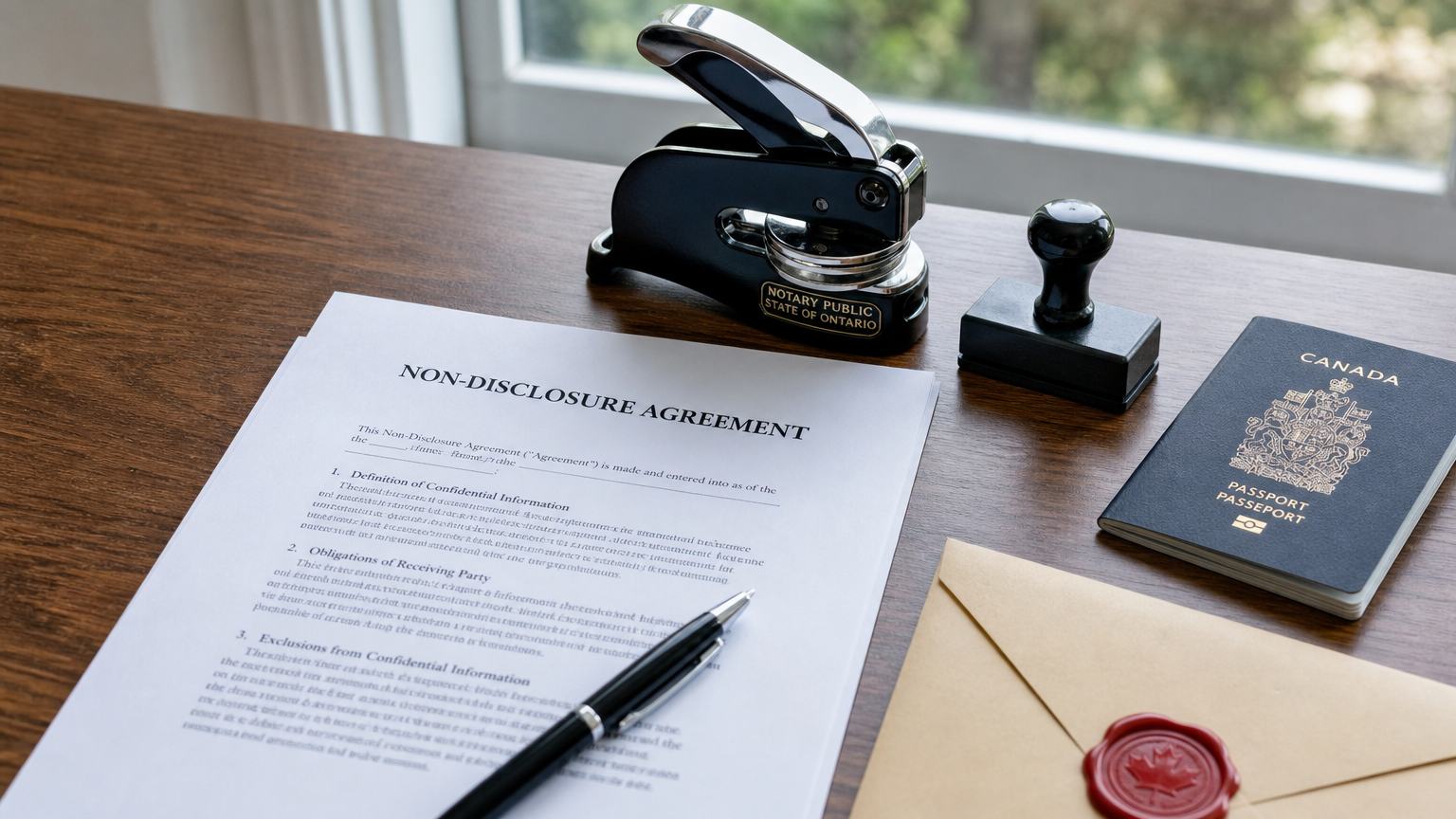
Essential guidance on NDA notarization in Ontario: when it’s required, how the process works, and how to prepare for a smooth notarization.
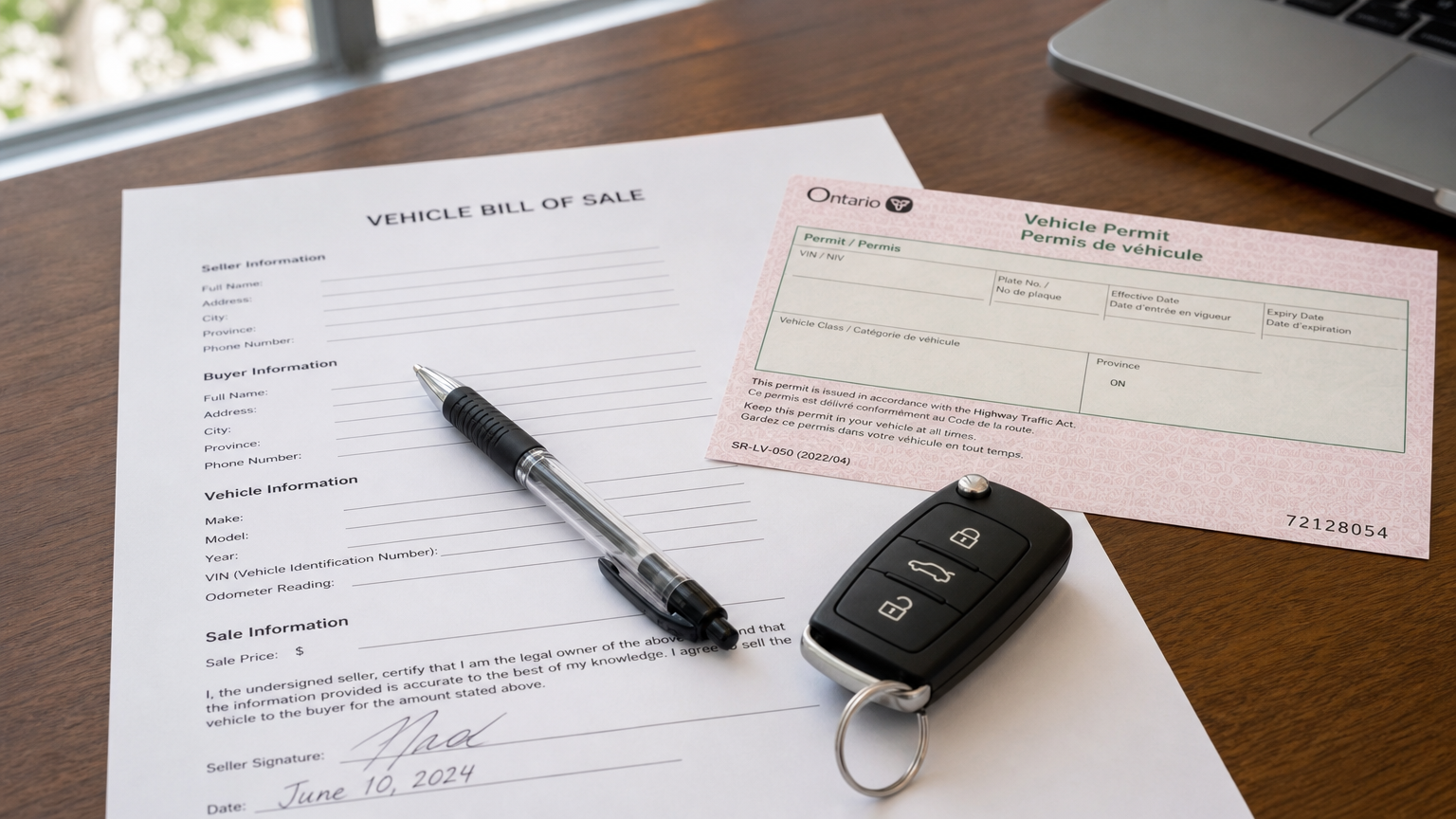
Essential vehicle transfer guidance for Ontario buyers and sellers, plus when notarization and statutory declarations are required.