
Introduction
If you want a vehicle listed in your business name in Ontario, there are a few specific steps to follow. Vehicles in Ontario must be registered through Service Ontario, and because a corporation cannot hold a drivers licence, businesses use a Registrant Identification Number (RIN) to register vehicles. This article explains what a RIN is, what documents are typically required, and practical steps to obtain one so you can register a company vehicle.
What is a RIN?
A Registrant Identification Number (RIN) is a ninedigit number used to register a vehicle on behalf of a business in Ontario. The RIN functions in place of a drivers licence number when the registrant is a corporate entity rather than an individual. While dealerships sometimes handle registration at the point of sale, owners who register or transfer a personally owned vehicle into the business will need a RIN to complete the process.
Who issues RINs and where to register the vehicle
All vehicle registrations in Ontario are processed through Service Ontario. Requirements for obtaining a RIN are set by the provincial registration authority. At the time of writing, the provincial registration service does not publish a comprehensive, stepbystep RIN application guide online, so its advisable to confirm current requirements directly with Service Ontario before you begin.
Typical documents and evidence you will need
Although specific cases can vary, you should generally be prepared to provide the following when applying for a RIN and registering a vehicle to a business:
- Personal identification for the individual acting on behalf of the company (for example, a valid drivers licence or another government ID).
- Proof of the businesss legal existence, such as articles of incorporation or equivalent business registration documents.
- Documentation demonstrating the applicants authority to act for the company (board resolution, director appointment records, or similar corporate documents).
- A sworn statement or statutory declaration requesting the RIN and confirming the applicants authority to register vehicles for the business. This must be sworn before a commissioner of oaths or a notary public.
How to prepare the statutory declaration
The statutory declaration or sworn statement is a formal, written declaration that you are authorized to request a RIN and register vehicles for the business. Key points for that document include:
- Clearly identify the business by its legal name and attach or reference its incorporation or registration details.
- State the name and personal identification details of the person signing the declaration.
- Declare that the signer is authorized to act on behalf of the business for vehicle registration purposes.
- Request issuance of a Registrant Identification Number (RIN) for the business.
- Sign the document in the presence of a commissioner of oaths or a notary public, who will administer the oath and add their commission stamp or seal.
Because requirements can vary, prepare the declaration but check with the registration office about any specific wording or additional information they may require.
Stepbystep process overview
- Gather corporate documents: articles of incorporation, business registration details, and proof that the signer has authority to act for the company.
- Prepare the statutory declaration requesting a RIN and confirming authority.
- Attend a commissioner of oaths or a notary public to swear the declaration and obtain the official commissioning.
- Present the sworn declaration, corporate documents, and the personal ID of the signatory to Service Ontario when applying for the RIN.
- Once the RIN is issued, use it to complete the vehicle registration or title transfer in the business name.
Practical tips
- Call or visit your local Service Ontario location to confirm current document requirements and any provincial updates before you travel.
- If a vehicle purchase is handled through a dealer, ask whether the dealer will complete registration on your behalf and what they need from you.
- Keep certified copies of corporate records and a clear letter or resolution that shows the signers authority to avoid delays.
- Bring original documents and one or more photocopies, as offices often require viewing originals and retaining copies.
Conclusion
Registering a vehicle to a business in Ontario requires a Registrant Identification Number because corporations cannot hold drivers licences. Obtain a RIN by providing proof of the businesss legal status, evidence that the signer is authorized, and a sworn statutory declaration commissioned by an appropriate official. Because provincial requirements can change and some details are not published online in a single guide, contact Service Ontario ahead of time to confirm the exact documentation and procedures required for your situation.

Essential guidance on NDA notarization in Ontario: when it’s required, how the process works, and how to prepare for a smooth notarization.
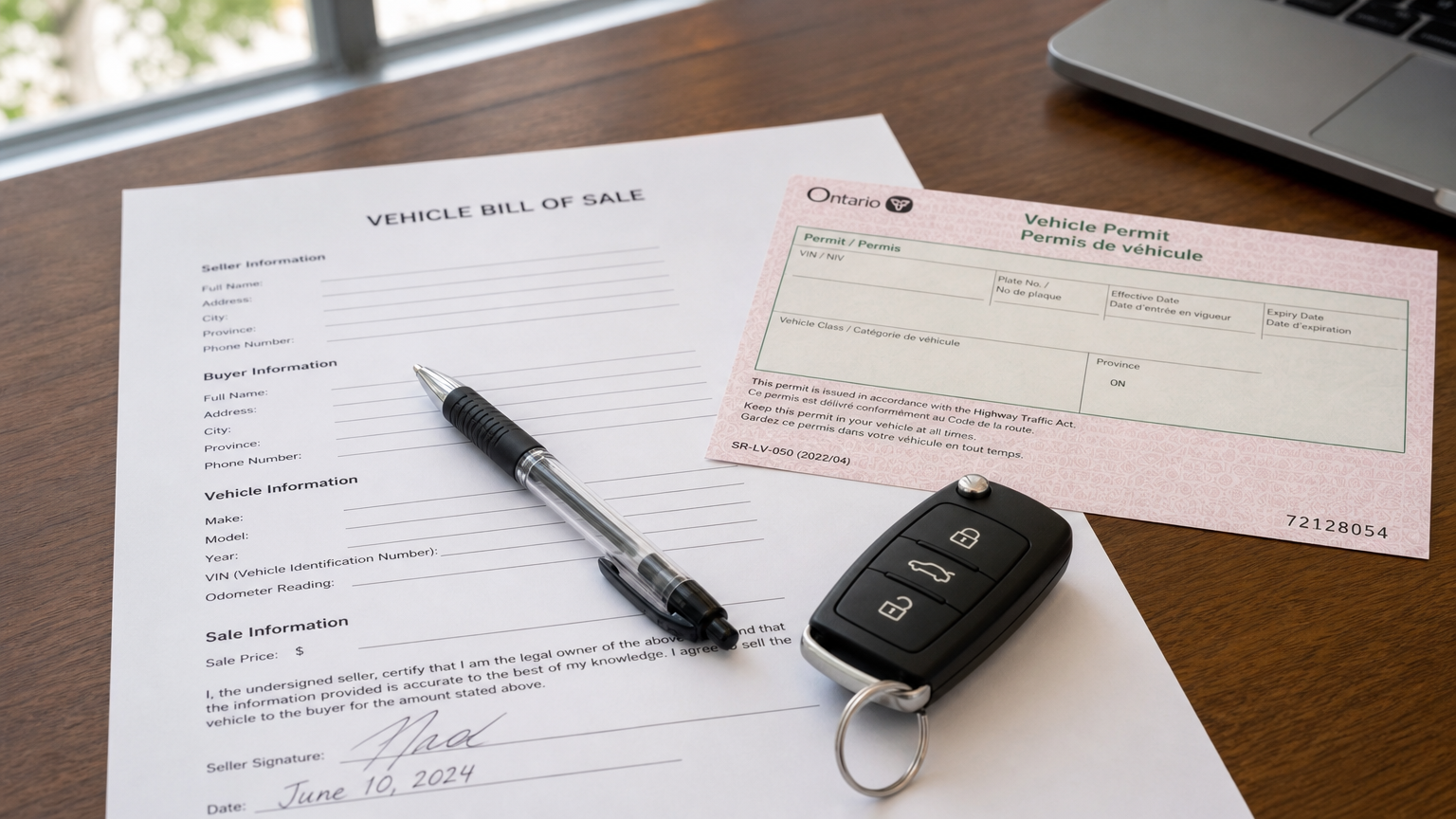
Essential vehicle transfer guidance for Ontario buyers and sellers, plus when notarization and statutory declarations are required.