

On this page
An RCMP criminal record check is an official search of Canada’s National Repository of Criminal Records. Employers, immigration authorities, adoption agencies, volunteer organizations, and licensing bodies often require these checks to verify whether an individual has a criminal history. Because these checks are used in sensitive contexts, understanding how they work (and how to obtain one correctly) is essential.
Understanding RCMP Criminal Record Checks
An RCMP criminal record check is conducted through the Canadian Criminal Real Time Identification Services (CCRTIS). There are two main types of checks:
1. Name‑based check
A name‑based search uses personal identifiers such as:
- Full legal name
- Date of birth
- Gender
This type of check is often used for general employment, basic volunteer roles, or situations where a quick screening is sufficient. Because it relies on personal identifiers rather than biometrics, it is faster and easier to obtain.
However, name‑based checks have limitations. People can share similar names, and spelling variations or administrative errors can lead to uncertain matches. When the system finds a potential match, the RCMP may request fingerprints to confirm identity. For this reason, name‑based checks are not accepted for high‑security roles or international applications.
2. Fingerprint‑based check
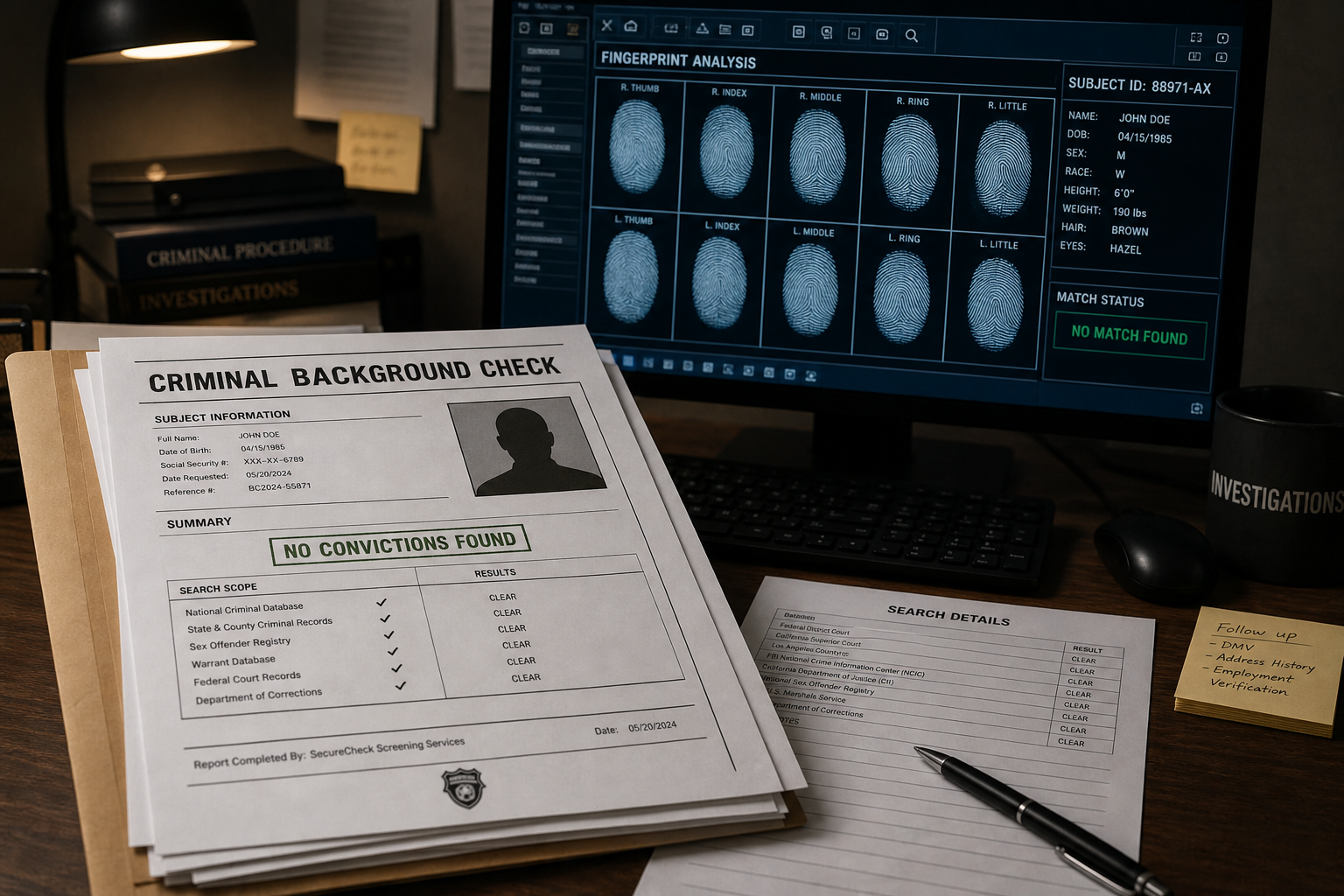
A fingerprint‑based check is the most accurate and reliable type of RCMP criminal record check. Fingerprint‑based checks are required for:
- Immigration and citizenship applications
- Adoption and foster care processes
- Vulnerable sector employment
- Professional licensing (e.g., healthcare, teaching, finance)
- International visa or residency applications
Because fingerprints are unique, this method eliminates false positives and identity confusion. It is the preferred option whenever an organization needs a definitive answer.
Many organizations require fingerprint‑based checks because they also provide:
- Higher accuracy — fingerprints cannot be duplicated or mistaken
- National‑level verification — results come from the RCMP’s central repository
- International acceptance — foreign governments trust fingerprint‑based results
- Reduced risk of identity mismatch — especially important for immigration and legal processes
Which Type Should You Choose?
A simple rule of thumb helps applicants decide:
- If the request involves immigration, adoption, licensing, or international use, choose fingerprints
- If the request is for basic employment or volunteering, a name‑based check may be acceptable
When in doubt, ask the requesting organization. Choosing the wrong type can delay your application!
Where They Are Commonly Required
RCMP checks are used in situations where trust, safety, or legal compliance is essential. They often appear in:
- Employment screening
- Roles involving finances, confidential data, or vulnerable populations often require federal‑level checks
- Immigration and citizenship applications
- Immigration authorities rely on RCMP checks to confirm admissibility and ensure applicants meet security requirements
- Adoption and foster care processes
- Agencies use RCMP checks to ensure children are placed in safe, stable homes
- Volunteer positions
- Organizations working with youth, seniors, or vulnerable groups often require federal background checks
Why RCMP Checks Are More Reliable Than Local Police Checks
Local police services may only access regional databases. RCMP checks, however, include:
- National criminal records
- Fingerprint‑based identity confirmation
- Pardons and record suspensions
- Updates from police services across Canada
This makes RCMP checks especially important for people who have lived in multiple provinces or who need a background check recognized outside Canada.
Why They Matter Internationally
For Canadians applying abroad, an RCMP criminal record check often serves as the country’s official national police certificate. Foreign governments and licensing bodies prefer RCMP checks because they:
- Reflect a complete federal‑level search
- Are recognized as Canada’s highest standard
- Reduce the risk of identity mismatches
This is the reason why RCMP checks are commonly required for visas, residency applications, overseas employment, and international licensing.
RCMP No Longer Accepts Fingerprint Cards
In Canada, fingerprints can be taken using either the traditional ink‑and‑card method or a digital live‑scan device
However, ink-and-paper fingerprint cards are not accepted. All fingerprints must be digitally captured or digitally converted by an accredited Canadian service provider.
Applicants abroad must send their fingerprint card to a Canadian agency that can convert it into an electronic format and submit it to the RCMP.
This change improves accuracy and reduces processing delays, but it also means applicants abroad must follow a slightly different process.
Steps to Obtain an RCMP Criminal Record Check in Canada
Obtaining an RCMP criminal record check in Canada is a straightforward process, but each step has important details that can affect how quickly your results are processed.
1. Confirm the type of check required
Before doing anything else, determine whether the requesting organization needs a name‑based check or a fingerprint‑based check. This matters because choosing the wrong type can delay your application.
Many employers and volunteer organizations accept name‑based checks. However, immigration authorities, adoption agencies, licensing bodies, and international organizations almost always require fingerprints.
If you’re unsure, ask the organization directly. They may have specific instructions or forms that must accompany your submission.
2. Get your fingerprints taken
The RCMP no longer accepts paper fingerprint cards. It is important that you find an accredited company that converts your fingerprint card into a digital format.
Most local police detachments offer fingerprinting services, and many private companies are accredited by the RCMP to capture fingerprints according to national standards. During your appointment, the technician will guide you through the process and ensure the correct fingerprint form is used if the requesting authority requires one.
You can get fingerprints taken at:
- Local police detachments
- RCMP‑accredited fingerprinting agencies
- Private technicians approved to capture fingerprints for federal checks
When attending your appointment, don’t forget to bring valid government ID and confirm whether the requesting organization requires a specific fingerprint form. Technicians will guide you through the process and ensure the prints meet RCMP standards.
3. Submit the request to the RCMP
Once your fingerprints are taken, they must be submitted to the RCMP along with any required forms and identification.
Your submission may include:
- Fingerprint documents
- If your fingerprints were taken by using the ink-and card method, it’s vital that you mail the fingerprint card to a RCMP-accredited fingerprinting agency that offers digital conversion services BEFORE submitting them to the RCMP
- RCMP consent forms
- Copies of government ID
- Any additional forms required by the requesting organization
The RCMP processes the request according to its current procedures. If your fingerprints are unclear or incomplete, the RCMP may ask for a new set, which can extend processing time.
4. Receive the results
Results may be:
- Mailed to you
- Sent directly to the requesting organization
- Returned electronically (for name‑based checks only)
Processing times vary depending on workload, completeness of the submission, and whether additional identity verification is required. Make sure to provide clear identification and to ensure all forms are complete to shorten the turnaround time.
Obtaining an RCMP Criminal Record Check Outside Canada
Canadians living outside the country often still need an RCMP criminal record check for immigration, employment, licensing, adoption, or residency applications. Fortunately, you do not need to return to Canada to complete the process. You can obtain a valid RCMP check from almost anywhere in the world, as long as your fingerprints and documents meet Canadian standards.
The most important step is having your fingerprints captured correctly. When you’re abroad, this is usually done by:
- Local police stations
- National law enforcement agencies
- Authorized fingerprinting technicians
- Private biometric centers (depending on the country)
Most countries use a standard fingerprint card, which is no longer accepted by Canadian authorities. It must be converted into a digital format by a RCMP-accredited fingerprinting agency before submitting.
What to Bring to Your Appointment
To avoid issues, bring:
- Valid government identification
- Any instructions provided by the Canadian fingerprinting agency
- Your Canadian mailing address or the address of the organization receiving the results
Technicians abroad may not be familiar with Canadian standards, so having clear instructions helps ensure your fingerprints are captured correctly.
Additional Requirements for International Applicants
Depending on the country you’re living in, you may need extra steps such as:
- Certified translations of your identification documents
- Notarization of your identity documents
- Authentication of foreign documents
- Country‑specific fingerprint formats
These requirements vary widely, so it’s helpful to check local regulations or ask the requesting organization if additional documentation is needed.
Receiving Your RCMP Results Abroad
Once processed, the RCMP will mail your results either:
- Directly to your international address, or
- To the organization requesting the check
International delivery may take longer than domestic Canadian mail, so plan ahead if your results are time‑sensitive.
Special Considerations
Although the process is straightforward, several practical factors can influence the success and timing of your RCMP criminal record check.
- Fingerprint‑based checks significantly reduce the risk of false positives and are preferred whenever precise identification is essential
- Criminal record checks require authorization from the individual being screened. Expanded or sensitive checks may require additional documentation
- Turnaround varies depending on workload and completeness of the submission so preparing your documents carefully and following RCMP instructions closely can help ensure a smoother experience
These considerations can affect both the timeline and the acceptance of your application, so it’s helpful to plan ahead!
Whether you are in Canada or living abroad, the key to a smooth process is ensuring your fingerprints are taken by an authorized service, following submission instructions carefully, and providing any required documentation or translations.
FAQ
1. Do I always need fingerprints?
Not always. Some organizations accept name‑based checks, especially for low‑risk roles. However, fingerprints are required whenever a definitive identity match is necessary or when the requesting authority explicitly requires them.
2. Where can I get fingerprints taken?
Within Canada, many local police detachments and accredited technicians provide fingerprinting services. Abroad, local police stations usually can take your fingerprints on a card or scan. Please confirm the required format before scheduling your appointment.
3. How long does an RCMP criminal record check take?
The processing time depends on several factors.
- Electronic fingerprints: usually 5-10 business days.
- High‑volume periods: may take 2-4 weeks.
- Incomplete submissions: can delay results further.
Submitting fingerprints electronically through an accredited Canadian agency is the fastest option.
4. Can I submit a paper fingerprint card?
No. The RCMP no longer accepts physical copies of your fingerprint. If you mail them your paper fingerprint card, they’ll refuse it and mail it back to you.
5. Can I use my RCMP check for multiple purposes?
Sometimes. If the check was done for general employment, you can often reuse it. However, sectors like immigration, adoption, or licensing checks are purpose‑specific. Each organization may require its own submission or consent form. When in doubt, request a new check to avoid rejection and delays.
6. How long is an RCMP criminal record check valid?
There’s no official expiry date, but most organizations accept results that are less than six months old. Immigration and licensing bodies may require a check completed within three months of submission. Always confirm with the requesting organization before reusing an older result.
7. Will pardoned or suspended records appear?
No. If you’ve received a record suspension (pardon), those convictions are removed from the searchable database. The RCMP will report “No record found” unless a new offence has been recorded since the suspension.
8. Can I get a copy of my own criminal record?
Yes. You can request a personal criminal record check through an accredited fingerprinting agency. The results will be mailed directly to you. This is useful if you want to verify your record before applying for jobs or visas.
9. What if my fingerprints are rejected?
If you get rejected, it’s usually because your fingerprints are unclear or incomplete. You’ll need to schedule a new appointment with a qualified technician.
Tip: Avoid lotion or sanitizer right before fingerprinting.
10. What should I do if my check shows a record?
If your check reveals a criminal record:
- Review the details carefully
- Contact the RCMP or a legal professional if you believe the information is incorrect
- You may be eligible for a record suspension through the Parole Board of Canada

Essential guidance on NDA notarization in Ontario: when it’s required, how the process works, and how to prepare for a smooth notarization.
Essential vehicle transfer guidance for Ontario buyers and sellers, plus when notarization and statutory declarations are required.