
Introduction
Planning to use Canadian documents overseas? Many countries require an official confirmation that your papers are genuine before they will accept them for employment, education, immigration, or business. This process—commonly called attestation—verifies the origin and authenticity of documents so foreign authorities can trust them. This guide explains what attestation means for Canadian documents, when it’s needed, the typical steps involved, and practical tips to avoid delays.
What is document attestation?
Attestation is the procedure used to confirm that a document, signature, or seal is legitimate. In practice, the term often refers collectively to authentication and legalization: initial certification that a document was properly issued and signed, followed by further verification to establish its validity for use in another country. In Canada, the first certification is typically performed by an authorized person such as a notary public, lawyer, or a relevant government office.
Why attestation matters for Canadian documents
Attestation establishes international trust in documents issued in Canada. It is particularly important when submitting records to countries that do not participate in the Hague Apostille Convention. Many Arab countries commonly request attestation as part of document legalization, and certain document types destined for specific countries may have additional requirements.
When to expect attestation requirements
- When submitting personal documents (birth certificates, marriage certificates, powers of attorney) for immigration, work or family matters abroad.
- When presenting educational credentials (diplomas, transcripts) for study admission or professional recognition overseas.
- When using corporate or commercial documents (certificates of incorporation, board resolutions, agreements) for business or regulatory processes in another country.
- When dealing with countries that are not part of the Hague Apostille Convention, which often rely on authentication plus consular legalization instead of an apostille.
Typical attestation process for Canadian documents
Procedures vary by document type and destination country, but the usual sequence includes the following stages:
1. Local certification
Have the original document certified by an authorized local official. This may be a notary public, a lawyer, or an issuing government department that confirms the document was legally issued and signatures are genuine.
2. Federal authentication
After local certification, the document is commonly authenticated by a federal authority in Canada. This step confirms the validity of the local certification. For Canadian documents intended for foreign use, this federal authentication is carried out by the national government department responsible for consular and international affairs.
3. Consular legalization or apostille
The final step depends on the destination country:
- If the receiving country is a member of the Hague Apostille Convention, an apostille may be used to finalize the process.
- If the receiving country is not a Hague member, the document typically must be legalized by that country’s embassy or consulate after federal authentication. This is commonly referred to as consular legalization or attestation.
Documents commonly requiring attestation
- Personal: birth, marriage, death certificates; police clearance certificates; powers of attorney.
- Educational: diplomas, degree certificates, transcripts, and credential assessments.
- Corporate: articles of incorporation, board resolutions, invoices, and commercial contracts.
Practical tips to avoid delays and rejections
- Check the exact requirements of the destination country’s embassy or consulate before you start. Requirements can differ by document type and by country.
- Use original documents or certified true copies as specified. Some authorities will not accept photocopies.
- Obtain any required certified translations performed by an accredited translator if the destination country does not accept documents in English or French.
- Ensure all signatures and seals are in place before submitting documents for certification or authentication.
- Allow sufficient processing time and verify whether in-person submission or mailing is required.
Conclusion
Attestation is the sequence of certification steps that makes Canadian documents acceptable to foreign authorities. It usually begins with a local certification, continues with federal authentication, and concludes with either an apostille or consular legalization depending on the destination country. Confirm the specific requirements with the receiving authority in advance, prepare originals and certified translations as needed, and plan for processing time to avoid delays.

Essential guidance on NDA notarization in Ontario: when it’s required, how the process works, and how to prepare for a smooth notarization.
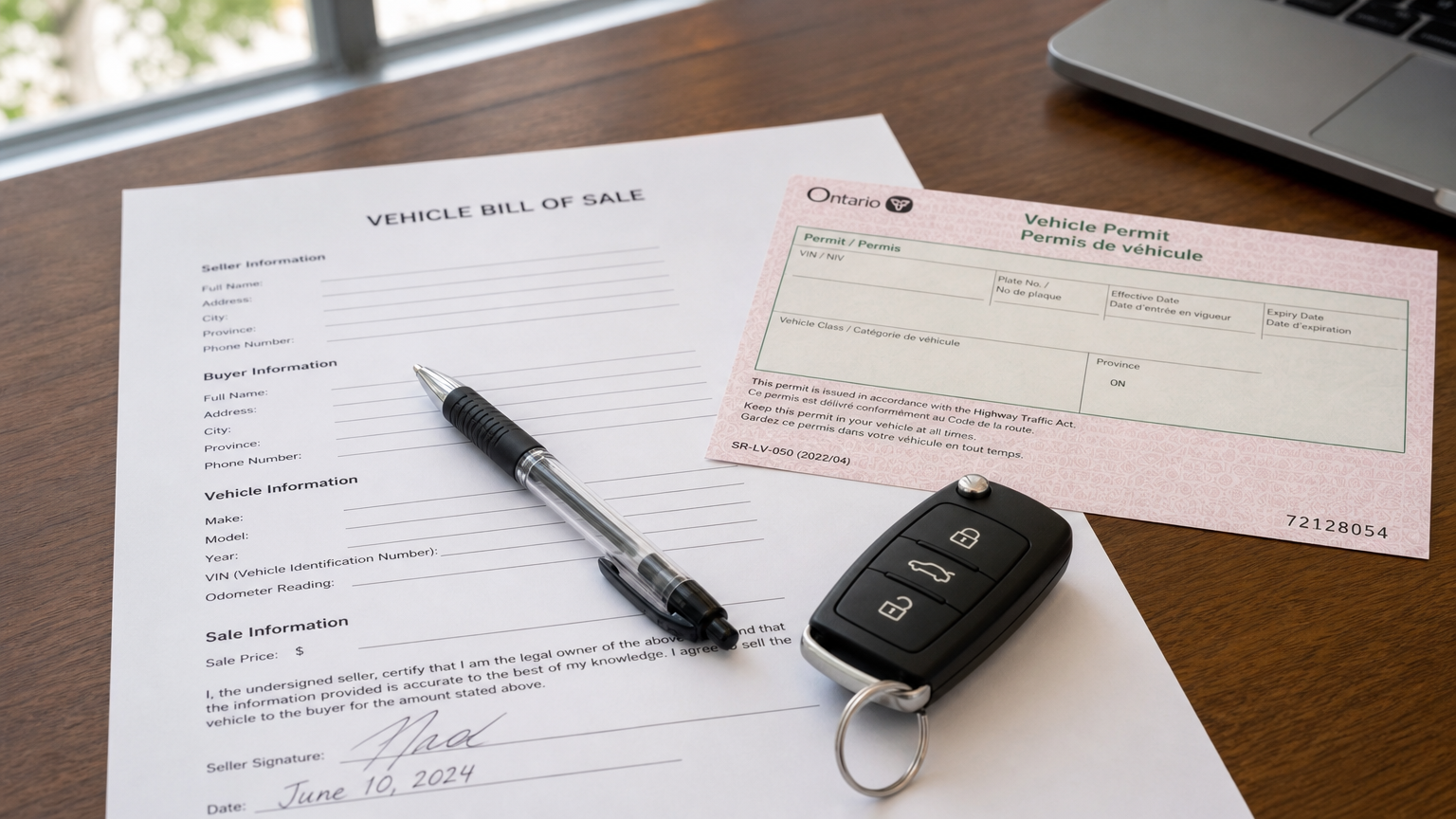
Essential vehicle transfer guidance for Ontario buyers and sellers, plus when notarization and statutory declarations are required.