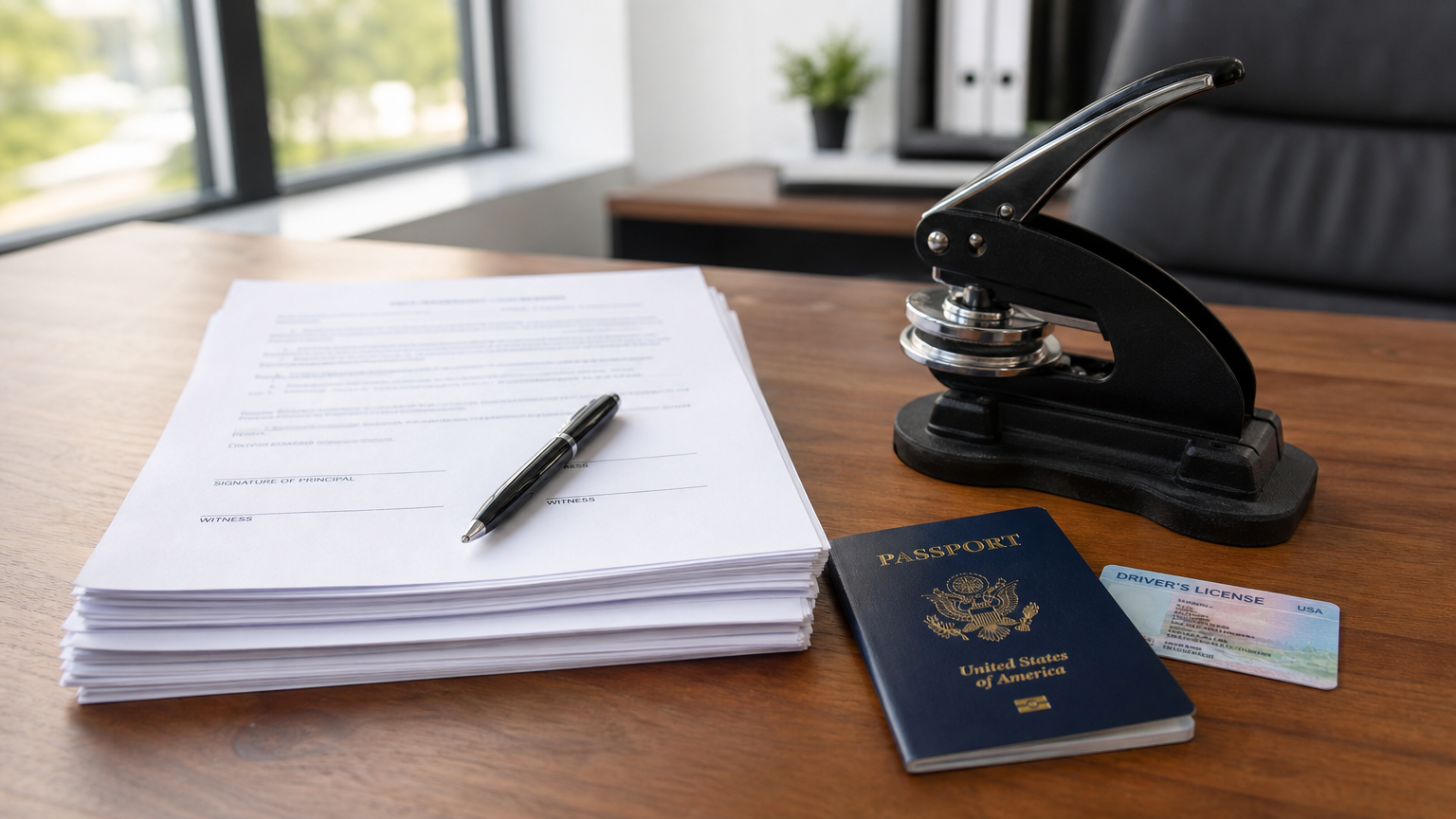
When you make an appointment with a notary public or a commissioner for taking oaths, one of the first practical questions is whether you must bring identification. The short answer is yes: identity verification is a core legal requirement for most notarizations. This article explains the legal basis for that rule in Ontario, which documents can be used for ID, how remote commissioning works for certain services, and what to do if you do not have standard identification.
Why identity verification is required
Notarial acts confirm to third parties—government offices, courts, consulates and financial institutions—that the person signing a document is who they claim to be. In Ontario, a notary public operates under the Notaries Act, R.S.O. 1990, c. N.6, and is governed by professional standards set by the Law Society of Ontario. One of the notary’s fundamental responsibilities is to verify the identity of the person appearing before them.
That verification must be done by inspecting government-issued photo identification, confirming the photograph matches the person, ensuring the ID is original and unexpired, and checking that the name on the ID corresponds to the name on the document. Skipping this step would undermine the reliability of the notarial act and create opportunities for fraud.
Which notarial services require ID
Valid identification is required for almost all notarial services. Some common examples of services that require in-person identity verification include certified true copies, vehicle transfers, passport-related documents, and attestations of signature or document authenticity. These services generally cannot be completed without the principal appearing in person and presenting the required ID.
Acceptable forms of identification
Notaries are instructed to use government-issued photo identification as the primary method of verification. Typical examples include a passport, a drivers licence, or a provincial photo card. The ID should be the original document (not a photocopy), must not be expired, and the name on the ID should match the name on the document being notarized.
Because rules and practice can vary slightly between offices, its a good idea to confirm with the notary ahead of your appointment if you have an uncommon form of ID.
Remote commissioning: limited and conditional
Ontario permits remote commissioning for a narrow set of services only. Under Ontario Regulation 431/20 (Administering Oath or Declaration Remotely) made under the Commissioners for Taking Affidavits Act, commissioners may administer statutory declarations and take affidavits using audio-visual technology.
Even during a remote session, the commissioner must verify identity. That means you must display valid government-issued photo identification to the camera so the commissioner can inspect the ID and compare the photograph to your face before administering the oath or declaration.
The Law Society of Ontario made clear in a February 2025 notice that online notarization under the Notaries Act is not permitted. In other words, other notarial acts that fall under the Notaries Act cannot be completed online; they require physical attendance.
Services that must be done in person
- Certified true copies of original documents
- Vehicle ownership and transfer paperwork
- Passport application attestations and related documents
- Attestations and many statutory notarial acts under the Notaries Act
If you do not have standard identification
If you lack a government-issued photo ID, do not assume the notary can proceed. Requirements differ by service and by office. For some matters, there is no workaround and you will need to obtain replacement identification before the notarization can occur. For statutory declarations and affidavits, remote commissioning still requires visible photo ID.
Before your appointment, contact the notary or commissioner and explain your situation. They can tell you whether any alternative documentation is acceptable for the specific act you need, or whether you must obtain a replacement ID.
How to prepare for your notarization appointment
- Bring the original, valid government-issued photo ID you plan to use.
- Ensure the name on your ID matches the name on the document. If names differ due to marriage or other reasons, bring supporting documents that explain the change.
- If your appointment is remote for an affidavit or statutory declaration, set up a well-lit area and a stable internet connection; be ready to hold your ID up to the camera for inspection.
- Contact the notary ahead of time if you have unusual documents, lack standard ID, or need a service that may require in-person attendance.
Conclusion
Identity verification is a legal and practical necessity for notarizations in Ontario. The Notaries Act and guidance from the Law Society of Ontario require notaries to confirm identity using government-issued photo ID. Remote commissioning is permitted only for statutory declarations and affidavits under Ontario Regulation 431/20, and even then identification must be shown on camera. For many notarial services, you will need to attend in person with original, unexpired photo ID. If you do not have standard identification, contact the notary in advance to learn what options, if any, are available.
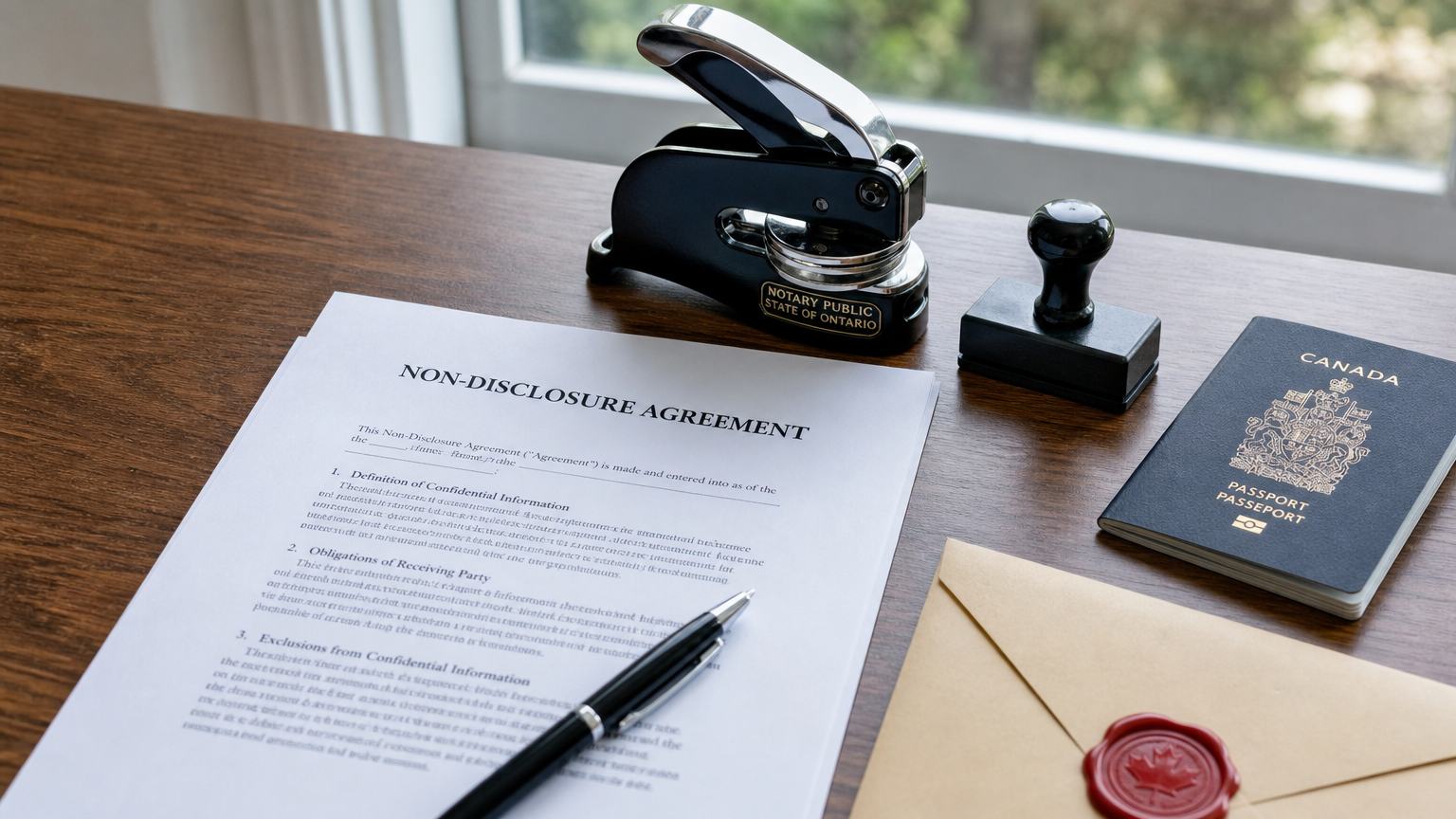
Essential guidance on NDA notarization in Ontario: when it’s required, how the process works, and how to prepare for a smooth notarization.
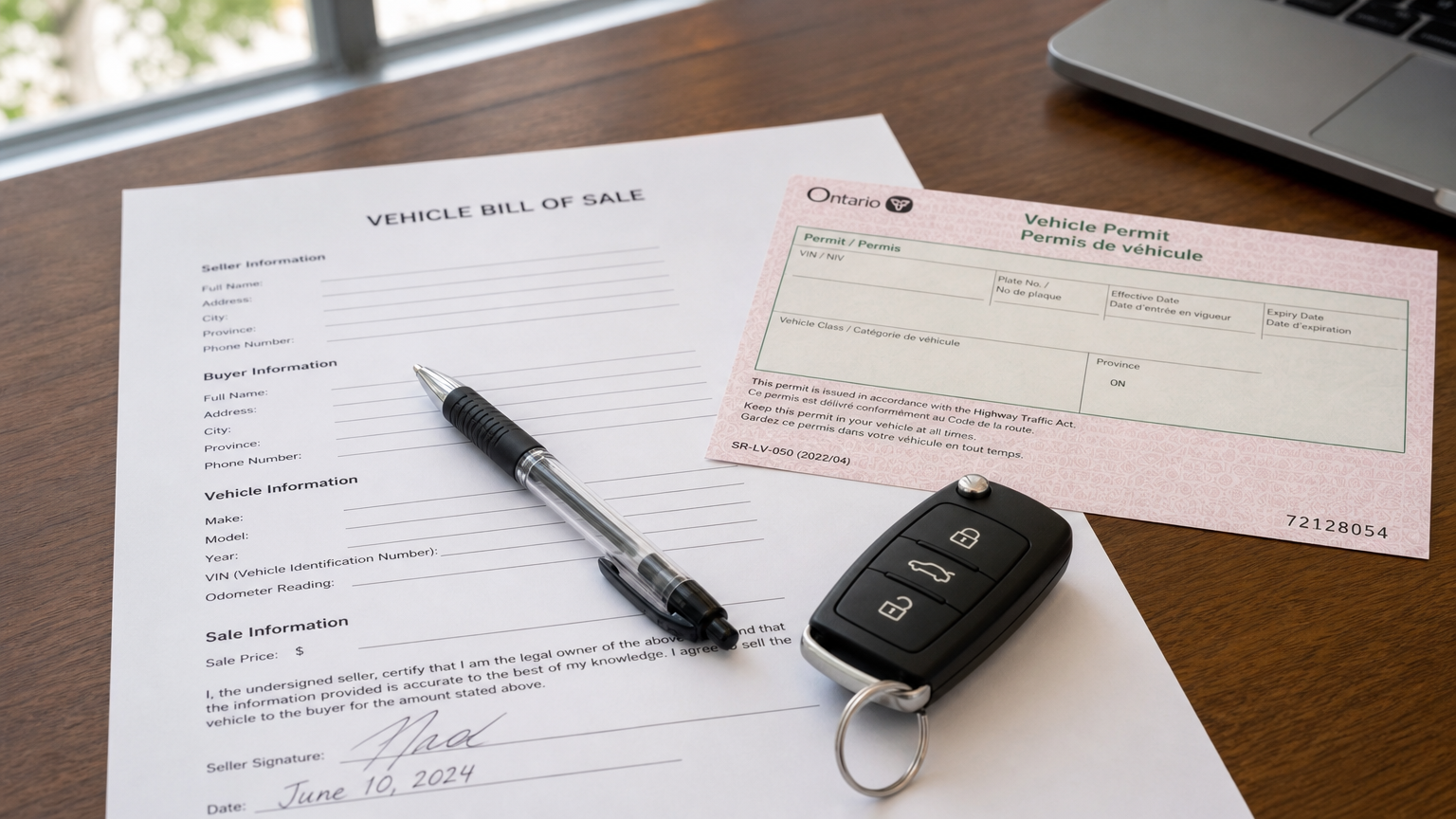
Essential vehicle transfer guidance for Ontario buyers and sellers, plus when notarization and statutory declarations are required.