
On this page
If you need to use a Canadian document outside Canada for immigration, employment abroad, university admission, or foreign legal or business matters, you may be asked to provide an attested document.
This guide explains what document attestation is, when it is required, how the process works in Canada, the difference between apostille and legalization, and practical tips to ensure your documents are accepted overseas.
What is Document Attestation?
Document attestation is a set of procedures that prove a Canadian document is genuine. It verifies:
- The authenticity of signatures
- The authority of the person who signed the document
- The legitimacy of seals or stamps
- The issuing institution’s credibility
Foreign governments, courts, employers, universities, and business entities rely on attestation to ensure documents issued in Canada meet their legal standards.
Attestation is a sequence of verification procedures. The exact steps depend on:
- The destination country
- The type of document
- Whether the country accepts apostilles
- Whether consular legalization is required
When an Attested Document Is Required
Attestation is commonly requested for documents used outside Canada in situations such as:
- Immigration and visa applications
- Foreign employment or professional licensing
- Admission to overseas universities
- International business transactions and contracts
- Legal matters involving courts or authorities in another country
- Opening bank accounts abroad
- Marriage or family registration in another country
Typical documents that may require attestation include:
- Birth certificates
- Marriage certificates
- Academic diplomas and transcripts
- Police clearance certificates
- Powers of attorney
- Corporate records
- Medical documents
- Adoption records
- Court orders
If a foreign authority needs proof that your Canadian document is legitimate, attestation is usually required.
Typical Attestation Steps in Canada
In Canada, “attestation” refers to a multi‑step process rather than a single standardized procedure. The most common steps are:
Step 1: Notarization
A notary public may be required to:
- Verify your identity
- Witness your signature
- Certify that a copy is a true reproduction of the original
- Confirm the authenticity of a document presented
Notarization is often the first step because many foreign authorities will not accept a document unless it has been notarized.
Not all documents require notarization; vital statistics documents (birth, marriage, death certificates) often do not. However, academic records, corporate documents, affidavits, and powers of attorney frequently do. Make sure to confirm whether your document needs notarization before submitting.
Step 2: Apostille or Legislation
The second and last step depends on the destination country.
Apostille
Countries that are part of the Hague Apostille Convention accept an apostille certificate. Canada joined the Convention in 2024, meaning Canadian documents destined for apostille‑member countries now receive an apostille instead of consular legalization.
An apostille:
- Is a single certificate
- Replaces embassy legalization
- Is recognized by all
- Convention countries
- Speeds up processing significantly
Legalization
Countries not part of the Hague Convention require consular legalization. This process involves:
- Submitting the authenticated document to the destination country’s embassy or consulate
- Paying consular fees
- Following country‑specific requirements (forms, translations, appointments, etc.)
Legalization is more time‑consuming and varies widely by country. They also typically require:
- Additional forms
- In‑person appointments
- Certified translations
- Supporting documents
You can find out if your destination country is a Hague Apostille Convention member here.
Order and Accuracy Matter
Each step must be completed in a specific sequence. For example:
- A document cannot be authenticated unless notarization is completed (when required). A document cannot be legalized unless authentication is completed. An apostille cannot be issued unless the document meets provincial or federal requirements.
Submitting documents in the wrong order can cause:
- Processing delays
- Rejection by foreign authorities
- Additional fees
- Missed deadlines for immigration or school applications
Always confirm the correct sequence before beginning.
Country‑Specific Variations
Most Middle Eastern countries
Often require:
- Notarization
- Authentication
- Legalization
- Certified translations
- Additional supporting documents
European Union Countries
Most accept apostilles and do not require consular legalization.
Asian Countries
Requirements vary widely; for example: Japan accepts apostilles, while China requires legalization.
Latin American Countries
Most accept apostilles, but some require additional steps for academic documents.
Tips and Timeline
- Confirm the exact attestation requirements with the foreign authority, consulate, or receiving organization before beginning the process.
- Check whether you need original documents, certified copies, or both.
- Allow extra time for each stage—notarization is often quick, but authentication and consular legalization can take days to weeks depending on workload and procedures.
- Prepare multiple certified copies if the receiving authority requests them or if you anticipate needing the document in more than one place.
Typical timeline:
- Notarization: same day (can vary depending on notarization appointment, availability of notary public)
- Authentication: 1-3 weeks
- Apostille: 1-2 weeks
- Legalization: 1-6 weeks depending on embassy workload
Common Mistakes to Avoid:
- Submitting documents in the wrong order
- Using photocopies instead of certified copies
- Not checking whether notarization is required
- Assuming apostilles apply to all countries
- Missing country‑specific requirements (translations, forms, fees)
- Waiting until the last minute (especially for immigration or school deadlines)
FAQ
1. What is document attestation?
Attestation is a multi‑step process that verifies a Canadian document’s authenticity so foreign authorities will accept it.
2. Do all countries accept apostilles?
No. Only Hague Convention countries accept apostilles. Others require consular legalization.
3. Do all documents need notarization?
No. Vital statistics documents often do not, but academic, corporate, and legal documents usually do.
4. How long does attestation take?
Notarization is quick, but authentication and legalization can take several weeks depending on workload and country requirements.
5. Can I use photocopies?
Only if they are certified true copies. Regular photocopies are almost always rejected.
6. Do translations need attestation?
Often yes. Some countries require certified translations to be notarized, authenticated, or legalized.
7. Can I use a Canadian POA abroad without attestation?
Usually no. Most countries require notarization plus apostille or legalization.
8. Is attestation the same as authentication?
No. Authentication is one step in the attestation process. Attestation may also include notarization and apostille/legalization.
9. Can I skip steps if the document is already official?
No. Even official documents often require authentication or apostille/legalization.
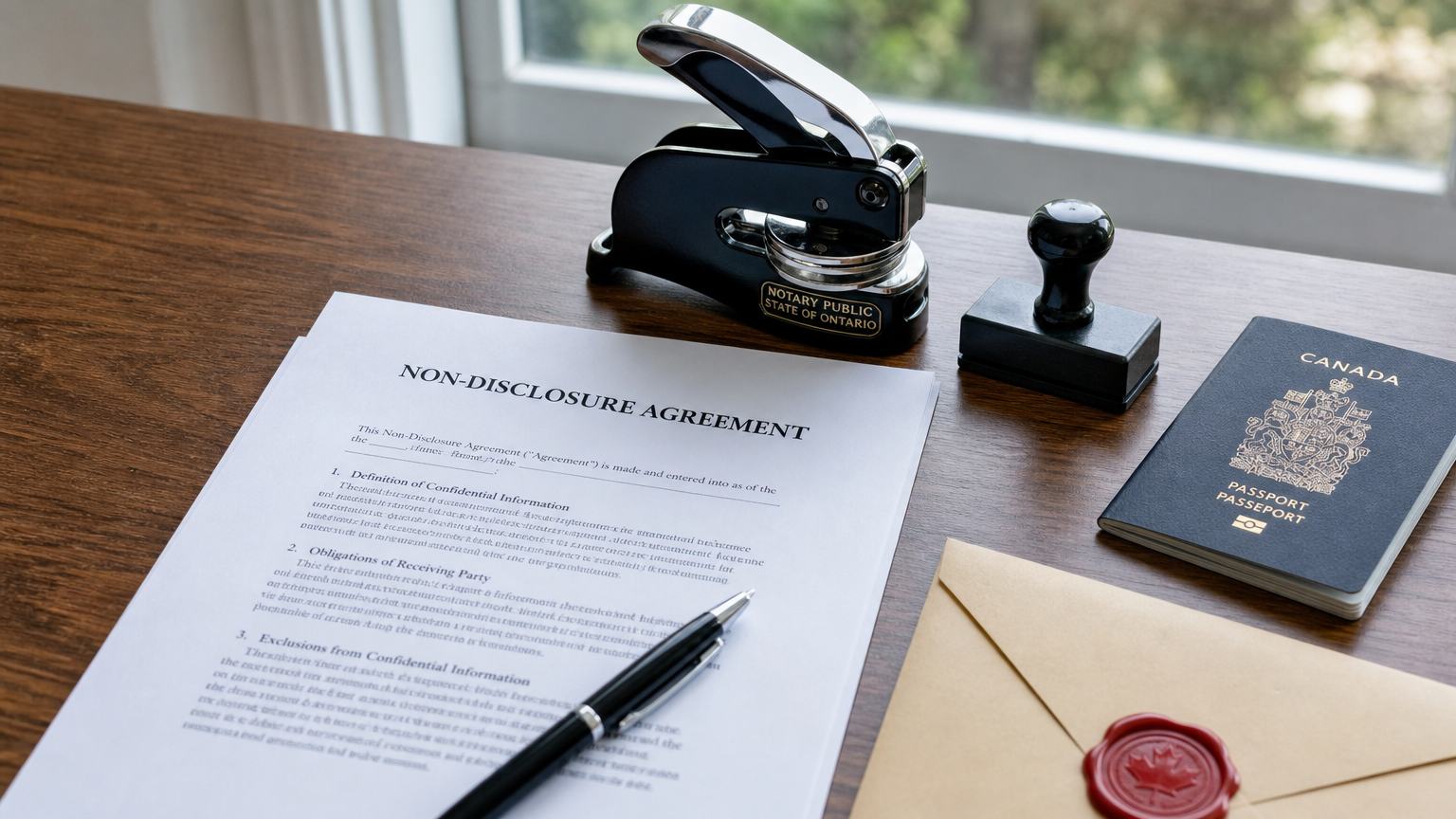
Essential guidance on NDA notarization in Ontario: when it’s required, how the process works, and how to prepare for a smooth notarization.
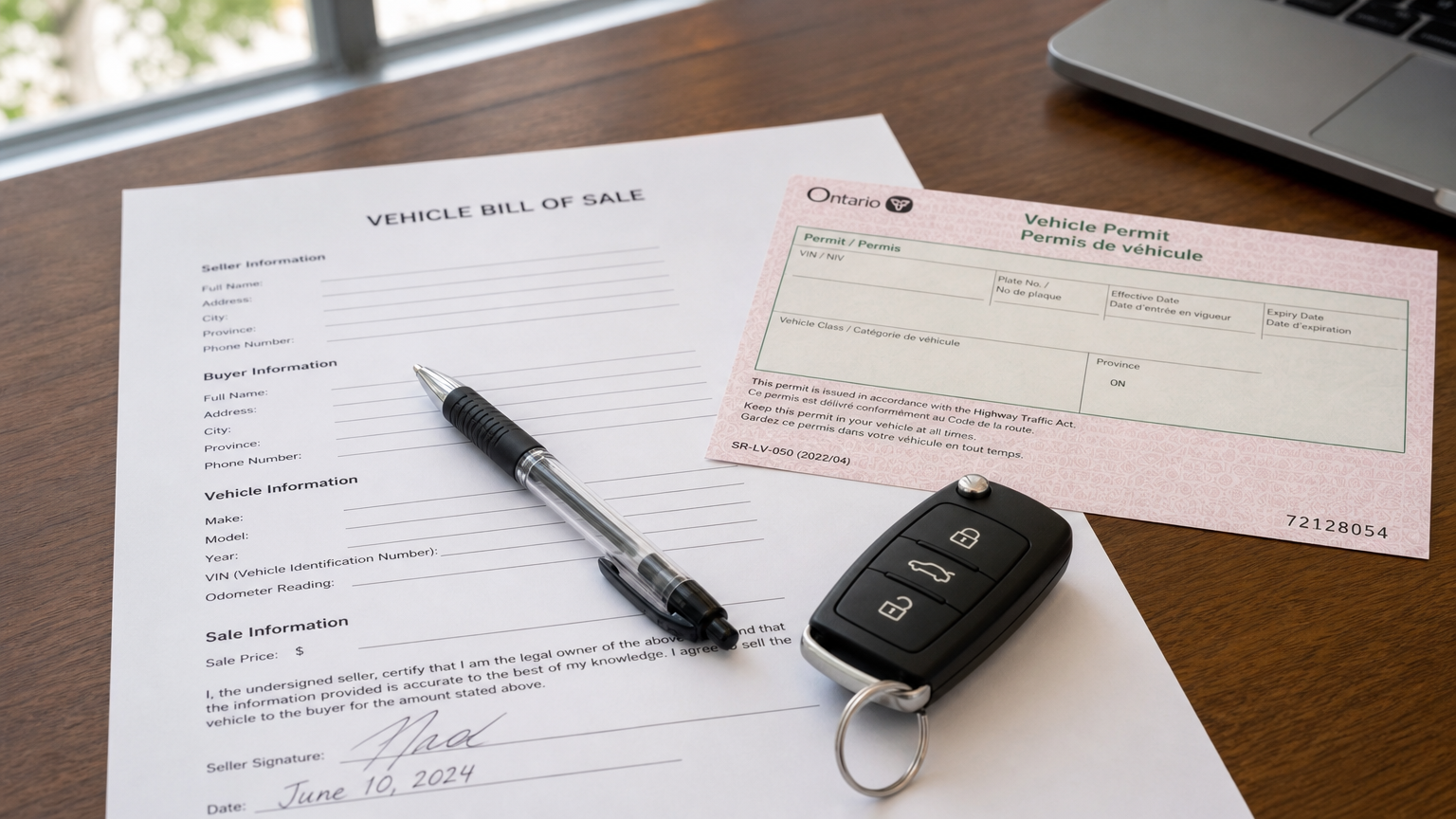
Essential vehicle transfer guidance for Ontario buyers and sellers, plus when notarization and statutory declarations are required.