Introduction
This guide explains the Super Visa for parents and grandparents visiting Canada: who qualifies, what documents are required, how to apply, and common reasons applications are refused. It summarizes official requirements, timelines and key steps so you can prepare a complete application.
Key takeaways
- The Super Visa allows parents and grandparents of Canadian citizens and permanent residents to stay in Canada for up to two years per visit.
- Applicants must meet admissibility rules, have a letter of invitation from a host in Canada, meet income requirements, and obtain private medical insurance valid in Canada for at least one year.
- Decisions on applications depend on correct documentation and proof of ties to the home country; common refusals are missing documents or insufficient proof of financial support.
What is a Super Visa?
The Super Visa is a multiple-entry temporary resident visa specifically for parents and grandparents of Canadian citizens and permanent residents. It permits multiple entries to Canada and allows stays of up to two years at a time without renewing status. The visa itself may be issued for up to 10 years, depending on the applicant’s passport validity and consular processing timelines.
Purpose of the Super Visa
The program aims to enable longer family visits for older relatives while ensuring public health and financial protection through insurance and sponsorship requirements. It is not a pathway to permanent residency; however, holders may travel to Canada more frequently and for extended periods compared with standard visitor visas.
Who is eligible?
- Applicants must be the parent or grandparent of a Canadian citizen or permanent resident.
- They must be admissible to Canada (no unresolved criminality or health issues that would make them inadmissible).
- The applicant must have a letter of invitation from their child or grandchild who resides in Canada.
- The host must meet a minimum necessary income threshold to financially support the visitor.
Invitation letter: what it must include
The invitation letter from the Canadian host should clearly identify both parties, describe the purpose and duration of the visit, and provide a commitment of financial support and accommodation. It is also used to confirm the host meets the required income level for sponsoring the visitor’s stay.
Minimum necessary income (MNI)
Hosts must demonstrate income at or above the minimum necessary income for their household size. The required figure is based on low-income cut-off tables corresponding to the number of people in the household, including the visiting parents or grandparents. Proof of income typically includes recent tax notices or other official income documentation.
Medical insurance requirement
Applicants must obtain private medical insurance from a Canadian insurance provider that is valid for at least one year from the date of entry and covers health care, hospitalization and repatriation. The policy must provide at least a minimum coverage amount as specified by immigration authorities.
Required documents
- Completed application forms for a temporary resident visa (as applicable).
- Letter of invitation from the Canadian host, including a declaration of financial support.
- Proof that the host meets the minimum necessary income (tax documents or official income statements).
- Proof of relationship to the host (birth certificates, marriage certificates, or other civil documents).
- Evidence of private medical insurance valid in Canada for at least one year.
- Valid passport and travel documents.
- Any additional documents requested by the visa office, such as police certificates or medical exam results.
How to apply
Applications can be submitted online or at a visa application centre, depending on the applicant’s country of residence and local processing rules. Complete the required forms, attach all supporting documents, pay the applicable fees, and follow biometric collection instructions if required. Processing times vary by country and season.
Step-by-step process
- Gather required documents including the invitation letter, proof of insurance and proof of relationship.
- Prepare and pay the application fees and any biometric fees.
- Submit the application online or at the designated visa application centre.
- Attend biometric collection or an interview if requested.
- Wait for the decision and, if approved, receive the visa placed in the passport.
Do Super Visa applications need to be commissioned or notarized?
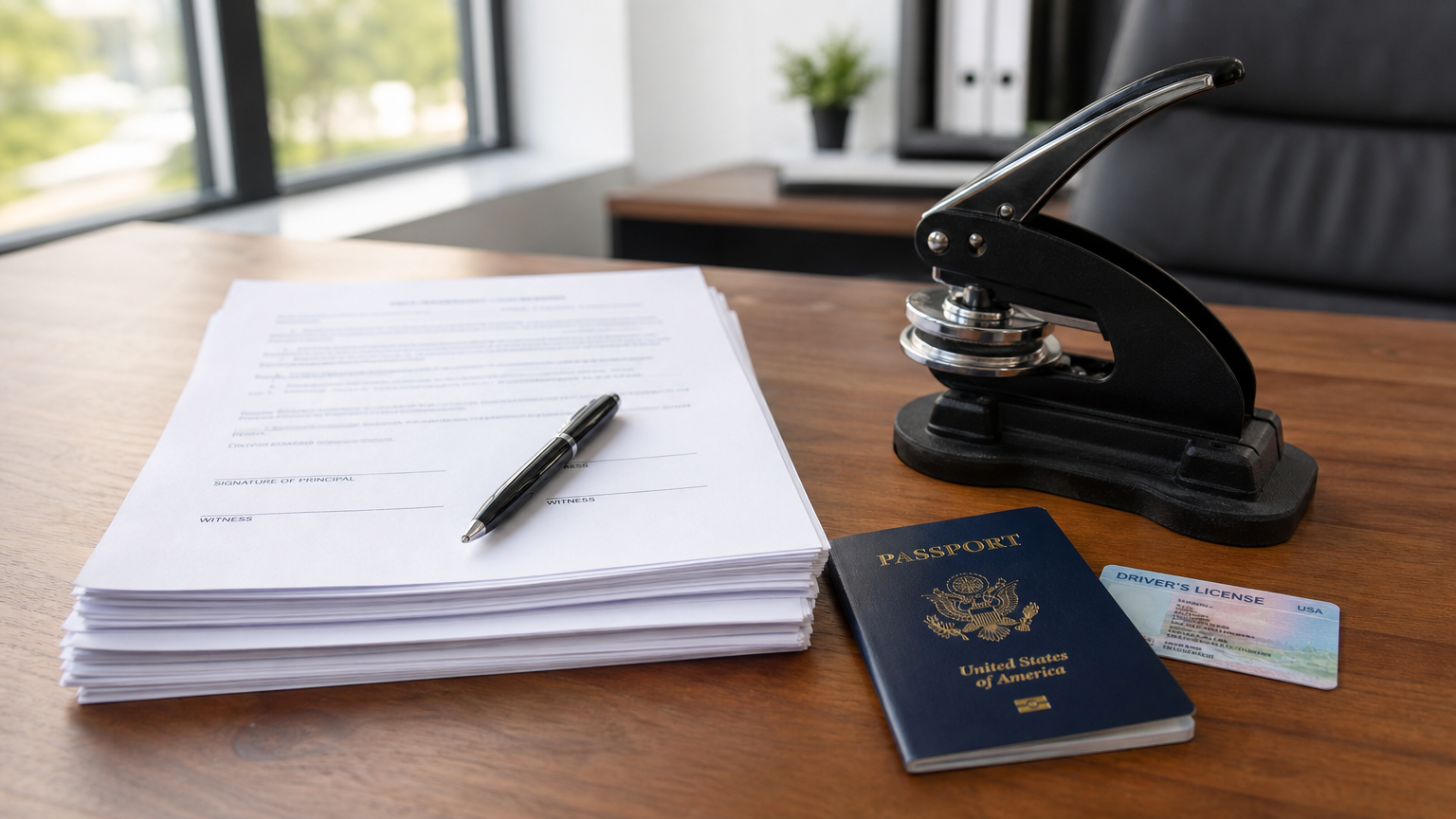
Some documents may require notarization or certification according to the requirements of the visa office. For example, copies of civil documents or sworn statements can require certification by an official notary or commissioner of oaths. Check the specific instructions for your visa office to determine whether documents must be notarized or translated by a certified translator.
Common reasons for refusal
- Insufficient evidence of the relationship between the applicant and the host.
- Missing or inadequate proof of the host’s income or failure to meet the minimum necessary income.
- Inadequate or missing private medical insurance covering the required period and benefits.
- Concerns about the applicant’s ties to their home country or the likelihood of overstaying.
- Incomplete applications or missing supporting documents requested by the visa office.
Tips to strengthen your application
- Include complete, organized documentation verifying relationships and finances.
- Ensure the insurance policy clearly states coverage dates and benefits and is issued by a recognized provider.
- Provide translations and notarizations where required by the visa office.
- Submit recent tax documents for the host to demonstrate ongoing ability to support the visitor.
- Respond promptly to any requests from the visa office for additional documentation.
Frequently asked questions
How long can a Super Visa holder stay in Canada per visit?
Up to two years per entry without needing to renew status.
How long is the visa valid?
The visa itself may be issued for up to 10 years or for the validity period of the applicant’s passport, whichever is shorter.
Can a Super Visa lead to permanent residency?
No. The Super Visa is a temporary resident visa and is not a direct pathway to permanent residency. Holders may, however, later pursue permanent residency through standard immigration programs if eligible.
Conclusion
The Super Visa offers a practical option for parents and grandparents who wish to spend extended time with family in Canada. Success depends on meeting admissibility requirements, providing a complete invitation and financial documentation from the Canadian host, and securing appropriate private medical insurance. Preparing an accurate and well-documented application reduces the chance of delays or refusal.
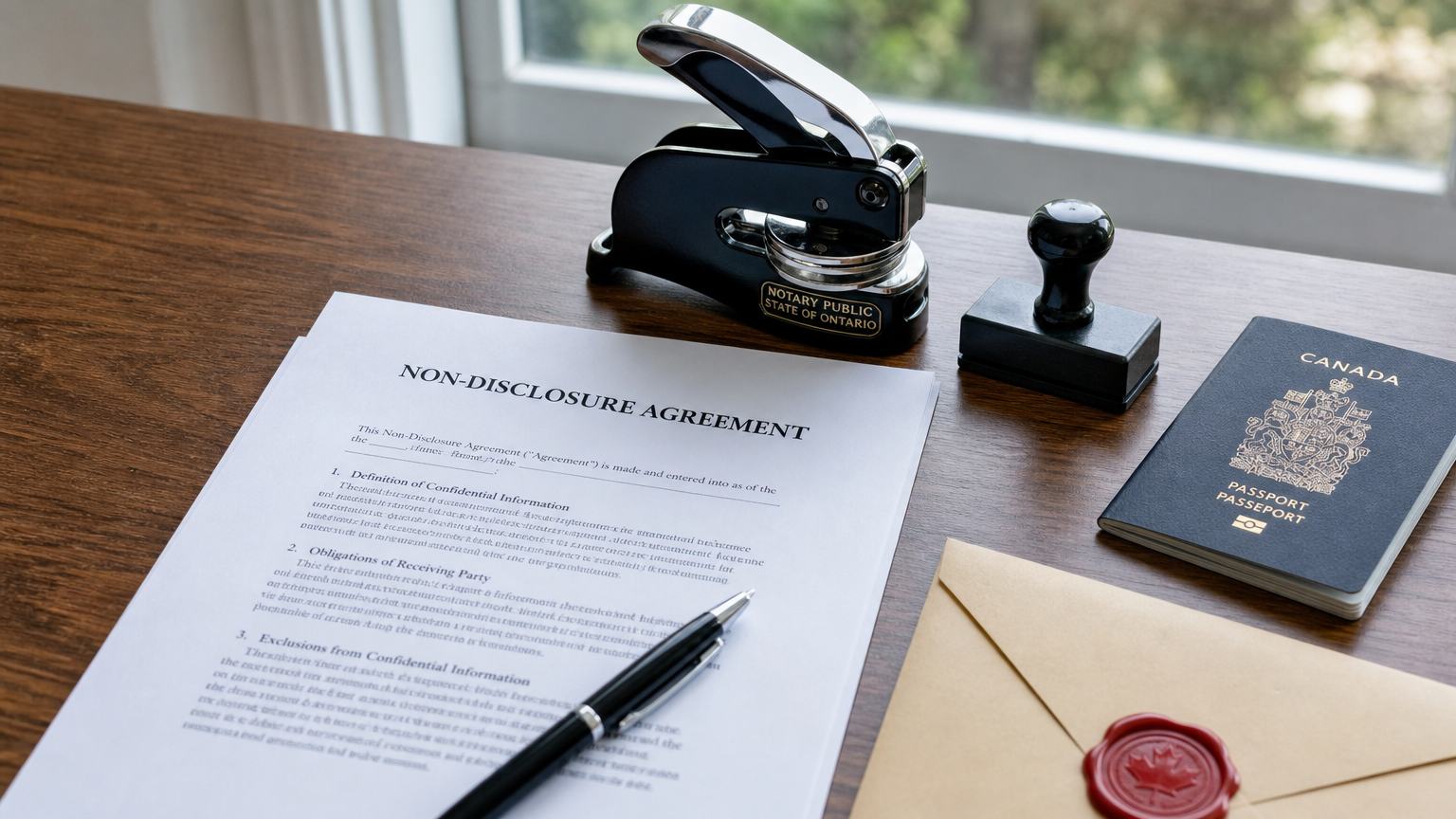
Essential guidance on NDA notarization in Ontario: when it’s required, how the process works, and how to prepare for a smooth notarization.
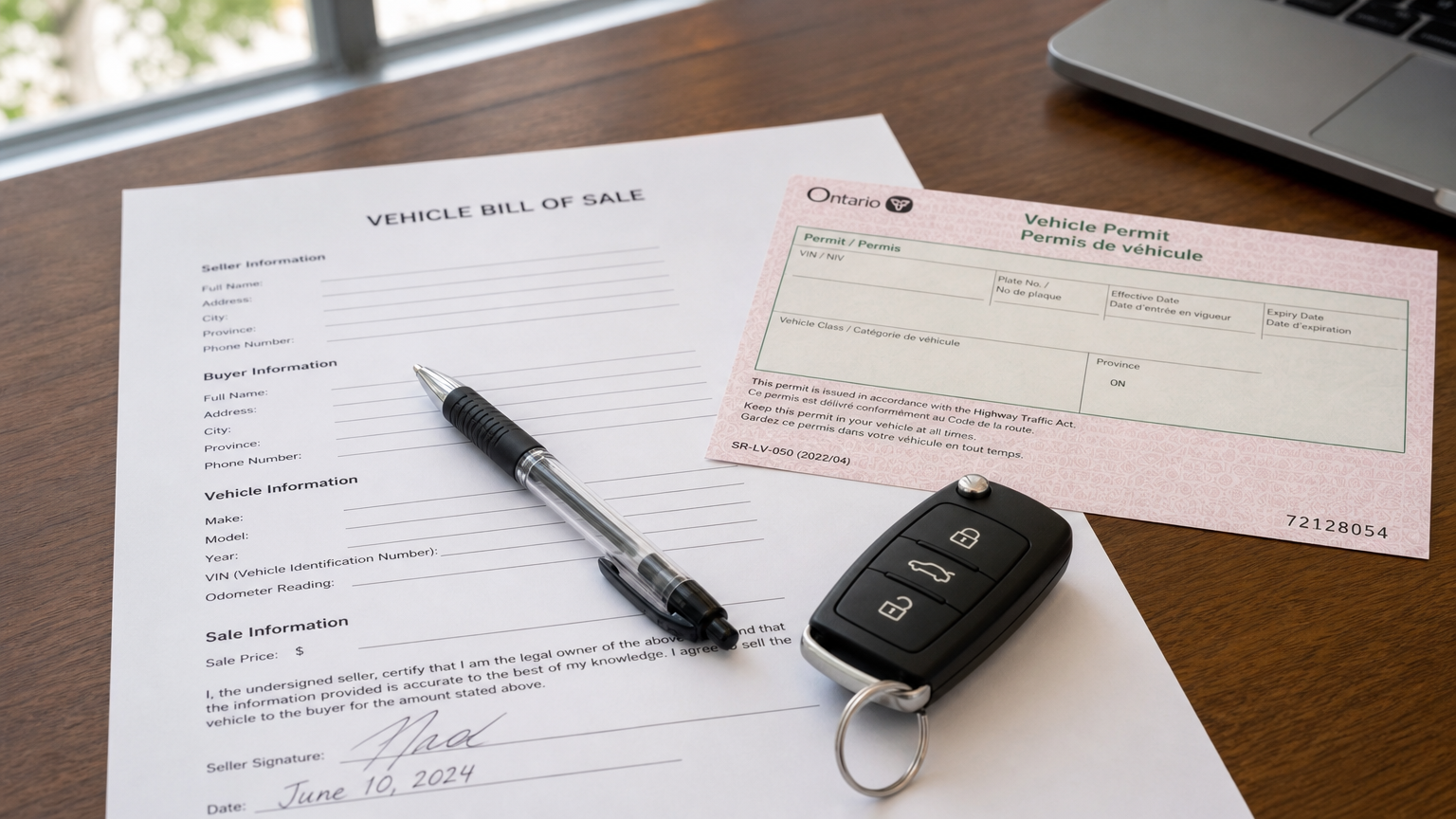
Essential vehicle transfer guidance for Ontario buyers and sellers, plus when notarization and statutory declarations are required.