
Introduction
Preparing official documents for use abroad requires knowing the difference between notarization and an apostille. These two processes are often confused, but they serve different purposes. This guide explains what an apostille is, clarifies the role of a notary public in Canada, lists the common documents that need apostilles, and outlines the typical steps to get a document ready for acceptance by foreign authorities.
What is an Apostille?
An apostille is a government-issued certificate that verifies the authenticity of a public document so it will be recognized in another country. Apostilles are used by nations that participate in the Hague Apostille Convention. Canada became a member of that convention on January 11, 2024, enabling Canadian public documents to receive an apostille. The apostille confirms that the signature, stamp or seal on a document comes from an authorized official within the issuing country and replaces the longer authentication and legalization chains previously required for Hague members.
Common Canadian documents that often need an apostille
- Birth certificates
- Marriage certificates
- Death certificates
- School diplomas and transcripts
- Powers of attorney
Even with an apostille, some foreign authorities may still request certified translations or additional local formalities depending on the destination country’s rules.
The Role of a Notary Public in Canada
A notary public’s core responsibilities are domestic: they verify the identity of signatories, witness signatures, and certify true copies of documents. Notaries help ensure that a signature is genuine and that the person signing a document understands and agrees to its contents. They may also administer oaths and certify affidavits.
What a notary cannot do
A notary public does not issue apostilles. Notarization and apostille serve distinct functions: notarization authenticates signatures and the execution of documents within the issuing country, while an apostille certifies that the document and the official who signed or sealed it are recognized by the issuing government for international use under the Hague Convention.
Who Issues an Apostille?
Apostilles are issued by a government authority designated to perform that function. The exact issuing office can vary by country and by the type of document. The apostille is attached to the original public document or to an official copy, confirming the authority of the signer or the seal. Because the apostille is a government-level authentication, it is separate from any notarization performed by a private notary public.
Typical Steps to Prepare a Document for Use Abroad
- Obtain the original public document or a certified copy from the issuing office (for example, vital statistics for birth or marriage records).
- If required by the receiving country, have signatures on the document notarized by a notary public to validate identity and execution.
- Submit the original or certified copy to the competent government authority that issues apostilles for attachment of the apostille certificate.
- Arrange for any required certified translations into the destination country’s language and complete any additional local steps requested by the receiving authority.
Following the correct sequence—starting with obtaining or notarizing the document and finishing with the apostille—helps avoid delays or rejection by foreign authorities.
When Authentication Instead of an Apostille Is Required
If the destination country is not a member of the Hague Apostille Convention, an apostille will not be accepted. In those cases, documents typically require a formal legalization procedure that involves authentication by the issuing country’s appropriate government office and subsequent legalization by the destination country’s consulate or embassy. Always confirm whether the receiving country accepts apostilles or requires traditional legalization.
Conclusion
Notarization and apostilles are complementary but different steps in preparing documents for international use. Notaries authenticate signatures and certify copies within Canada, while apostilles are government-issued certificates that enable recognition across Hague Convention countries. Since Canada joined the Hague Apostille Convention on January 11, 2024, many Canadian public documents can receive an apostille, simplifying cross-border acceptance among member states. Check the receiving country’s requirements carefully—some documents may still need notarization, certified translations, or additional legalization depending on local rules.

Essential guidance on NDA notarization in Ontario: when it’s required, how the process works, and how to prepare for a smooth notarization.
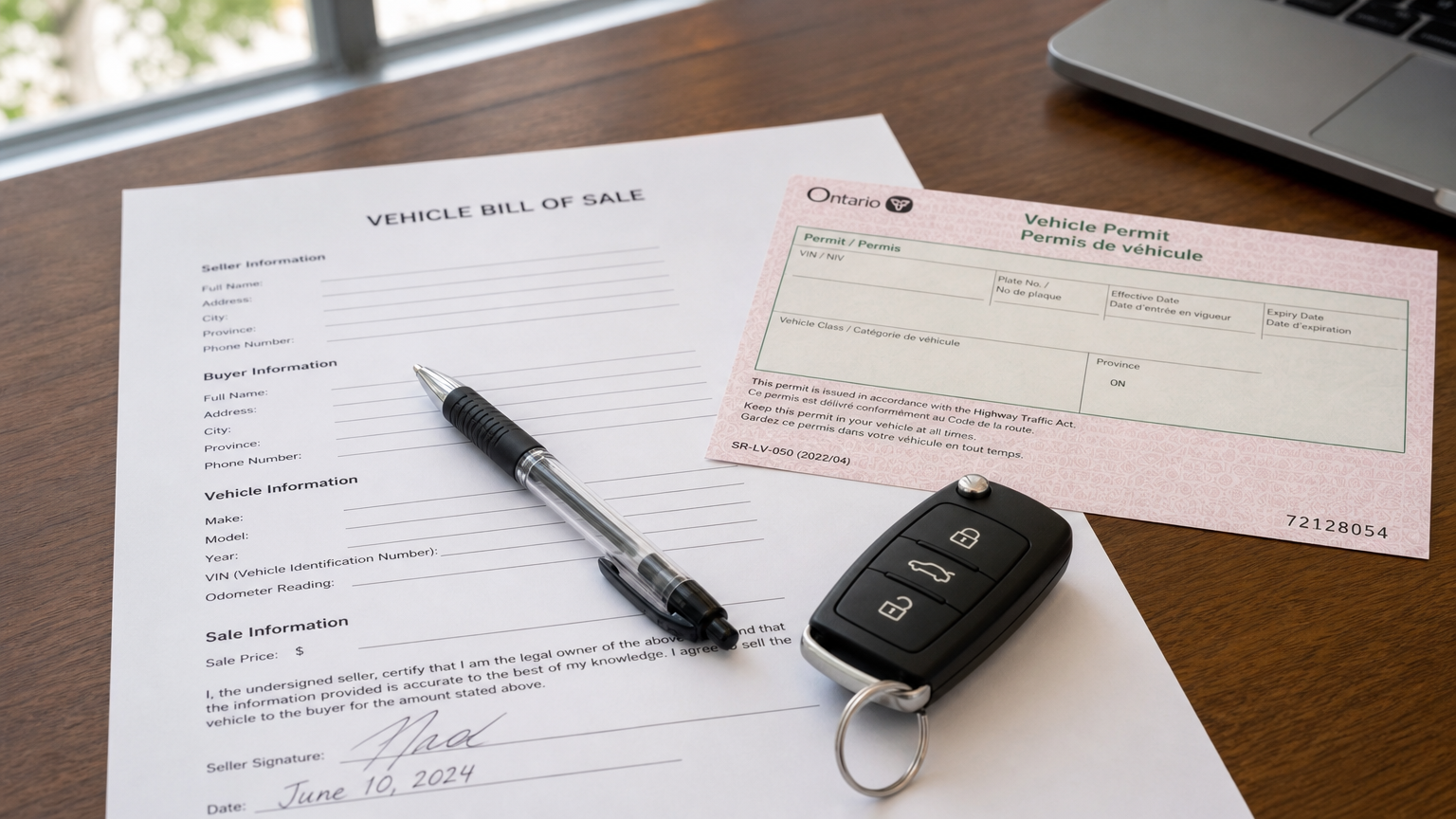
Essential vehicle transfer guidance for Ontario buyers and sellers, plus when notarization and statutory declarations are required.