
Transferring ownership of a used car involves more than handing over keys — a proper vehicle transfer follows Ontario law, meets Ministry of Transportation requirements, and protects both buyer and seller from future liability. This guide explains the core legal terms, when notarization is needed, and common pitfalls to avoid during a private sale.
- What is a vehicle transfer?
- Why vehicle transfers are more than a handshake
- Key legal terms in a transfer
- When notarization or a statutory declaration is required
- Out-of-province, exports and gift transfers
- Common pitfalls and how to avoid them
- Conclusion
What is a vehicle transfer?
A vehicle transfer is a legal transaction that changes ownership of a motor vehicle and is governed in Ontario by the Highway Traffic Act and Ministry of Transportation rules. At the moment ownership changes hands, both the seller and buyer accept distinct rights and responsibilities — from payment and delivery of documents to obligations around registration, insurance and any outstanding debts on the vehicle.
Why vehicle transfers are more than a handshake
Private sales can appear simple, but incomplete or incorrect documentation creates practical and legal problems. Mistakes like leaving a lien undisclosed, missing the permit transfer deadline at the provincial registry, or submitting an incomplete bill of sale can delay registration, transfer debt to the buyer, or leave the seller exposed to traffic infractions committed after the sale.
Key legal terms in a transfer
Understanding the language used in vehicle sale documents reduces surprises. Below are the most important terms you will encounter.
Vendor and Purchaser
The vendor is the person selling the vehicle; the purchaser is the person buying it. Both names should be clearly recorded on the bill of sale and the vehicle permit to establish who held title before and after the transaction.
Bill of Sale
A bill of sale documents the transaction details: buyer and seller names, vehicle identification number (VIN), make and model, sale price, odometer reading and the date of sale. It creates a written record of the agreement and is often required by the registry to process ownership changes.
Lien
A lien is a legal claim on the vehicle by a lender or creditor. If a lien exists and is not cleared or disclosed, the creditor may pursue the vehicle or its value even after ownership transfers. Buyers should check for outstanding liens before completing a purchase and sellers must disclose known liens.
Vehicle Permit and Registration
The vehicle permit shows who is currently registered as the owner. The buyer must complete the registration or permit transfer at the registry as required by the Ministry of Transportation. Missing the permit transfer deadline or failing to register properly can create exposure for either party depending on timing and local rules.
When notarization or a statutory declaration is required
Notarization or a sworn statutory declaration is not necessary for every private sale, but specific situations commonly require it. Examples include transfers involving buyers from another province, vehicles being exported, and some gift transfers. Registries or receiving institutions frequently demand a notarized bill of sale or declaration to verify signatures, confirm legal statements, or resolve identification issues.
Why a notarized document matters
A notary or commissioner certifies the identity of signatories and confirms signatures were made willingly. That extra layer of verification helps registries accept documents from outside jurisdictions and reduces the likelihood of disputes over the authenticity of the transaction.
Out-of-province, exports and gift transfers
Sales where the buyer lives in another province, where the vehicle will be exported, or where the vehicle is transferred as a gift carry additional documentation requirements. Export processes may require customs paperwork and proof of ownership; registries may ask for notarized forms or statutory declarations to recognize an out-of-province sale. When gifting a vehicle, titling and tax implications can differ from a standard purchase, so clear, documented evidence of the transfer is essential.
Common pitfalls and how to avoid them
Many disputes stem from avoidable errors. Follow these practical steps to reduce risk:
- Complete a detailed bill of sale with VIN, odometer reading, sale price and date.
- Confirm and disclose any liens; obtain a lien release if applicable.
- Ensure both parties keep copies of all signed documents and receipts.
- Register or transfer the vehicle permit at the registry within the required timeframe set by the Ministry of Transportation.
- When dealing with out-of-province buyers, exports or gifts, check whether a notarized bill of sale or statutory declaration is required and obtain it before attempting registration.
- Consider a simple written statement of “sold as-is” if that reflects the agreement; however, this does not absolve sellers from disclosing known liens or defects where the law requires disclosure.
A careful, documented vehicle transfer protects both buyer and seller. Knowing the essential terms — vendor and purchaser, bill of sale, lien, and the vehicle permit — and recognizing when notarization or a statutory declaration is required will reduce delays and legal exposure. When in doubt, obtain clear, signed documentation and confirm requirements with the registry before completing the sale.

Clear, practical guide to completing an Affidavit of Service in Ontario Small Claims Court, with who should serve, methods, and filing tips.

Discover why you should notarize will in Ontario to avoid delays, satisfy banks and handle international assets—practical steps and legal insights.
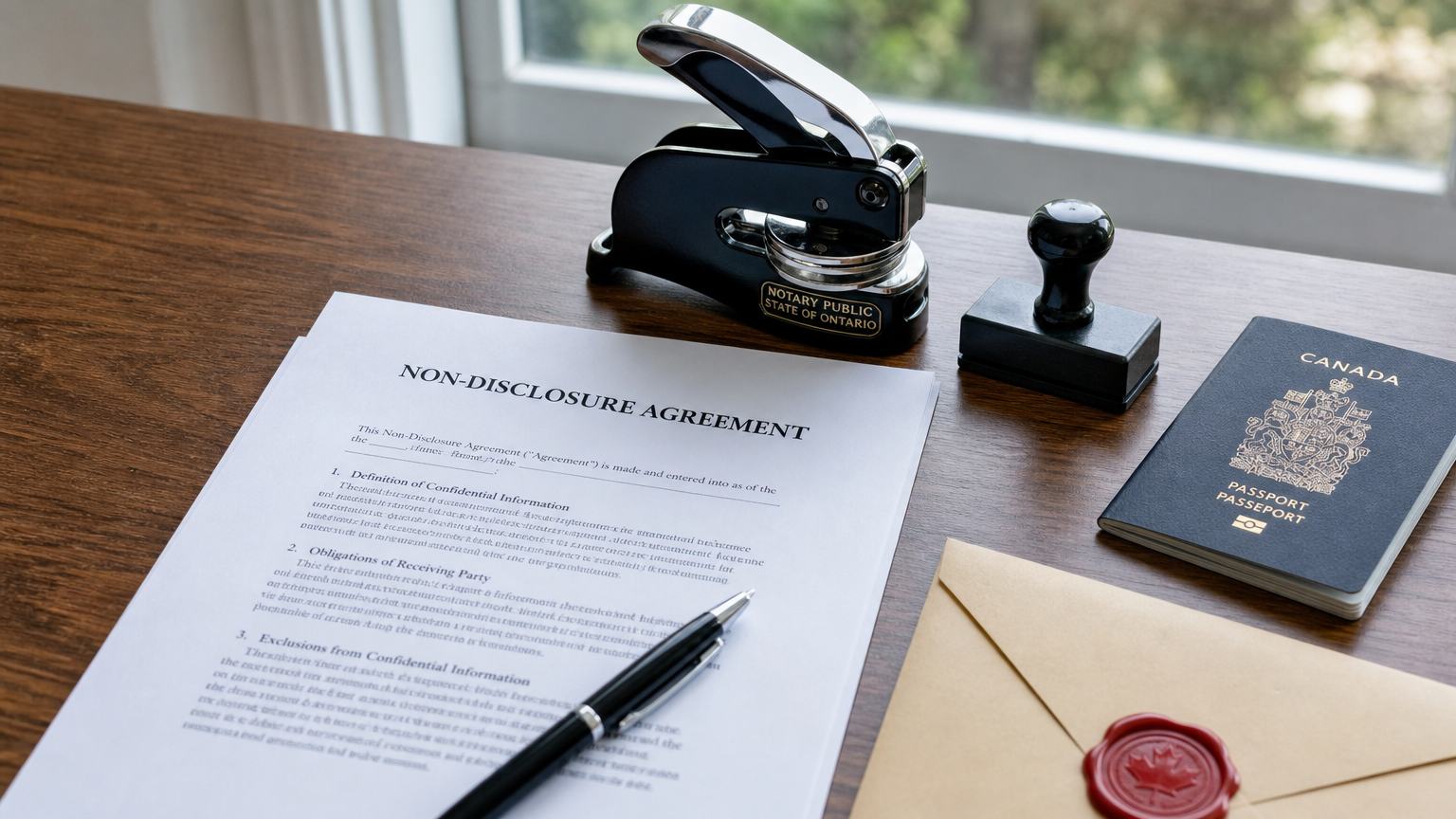
Essential guidance on NDA notarization in Ontario: when it’s required, how the process works, and how to prepare for a smooth notarization.