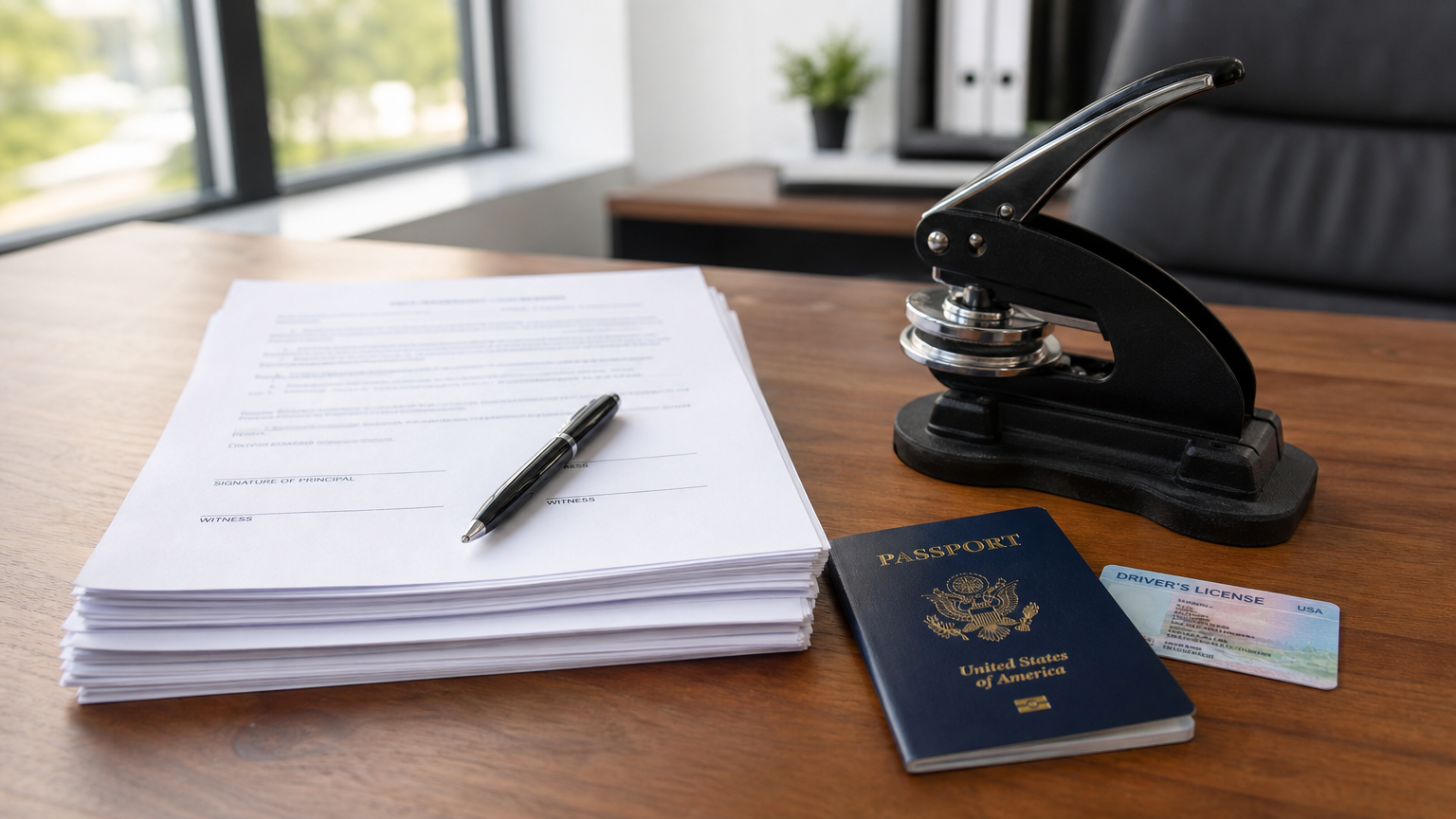
If you are planning to marry overseas, apply for a spousal visa, or complete certain legal procedures abroad, you may be asked for official proof that you are not currently married. Many countries require a “single status certificate” or “certificate of no impediment” before they will register a marriage or process certain immigration applications.
Canada does not issue a single, nationwide “single status certificate”. Instead, several different Canadian documents can serve this purpose depending on the destination country’s requirements. This guide explains what those documents are, how to obtain them, and how to prepare them for international use.
What is a Single Status Certificate?
A single status certificate is a document that confirms a person is not married and is legally free to marry. Because Canada does not issue one standardized certificate, Canadians typically provide one of several alternative documents that serve the same purpose.
Foreign authorities may request proof of single status for:
- Marriage ceremonies conducted outside Canada
- Spousal or family immigration applications
- International adoptions
- Legal matters involving marital status
The exact document required depends on the country, and sometimes even the specific registry office within that country.
Why you Might Need Proof of Single Status
Many countries require official confirmation of marital status to prevent:
- Bigamy or polygamy
- Fraudulent marriages
- Invalid marriage registrations
- Incorrect immigration filings
You could be asked for proof of single status when:
- Registering a marriage abroad
- Applying for a fiancé(e) or spousal visa
- Completing family reunification applications
- Participating in religious or civil marriage ceremonies
- Filing legal documents that require marital status verification
Common Canadian Documents Accepted as Proof of Single Status
Canadians typically use one of the following documents to demonstrate they are single:
1. Notarized Affidavit of Single Status
A notarized affidavit is the most widely accepted option. It is a sworn statement declaring that you are not married. It typically includes:
- Full legal name
- Date of birth
- Current address
- Citizenship
- Passport number (if required)
- A declaration that you are not married and free to marry
A notary public or commissioner for oaths must witness and notarize the affidavit.
Additionally, many countries require the affidavit to be:
- Notarized Apostilled (for Hague Convention countries)
- Authenticated and legalized (for non‑apostille countries)
2. Provincial or Territorial Marriage Search Letter
A marriage search letter is issued by the provincial or territorial vital statistics office. It confirms that no marriage record exists in your name within that province or territory.
This document is often accepted because it comes directly from a government authority. Each province has its own process, but generally you must:
- Submit identification
- Provide personal details (full name, date of birth, parents’ names)
- Pay a processing fee
- Processing times vary by province
3. Federal Statement in Lieu of Certificate of Non‑Impediment
Some countries expect a federal “certificate of non‑impediment.” Canada does not issue this certificate, but Global Affairs Canada may issue a Statement in Lieu of Certificate of Non‑Impediment to Marriage Abroad. This document is used when:
- A foreign authority refuses to accept a provincial document
- A notarized affidavit is not sufficient
- The country specifically requests a federal confirmation
It is important to note that not everyone is required to obtain this statement. Global Affairs Canada issues it only in certain circumstances.
How to Obtain Each Document
Notarized affidavit of single status
1. Draft the affidavit
Include full name, date of birth, address, and a clear declaration that you are not married.
2. Visit a notary public
Sign the affidavit in front of the notary. They will verify your identity and notarize the document.
3. Prepare for international use
Depending on the destination country, you may need:
- Apostille (for Hague Convention countries)
- Authentication + legalization (for non‑apostille countries)
- Certified translation
Provincial or Territorial Marriage Search Letter
1. Contact the vital statistics office
Request a marriage search or “no record of marriage” letter.
2. Provide identification
Usually government‑issued ID and personal details.
3. Pay the fee
Fees vary by province.
4. Wait for processing
Processing times range from a few days to several weeks
Federal Statement for Marriage Abroad
1. Confirm the foreign authority’s requirements
Only request this document if the foreign authority specifically asks for federal confirmation.
2. Contact Global Affairs Canada
Inquire whether they can issue a Statement in Lieu of Certificate of Non‑Impediment.
3. Submit required documents
This may include identification, proof of citizenship, and a notarized affidavit.
4. Prepare for international use
This document may also require apostille or legalization
Preparing Documents for Use Abroad
Many countries require additional steps before accepting Canadian documents:
Apostille (Hague Convention Countries)
Canada joined the Hague Apostille Convention in 2024. Documents destined for apostille‑member countries require an apostille instead of consular legalization. Apostilles are issued by:
- Provincial authorities (for provincial documents)
- Global Affairs Canada (for federal documents)
Authentication and Legalization (Non‑Apostille Countries)
Countries not part of the Hague Convention require:
- Authentication
- Legalization at the destination country’s embassy
Certified Translations
If the receiving country’s official language differs from English or French, you may need:
- A certified translation
- A translator’s affidavit
- Apostille or legalization of the translation
Validity Window
Some authorities accept documents only if issued within a set time frame (for example, three months). To be sure, you can confirm the acceptable validity period in advance.
Checklist and Timeline
What to keep in mind
- Confirm the exact document required
- Determine whether apostille or legalization is needed
- Gather identification
- Prepare or order the document
- Arrange certified translations
- Begin apostille or legalization steps
- Allow extra time for processing
Timeline of processing times
The processing times can vary based on appointment times (if applicable), availability, and demand, so it’s important to note that this timeline is not definitive. These are the typical processing times, based on average experiences:
- Notarized affidavit: same day
- Marriage search letter: 1-4 weeks
- Federal statement: varies
- Apostille: 1-2 weeks
- Legalization: 1-6 weeks
Common Mistakes (and How to Avoid Them)
- Assuming Canada issues a single status certificate
- Canada doesn’t. You can use one of several documents (noted above) to prove your single status
- Requesting the wrong document type
- Make sure to confirm which document you need to submit, since each document plays a different role
- Not checking country‑specific requirements
- Not all countries have the same requirements. Check here to see if your destination country is a Hague Apostille Convention member
- Forgetting apostille or legalization
- Once you know which document you need, confirm the next step: apostille (for Hague members) or legalization (for non-Hague members)
- Using uncertified translations
- Make sure to get a certified translation from a legitimate service
- Waiting until the last minute
- Providing incomplete personal details
- Always include everything that’s required and ask for clarification if there’s any.
Frequently Asked Questions (FAQ)
1. Does Canada issue a single status certificate?
No. Canada does not issue one standardized certificate. Instead, Canadians use affidavits, marriage search letters, or federal statements.
2. Which document is most commonly accepted?
A notarized affidavit of single status is the most widely accepted worldwide. However, it does not guarantee acceptance.
3. Do I need an apostille?
If the destination country is part of the Hague Apostille Convention, yes.
4. Do I need legalization?
If the destination country is not part of the Hague Convention, then yes, legalization is required.
5. Can I use a marriage search letter alone?
Some countries accept it, but others require a notarized affidavit or federal statement.
6. How long does it take to get a marriage search letter?
Processing times vary by province, but it’s typically 1-4 weeks.
7. Do I need a translation?
If the receiving country’s official language differs from English or French, then a certified translation is usually required.
8. Can I marry abroad without proof of single status?
Most countries require it. Without the proper documentation, your marriage may not be registered.
Essential guidance on NDA notarization in Ontario: when it’s required, how the process works, and how to prepare for a smooth notarization.
Essential vehicle transfer guidance for Ontario buyers and sellers, plus when notarization and statutory declarations are required.