
Introduction
If you need to use Canadian documents in another country, attestation is often a mandatory step. Attestation confirms that signatures, seals and issuing authorities on a document are genuine so foreign institutions and government bodies can accept the document as legally valid. This guide explains what document attestation means in Canada, when it is required, the standard steps involved and practical tips to avoid delays.
What is Canadian document attestation?
Document attestation is the formal process for verifying a document’s authenticity for use outside Canada. It usually begins with a local certification—such as a notary public, commissioner of oaths or the issuing government office—confirming that the document or signature is genuine. For international use, Canadian documents are then authenticated by the federal authority responsible for foreign affairs, which provides confirmation that the local certification is valid. Finally, some destination countries require additional legalization by their embassy or consulate.
Which countries require attestation?
Countries that are not parties to the Hague Apostille Convention typically require authentication and legalization rather than an apostille. Several countries in the Middle East and other regions commonly request document attestation and legalization before accepting foreign documents for employment, education, immigration or business. Requirements differ by destination, so always verify the specific process and any additional conditions that apply.
Common types of documents that need attestation
- Personal documents: birth, marriage, death certificates, national ID and passports;
- Educational documents: diplomas, transcripts, degree certificates;
- Corporate and commercial documents: articles of incorporation, board resolutions, powers of attorney;
- Professional and employment documents: licenses, reference letters, contracts.
Step-by-step attestation process
1. Confirm destination-country requirements
Start by checking the exact requirements with the embassy or consulate of the destination country. Confirm whether they accept original documents, certified true copies, require a translation, or specify particular formats for seals and signatures.
2. Obtain the required local certification
Have the document signed or certified by the appropriate Canadian authority. This may be a notary public, a commissioner of oaths, a university official or the provincial vital statistics office (for birth or marriage certificates). For some documents, an official long-form copy issued directly by the provincial authority is necessary.
3. Apply for federal authentication
The next step is authentication by the federal department responsible for foreign affairs. That office verifies the signature or seal of the local certifying official and attaches an authentication certificate. Authentication confirms to foreign officials that the local certification is legitimate.
4. Legalization at the destination country’s mission
After federal authentication, many countries require legalization by their embassy or consulate in Canada. The embassy applies its own certificate, stamp or sticker to confirm acceptance of the federal authentication. Only after this legalization will the document typically be accepted by authorities in the destination country.
5. Translations when required
If the destination country does not use English or French, you may need a certified translation. The translation itself may need to be notarized, authenticated and legalized following the same steps as the original document.
Practical tips to avoid delays
- Begin the process well in advance—authentication and legalization can take days or several weeks depending on processing times and appointment availability.
- Do not sign documents in advance unless instructed; many authorities require the certifying official to witness or verify the signature.
- Use official or long-form copies for vital records rather than photocopies when possible.
- Confirm whether certified true copies are acceptable in place of originals for your specific purpose.
- Check whether the destination country accepts electronic submissions or requires original hardcopy documents.
Conclusion
Attestation makes Canadian documents legally recognizable abroad by confirming the authenticity of signatures and seals through local certification, federal authentication and, when required, embassy legalization. Because rules vary by country and document type, verify the destination’s requirements early, prepare the correct originals or certified copies, and allow sufficient time for notarization, federal authentication and consular legalization. Following the correct sequence of steps will reduce the risk of rejected submissions and ensure your documents are accepted overseas.
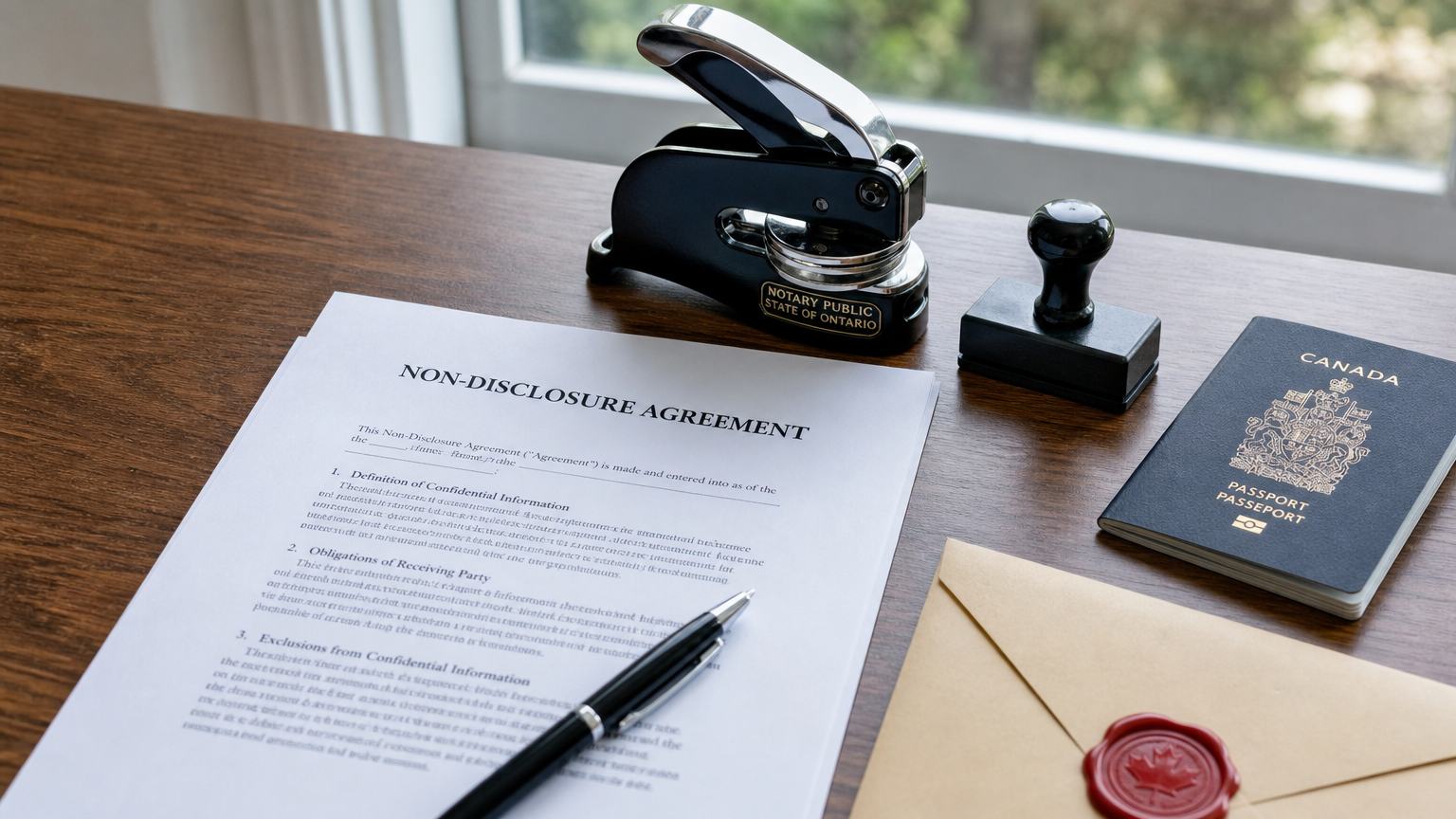
Essential guidance on NDA notarization in Ontario: when it’s required, how the process works, and how to prepare for a smooth notarization.
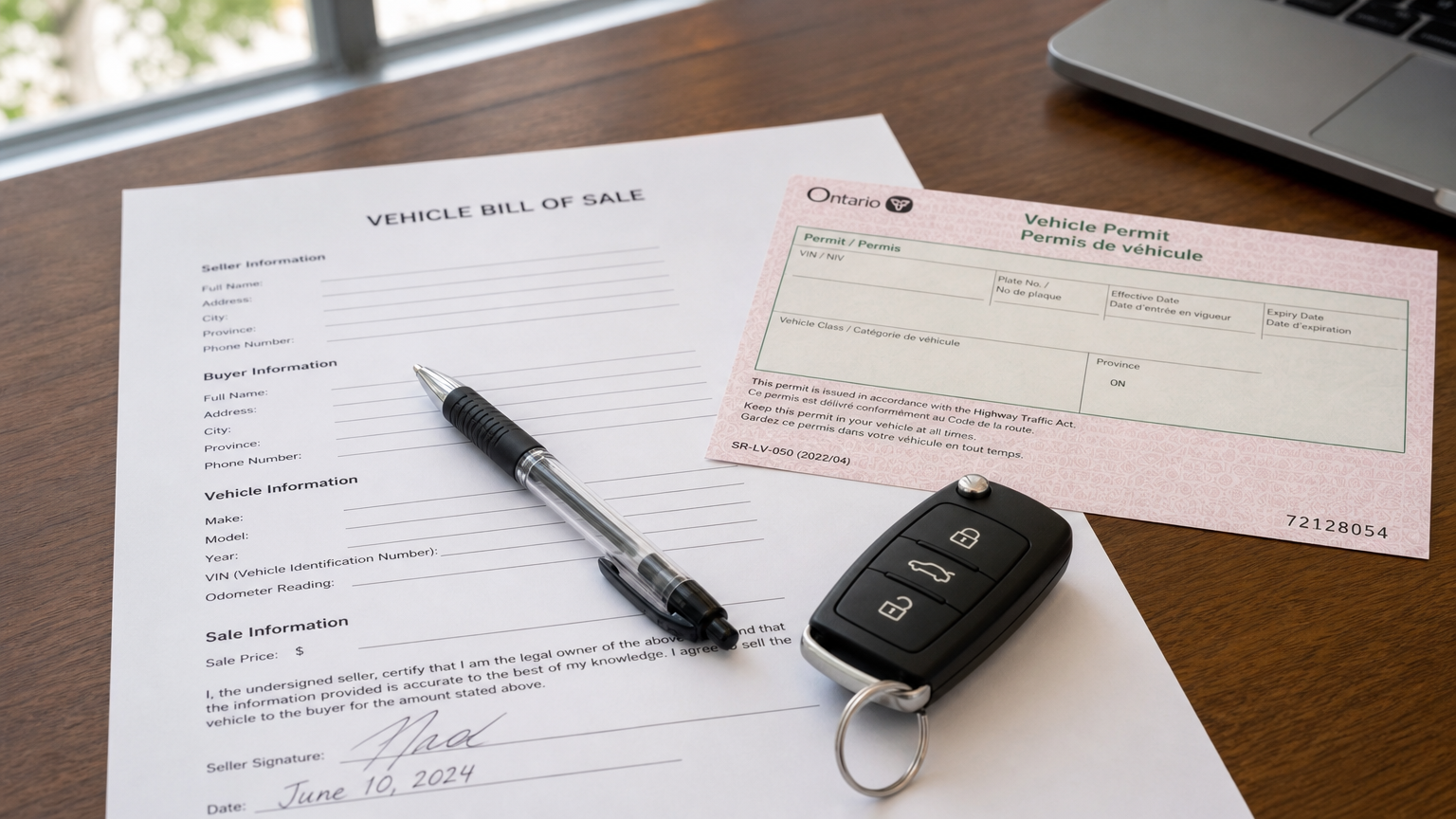
Essential vehicle transfer guidance for Ontario buyers and sellers, plus when notarization and statutory declarations are required.