
Introduction
When Canadian documents are needed outside Canada—for immigration, study, employment, or business—authorities in the receiving country often require proof that those papers are genuine. The Hague Apostille Convention created a streamlined way to certify public documents for international use, but the practical steps vary depending on where you plan to use the documents. This guide explains what an apostille is, how it works, which kinds of Canadian documents are commonly involved, and the typical paths to making documents acceptable overseas.
What an apostille is and what it does
The apostille is a standardized certificate established by the Hague Convention of October 5, 1961. It confirms the authenticity of a document by verifying the signature, official seal or stamp, and the authority of the person who signed or certified the document. An apostille does not attest to the truth of the document’s contents; it only confirms that the document was issued or certified by a recognized authority.
Which countries use apostilles
Countries that have joined the Hague Apostille Convention accept apostilles in place of the older multi-step legalization process. For countries that are not party to the Convention, documents typically must go through an authentication and consular legalization process at the embassy or consulate of the destination country.
Common Canadian documents that may need certification
- Birth and death certificates
- Marriage licences and divorce decrees
- Academic diplomas and transcripts
- Court records and police clearances
- Business records and corporate documents
Typical paths to make Canadian documents acceptable abroad
The procedure depends on the destination country’s requirements. Two common approaches are:
-
If the receiving country is a party to the Hague Convention: obtain an apostille that verifies the issuing authority and signatures on the document. The apostille replaces further embassy legalization for Convention members.
-
If the receiving country is not a party: follow the authentication and legalization route. This generally means having the document certified by the appropriate provincial or federal authority and then legalized by the destination country’s embassy or consulate.
Steps to prepare Canadian public documents
- Identify the exact document(s) required and confirm which authority issued or certified them (provincial, territorial, or federal).
- Check whether the destination country accepts apostilles or requires consular legalization.
- If an apostille is accepted, obtain the apostille from the competent authority designated to issue apostilles for documents from the issuing jurisdiction.
- If consular legalization is required, complete any needed provincial authentication first and then submit the authenticated document to the destination country’s embassy or consulate for legalization.
- Translate any documents if the destination country requires a certified translation, and have translations authenticated or legalized as required.
Practical tips
- Start the process well before deadlines—processing times vary by office and by country.
- Confirm whether original documents, certified copies, or notarized copies are needed.
- Keep copies of everything submitted and request receipts or tracking information when available.
- Many jurisdictions require specific forms, fees, or appointment bookings—verify those details with the issuing or certifying office.
Conclusion
The Hague Apostille Convention, adopted October 5, 1961, provides a simplified way to certify public documents between participating countries by using a single apostille certificate to confirm authenticity. For Canadians, the correct route—apostille or consular legalization—depends on the destination country’s rules and the type of document. Confirm requirements early, follow the appropriate provincial or federal steps, and allow sufficient time to complete authentication, apostille, or legalization so your documents are accepted abroad without delay.
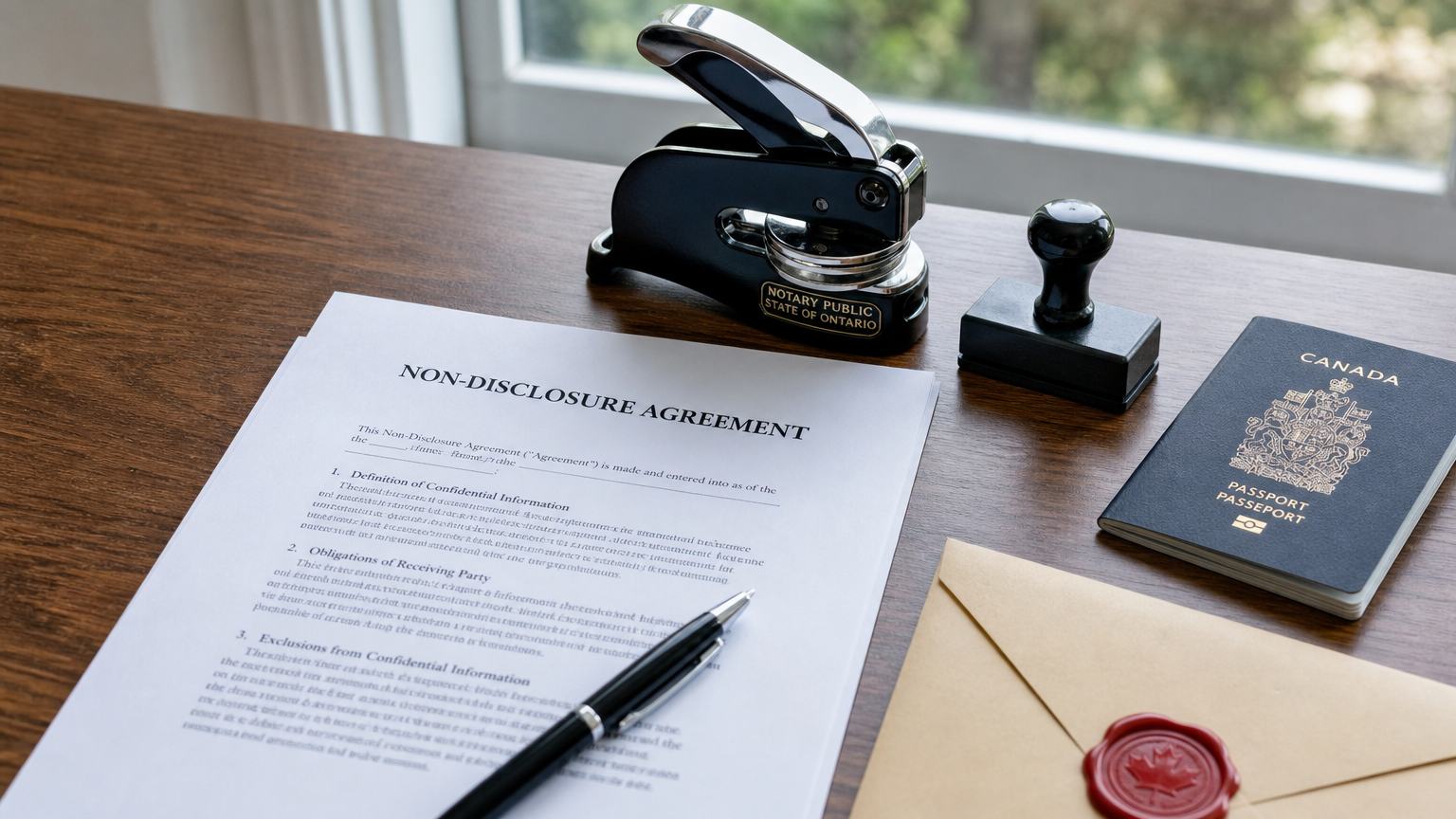
Essential guidance on NDA notarization in Ontario: when it’s required, how the process works, and how to prepare for a smooth notarization.
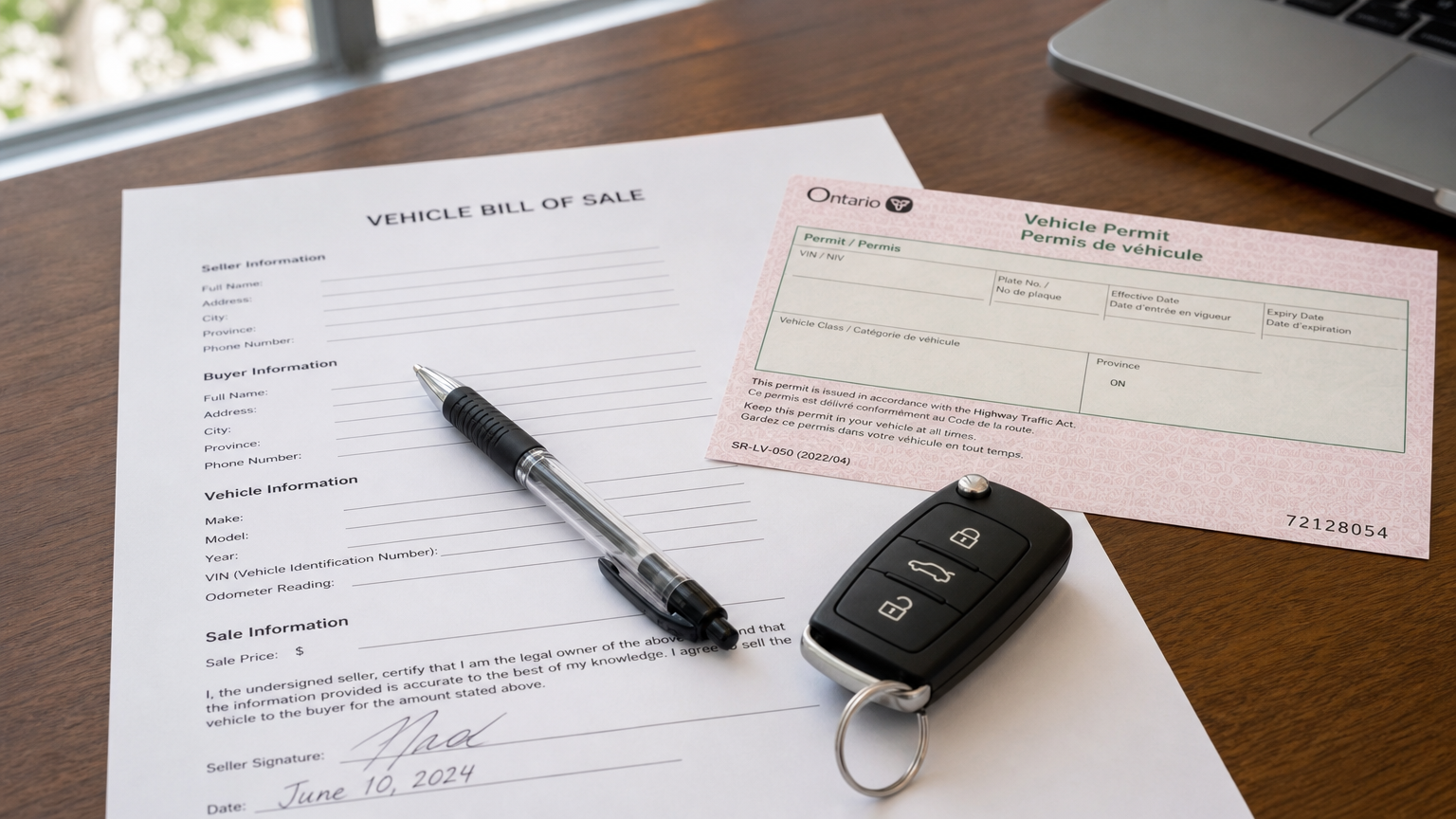
Essential vehicle transfer guidance for Ontario buyers and sellers, plus when notarization and statutory declarations are required.