
Introduction
If you need to use an Ontario-issued or notarized document outside Canada, you will generally need an official certification that the signature, seal, or stamp on that document is genuine. Canada joined the Hague Apostille Convention on January 11, 2024, which changed the process for documents destined to many countries. This guide explains the difference between authentication and apostille, which Ontario documents are commonly certified, and clear step-by-step instructions for preparing and submitting paperwork for international use.
What Authentication and Apostille Mean
What is document authentication?
Document authentication is a government procedure that confirms a signature, seal, or stamp on a paper from Ontario is genuine. The authority performing the authentication verifies that the signatory (for example, a notary or an official) is authorized and that their signature appears in official records. Authentication does not verify the factual contents of the document itself—only the authenticity of the signature or official mark.
What is an apostille?
An apostille is a simplified form of certification used between countries that are parties to the Hague Apostille Convention. Since Canada became a member on January 11, 2024, many documents bound for other signatory countries can now receive an apostille instead of undergoing the older multi-step legalization process. If the destination country is not a Hague member, additional consular legalization may still be required after authentication.
Why Certification Is Required
Foreign authorities use authentication or apostilles to guard against fraud and to be confident a document presented abroad has been issued or signed by a legitimate official. Common reasons to authenticate or apostille Ontario documents include immigration applications, employment verification, academic admissions, marriage registration, business transactions, and legal proceedings.
Documents Commonly Authenticated or Apostilled
- Birth, marriage, or death certificates
- Academic diplomas and transcripts
- Notarized affidavits and statutory declarations
- Powers of attorney
- Court orders and certified court-issued documents
Who Can Sign or Certify Before Submission
Before a document is submitted for provincial authentication or an apostille, it often must be signed or certified by an authorized person. That may include:
- Registrar’s office issuing vital records (for birth, marriage, death certificates)
- A licensed notary public or commissioner for taking oaths
- Officials who issued or endorsed the document (for example, court clerks for court documents)
Ensure any required signature or seal appears on the original or on an officially certified copy as required by the accepting authority.
Step-by-Step: How to Prepare and Submit Documents in Ontario
1. Confirm the destination country’s requirements
Check whether the receiving country accepts an apostille (Hague member) or requires traditional consular legalization (non-member). This determines whether you should request an apostille or a different form of authentication.
2. Obtain the correct document type
Use original documents or official certified copies as required. For vital records, obtain a certified copy from the issuing registry. For academic and court documents, use official sealed copies issued by the institution or court.
3. Have the document signed or notarized if needed
Some documents require a notary public or other authorized official to sign or certify before provincial authentication. Verify who must sign your specific document and have that step completed first.
4. Submit to the provincial authentication office
Bring or mail the prepared document to the provincial office responsible for authentication in Ontario. That office will confirm the signature or seal is authentic and will either apply an authentication certificate or attach an apostille if the destination country accepts it.
5. Additional legalization for non-Hague countries
If the country receiving the document is not a member of the Apostille Convention, you may need to obtain further consular legalization from the destination country’s embassy or consulate. This typically occurs after provincial authentication.
6. Check processing times and fees
Processing times and fees vary by office and by whether you request expedited handling. Confirm current timelines and charges before submitting documents so you can plan appropriately.
Common Mistakes to Avoid
- Submitting unsigned documents or documents signed by the wrong person.
- Using uncertified photocopies when certified copies or originals are required.
- Failing to confirm whether the destination country accepts apostilles or requires additional consular legalization.
- Not providing certified translations when the receiving authority requires documents in another language.
- Missing required seals, stamps, or official endorsements that the authentication office needs to verify.
Practical Tips
- Start the process well before deadlines: authentication, apostille and consular steps can add days or weeks.
- Keep copies of everything you submit and obtain a tracking number for mailed submissions.
- If you are uncertain which office or form you need, contact the relevant provincial authentication office for guidance.
Conclusion
Authenticating or obtaining an apostille for Ontario documents ensures foreign authorities can trust the signatures and seals on your paperwork. Since Canada joined the Hague Apostille Convention on January 11, 2024, many documents destined for signatory countries may be issued an apostille rather than undergoing older legalization steps. Confirm the destination country’s rules, prepare originals or certified copies, obtain any necessary notarizations, and submit to the provincial authentication office. Planning and attention to detail will help avoid delays and ensure your documents are accepted abroad.

Essential guidance on NDA notarization in Ontario: when it’s required, how the process works, and how to prepare for a smooth notarization.
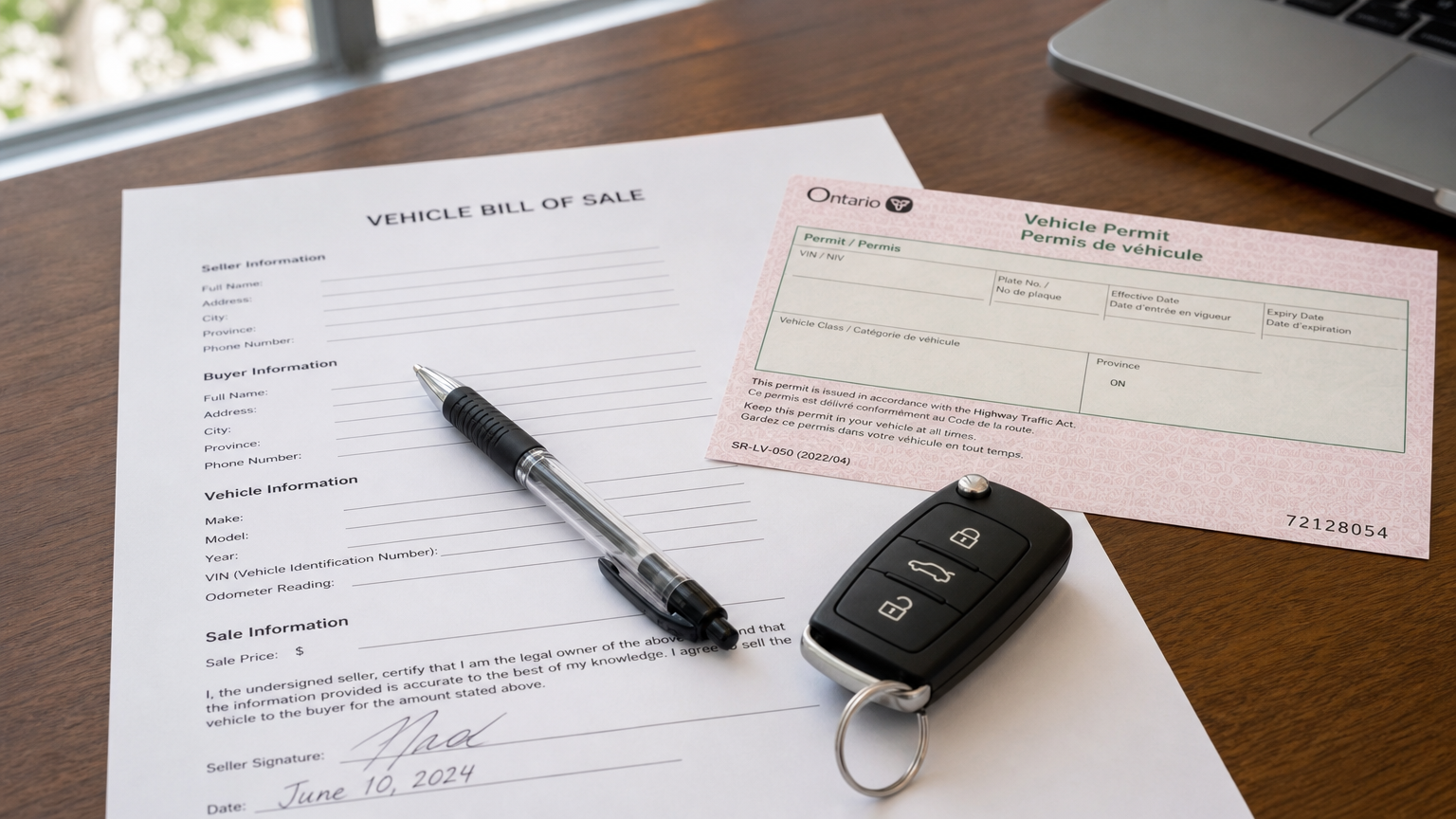
Essential vehicle transfer guidance for Ontario buyers and sellers, plus when notarization and statutory declarations are required.