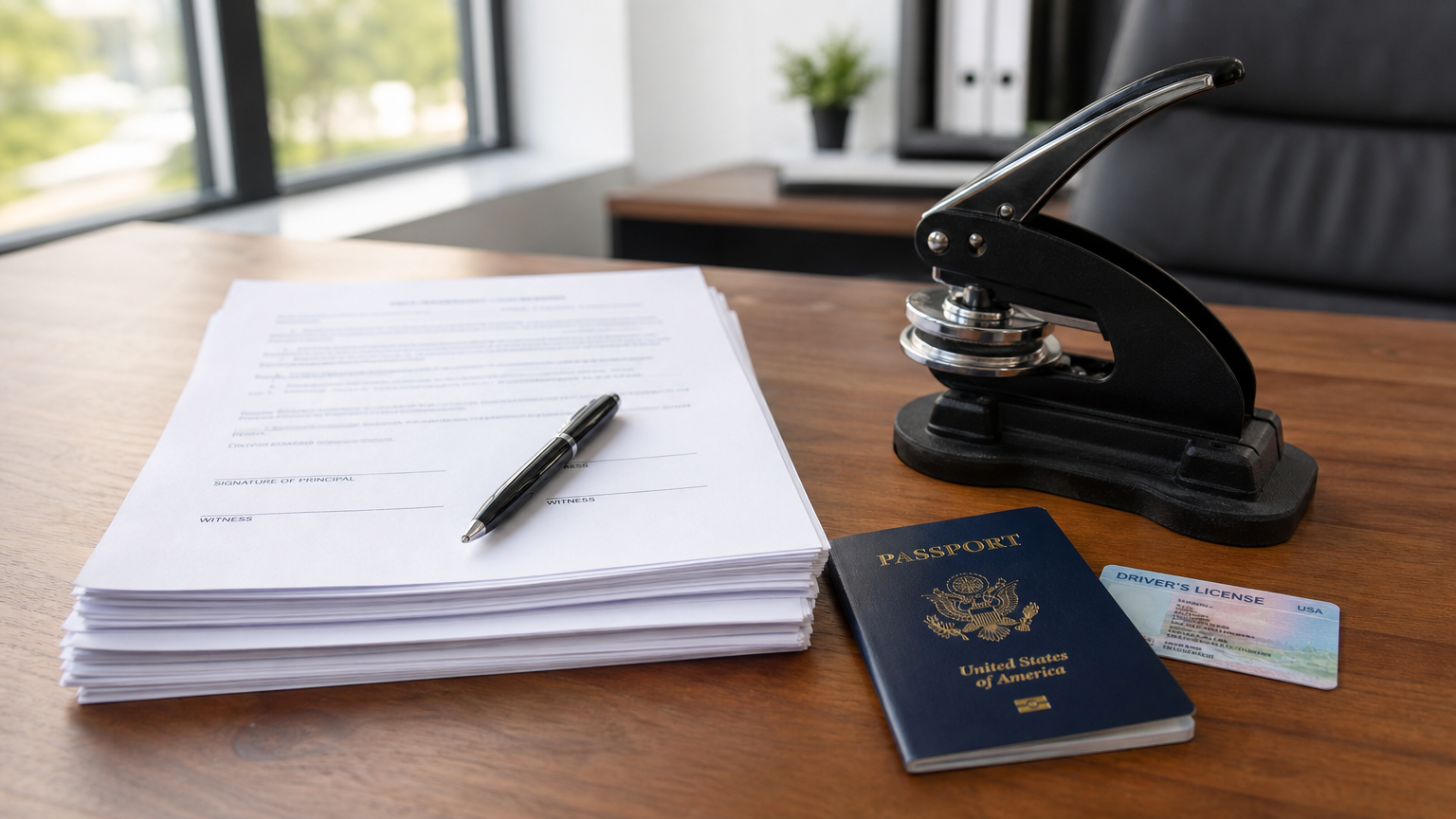
When you book a notary or commissioner appointment in Ontario, the first practical question is whether you must bring identification. The short, definitive answer is yes. Verifying identity is a core legal requirement before any notarial action can be completed. This article explains why ID is required, how verification is performed, the limited remote options for certain services, and what happens if you arrive without acceptable identification.
Why identity checks are mandatory
Notaries and commissioners in Ontario carry out their duties under statutory and professional rules. The Notaries Act (R.S.O. 1990, c. N.6) and the standards set by the provincial law society make confirming a signer’s identity an essential part of the notarial process. A notarization tells governments, courts, banks or other recipients that the person who signed a document is who they claim to be; without reliable identity verification the notarial certificate would be meaningless and could enable fraud.
How notaries verify identity
The accepted primary method of identity verification is a government-issued photo identification document. A notary must visually inspect the original document, confirm it is not expired, compare the photo to the person present, and ensure the name on the ID matches the name used on the document being notarized. These steps are taken to protect everyone involved and to preserve the integrity of the notarial act.
Is remote notarization allowed?
There is a narrow exception for remote commissioning in Ontario. Under Ontario Regulation 431/20 (Administering Oath or Declaration Remotely) made under the Commissioners for Taking Affidavits Act, commissioners may administer statutory declarations and affidavits using audio-visual technology. Even in these remote sessions, the commissioner must still verify identity: you are required to display valid government-issued photo ID to the camera so the official can inspect it before proceeding.
Limits on online notarial services
Online notarization is not permitted more broadly under the Notaries Act. A February 2025 notice from the provincial law society confirmed that many notarial acts must be done in person. Services that require in-person attendance include certified true copies, vehicle transfers, passport-related attestations and the attestation of certain documents. For those services, remote or fully online notarization is not allowed.
What if you don’t have acceptable ID?
If you cannot produce the required government-issued photo identification, a notary or commissioner will generally be unable to proceed. Because identity verification is a legal obligation, skipping or substituting inadequate proof is not permitted. The practical result is that the notarial act cannot be completed until acceptable identification is presented.
Practical tips before your appointment
- Bring original government-issued photo ID that is current and unexpired.
- Make sure the name on the ID matches the name shown on the document to be notarized.
- For remote statutory declarations or affidavits, position your camera so the commissioner can clearly view your ID and your face.
- If you expect non-standard circumstances (name changes, lost ID), contact the office ahead of time to clarify what will or will not be accepted.
Conclusion
Identity verification is a non-negotiable legal requirement for notarial services in Ontario. Except for the limited, regulated option to administer affidavits and statutory declarations remotely under Ontario Regulation 431/20, you must appear in person with valid government-issued photo identification. These rules exist to prevent fraud and to ensure that every notarization accurately reflects the identity of the signer.
Essential guidance on NDA notarization in Ontario: when it’s required, how the process works, and how to prepare for a smooth notarization.
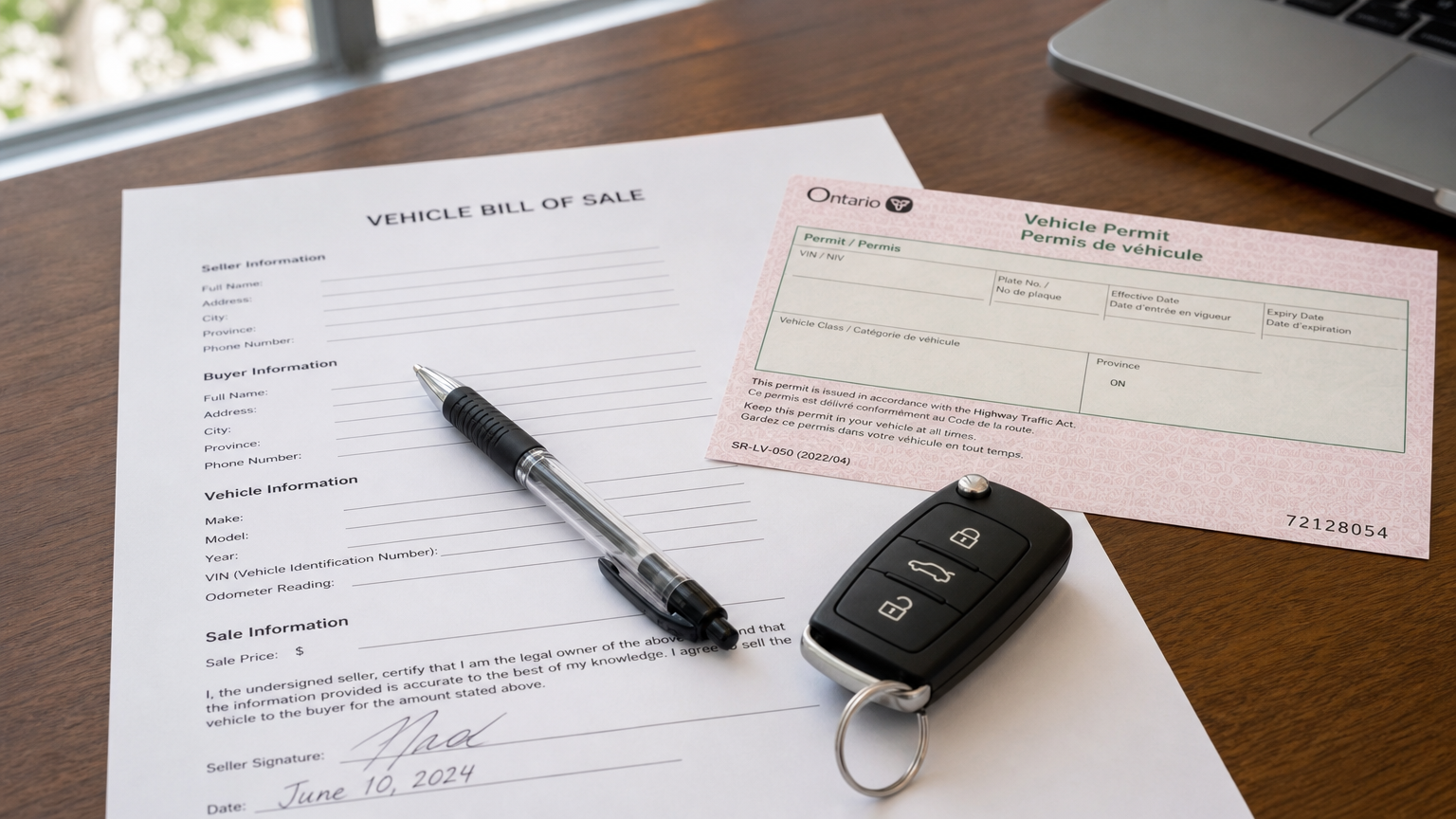
Essential vehicle transfer guidance for Ontario buyers and sellers, plus when notarization and statutory declarations are required.