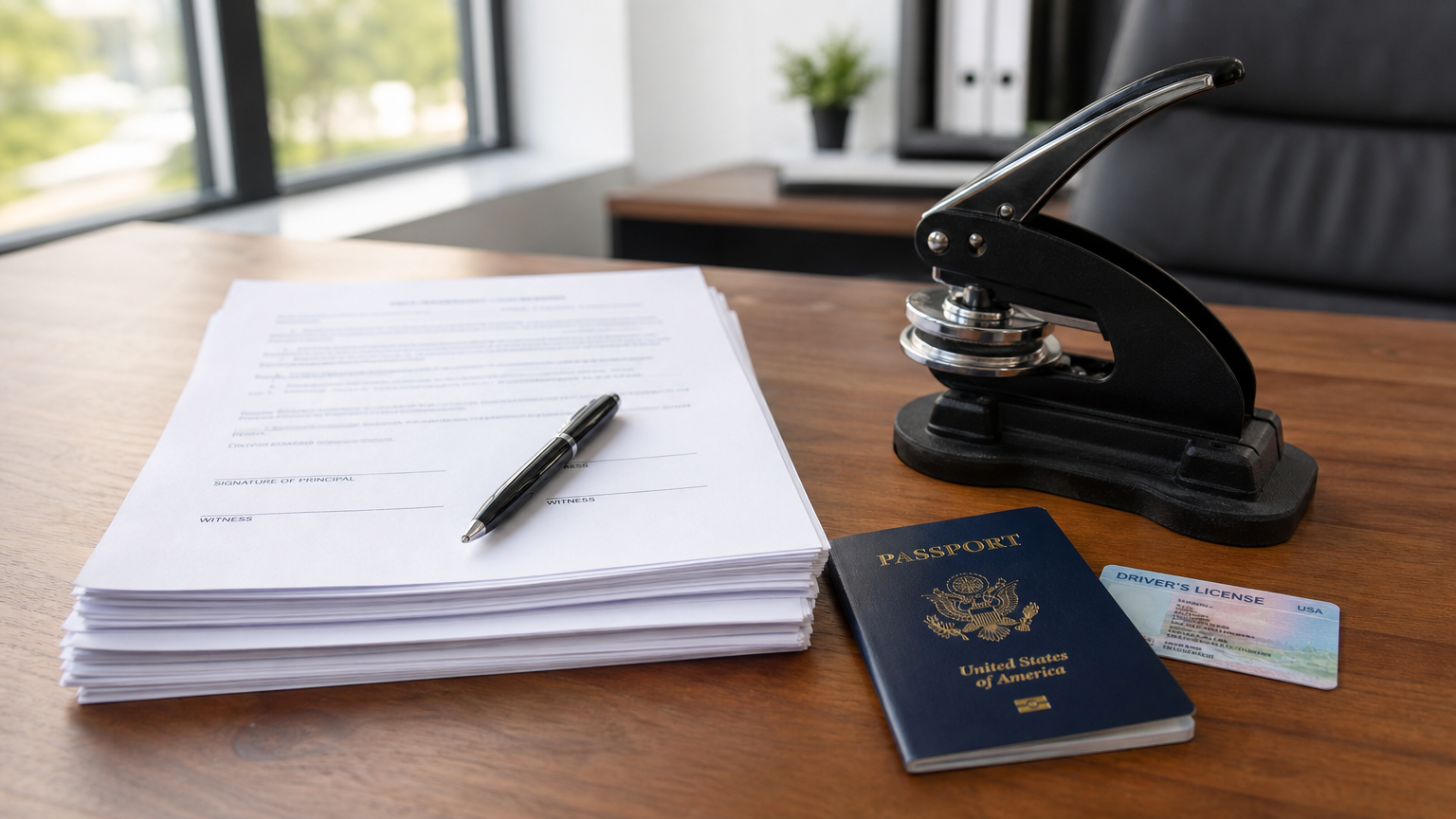
Introduction
If you plan to use your Canadian marriage certificate abroad—for a visa, citizenship application, name change or other official purpose—you may need an apostille to confirm the document’s authenticity. This guide explains which certificates qualify, what an apostille does, and the steps to prepare your marriage certificate for international use.
Does your marriage certificate qualify?
Not all marriage documents are acceptable for international use. Only an official marriage certificate issued by a provincial or territorial Vital Statistics office is typically accepted for authentication or apostille. Certificates issued by religious institutions or officiants are not valid for this purpose.
There are two common formats:
- Short-form certificate: a concise record that may not include full details required by foreign authorities.
- Long-form certificate: a complete record listing both spouses’ names, the date and place of marriage, and the registrar’s signature. The long-form is most often required for international procedures.
What the apostille does and recent change for Canada
An apostille is a standardized certificate that verifies the authenticity of a public document by confirming the issuing official’s signature, seal and authority. When a document carries an apostille, countries that are signatories to the Hague Apostille Convention will recognize it without additional embassy or consular legalization.
Canada joined the Hague Apostille Convention on January 11, 2024. That change simplifies recognition of Canadian public documents, including marriage certificates, when they are sent to member countries.
Step-by-step: How to prepare and apostille your marriage certificate
- Obtain the correct certificate: Request a certified long-form copy from the provincial or territorial Vital Statistics office that issued your record. Confirm the long-form includes the registrar’s signature and any official seal.
- Confirm the destination country’s requirements: Verify whether the country where you will use the document is a signatory of the Hague Apostille Convention. If it is, an apostille is usually sufficient. If it is not, the document will generally require authentication and subsequent embassy or consular legalization for that country.
- Request the apostille or equivalent authentication: Submit the certified long-form to the appropriate authority that issues apostilles or performs authentication in Canada. The apostille certifies the signature, seal and authority on the marriage certificate for recognition by Hague member states.
- Translate if required: Some countries require a certified translation of the marriage certificate into an official language. Arrange a sworn or certified translation when necessary and check whether the translation itself must be authenticated or apostilled.
- Check processing times and plan ahead: Government processing and any required translations or additional legalizations can take time. Order extra certified copies if you anticipate multiple uses.
Common pitfalls and practical tips
- Do not use church-issued or ceremony-only documents; they are typically invalid for apostille or authentication.
- Ensure the long-form includes the registrar’s signature and any embossed or impressed seals; missing elements can delay or void the apostille.
- Confirm whether the destination country accepts apostilles alone or also requires translations or additional certifications.
- Keep certified surplus copies on hand to avoid repeat requests to Vital Statistics offices.
Conclusion
To use a Canadian marriage certificate abroad, start with a certified long-form issued by the relevant provincial or territorial Vital Statistics office, confirm the destination country’s rules, and obtain an apostille if the country is a Hague Convention member. For non-member countries, expect to follow the authentication and consular legalization route. Planning ahead and verifying requirements will reduce delays and ensure your document is accepted overseas.
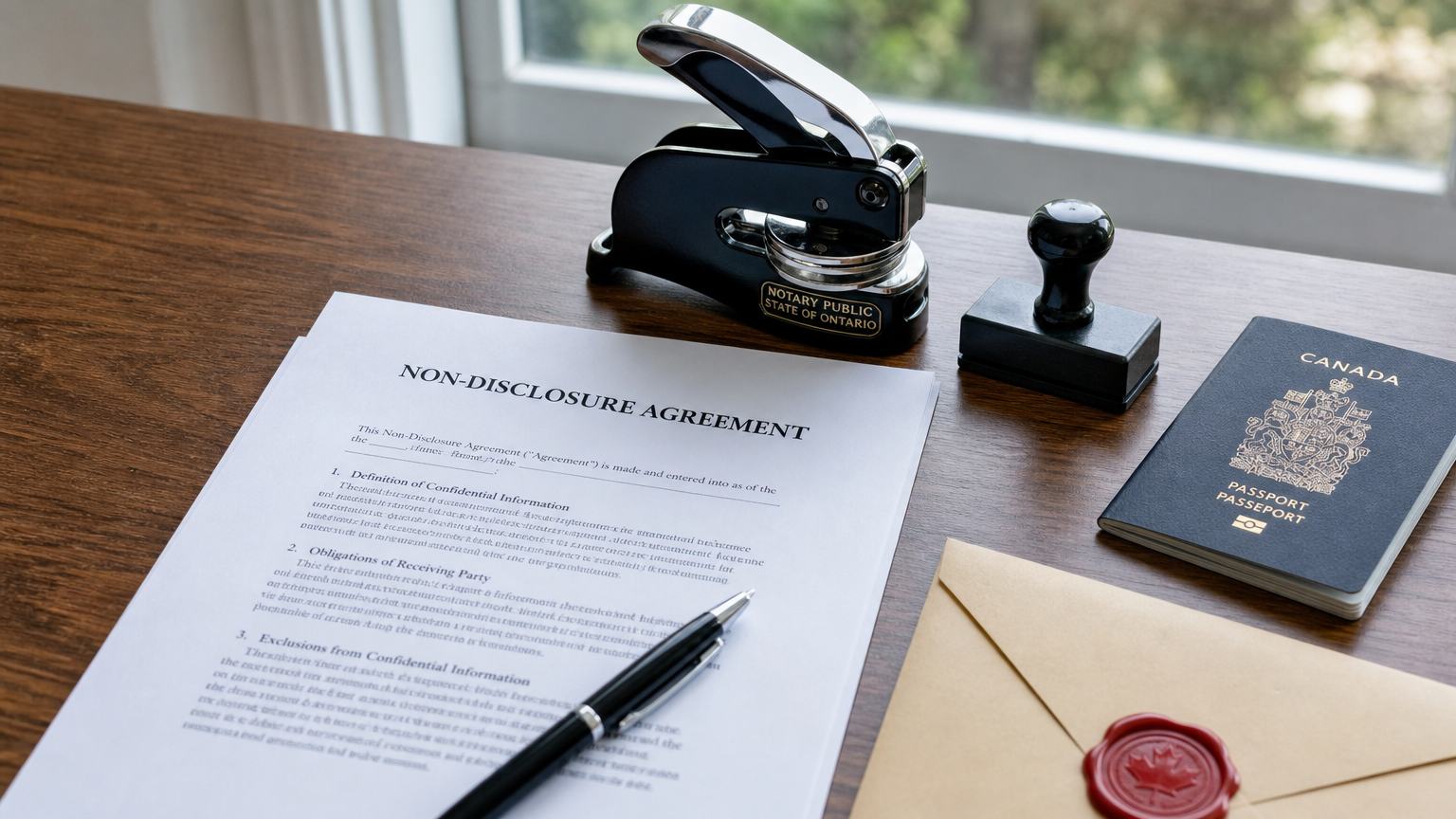
Essential guidance on NDA notarization in Ontario: when it’s required, how the process works, and how to prepare for a smooth notarization.
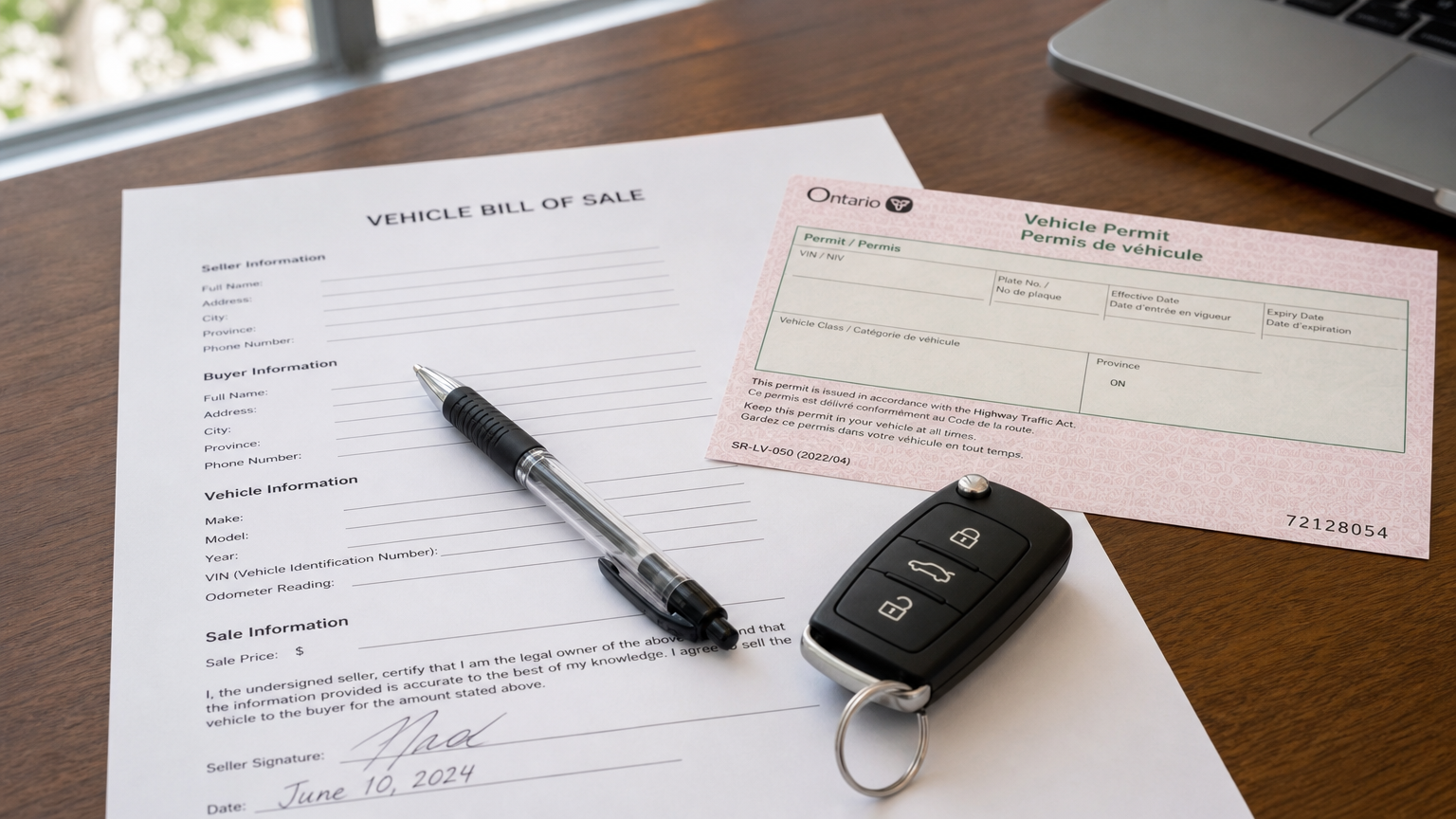
Essential vehicle transfer guidance for Ontario buyers and sellers, plus when notarization and statutory declarations are required.