
Introduction
The Hague Apostille Convention streamlines the process of making public documents valid across borders. This guide explains what the convention does, highlights recent accessions, and shows how to confirm whether a country accepts apostilles. It also outlines practical steps for authenticating documents when an apostille is not accepted.
What the Hague Apostille Convention Does
Formally titled the Convention of 5 October 1961 Abolishing the Requirement of Legalisation for Foreign Public Documents, the treaty was developed by the Hague Conference on Private International Law. Its purpose is to replace lengthy embassy or consular legalization with a single certificate called an apostille. When a document issued in one member state receives an apostille, many other member states will accept that document for official use without further legalization.
Membership and Recent Accessions
Membership in the convention has grown steadily. As of 2025, the convention has 128 member countries. Notable recent accessions include the following:
- China joined the Convention on November 7, 2023.
- Canada became a party to the Convention on January 11, 2024.
These additions reduce the need for consular legalization between member states and make cross-border document use faster and less expensive for individuals, businesses and institutions.
How to Confirm Whether a Country Is a Party
To confirm a country’s membership status, use official sources such as the list of contracting states maintained by the treaty’s depositary or the designated central authorities for apostilles. If you are unsure, check with the issuing authority for the document, or contact the foreign affairs ministry or diplomatic representation for authoritative guidance.
When Your Destination Country Is a Party
If the destination country is a member of the Hague Apostille Convention, follow these general steps:
- Obtain the original public document from the issuing authority (for example, a birth certificate, marriage certificate, court record, or diploma).
- Have the document certified or authenticated as required by the issuing authority (this may include a notary or a designated governmental office).
- Request an apostille from the designated central authority in the issuing country. Once attached, the apostille certifies the origin of the public document for use in other Convention countries.
After an apostille is attached, the document should be accepted by public authorities in other member countries without further legalization.
When Your Destination Country Is Not a Party
If the destination country is not a contracting state, the apostille is not accepted. In that case, a conventional legalization process is usually required. Typical steps include:
- Obtaining any required certifications or notarizations from the document’s issuing authority.
- Authentication by the issuing country’s foreign affairs department or ministry.
- Consular legalization by the destination country’s embassy or consulate, which may involve additional in-country requirements.
Procedures and required documents vary by country, so verify the exact steps with the destination country’s diplomatic mission before you begin.
Practical Tips
- Start the process early—authentication and legalization can take time, especially when consular steps are needed.
- Keep original documents secure and produce certified copies only when required by the receiving authority.
- If a document is translated, ensure translations are completed and certified according to the receiving country’s rules.
- When in doubt, ask the issuing authority or the destination country’s diplomatic representation for a checklist of required steps.
Conclusion
The Hague Apostille Convention significantly simplifies cross-border use of public documents for countries that are party to the treaty. With 128 members as of 2025—and recent accessions including China and Canada—the convention increasingly reduces the need for consular legalization. Always confirm a destination country’s status and follow the specific procedural steps required for apostilles or, where necessary, the traditional legalization route.

Essential guidance on NDA notarization in Ontario: when it’s required, how the process works, and how to prepare for a smooth notarization.
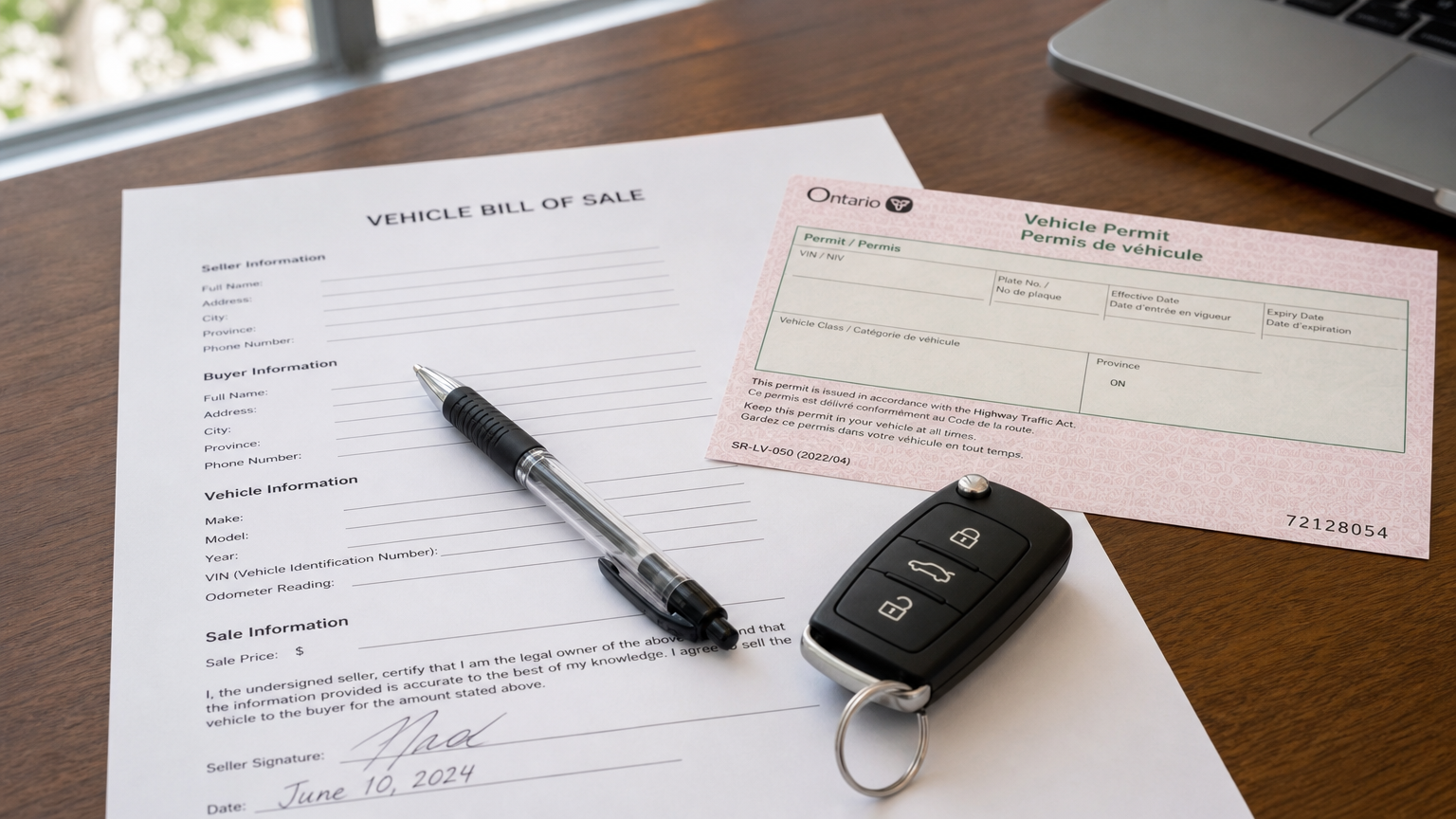
Essential vehicle transfer guidance for Ontario buyers and sellers, plus when notarization and statutory declarations are required.