
Introduction
Using official documents abroad often requires more than presenting the original. Birth and marriage certificates, academic diplomas and legal records may need formal authentication so foreign authorities will accept them. An apostille is a common method for certifying the origin of public documents for use in countries that participate in the Hague Apostille Convention.
What an Apostille Does
An apostille is a standardized certificate attached to a public document to confirm its authenticity for international use in Convention countries. It verifies the origin of the document by attesting to such elements as the signature on the document, the capacity in which the signatory acted, and any official seal or stamp present. An apostille does not assess or validate the factual content of the document; it only confirms the document’s provenance and the authority of the person who signed it.
The Hague Apostille Convention — How It Works
The Hague Apostille Convention created a uniform process that allows a document issued in one member country to be recognized in another member country without additional consular legalization. When both the issuing country and the destination country are parties to the Convention, an apostille issued by the competent authority in the issuing country is sufficient for recognition by the receiving country’s authorities.
Which Documents Commonly Need an Apostille
Documents frequently presented for apostille certification include:
- Birth certificates
- Marriage certificates and divorce decrees
- Academic diplomas, transcripts and enrollment records
- Power of attorney and notarized affidavits
- Court orders and criminal record checks
Apostille vs. Consular Legalization
If the destination country is a member of the Hague Apostille Convention, an apostille replaces the need for embassy or consulate legalization. If the destination country is not a Convention member, you will generally need consular legalization: the document must be authenticated by the issuing country’s competent authority and then legalized by the embassy or consulate of the destination country. Always confirm the destination country’s requirements before starting the process.
Typical Steps to Obtain an Apostille
- Confirm the destination country’s status under the Hague Apostille Convention.
- Obtain the original public document from the issuing authority (vital records office, court, educational institution, etc.).
- If required, have the document notarized or certified by a local official before apostille submission.
- Submit the document to the competent authority that issues apostilles in the country of origin.
- Receive the apostille certificate attached to the document and use the authenticated document with the foreign authority.
Practical Tips to Ensure Acceptance Abroad
- Verify whether the receiving entity accepts original documents, certified copies or notarized copies.
- Check whether official translations are required and whether translators must be sworn, certified or notarized.
- Confirm any additional authentication steps specific to the destination country before you begin, to avoid delays.
- Keep copies of all documents and the apostille for your records and future use.
Conclusion
An apostille streamlines cross-border acceptance of public documents between member countries of the Hague Apostille Convention by certifying the document’s origin. Determining whether your destination country is a Convention member and following the competent authority’s procedures are the key steps to ensure your documents are recognized abroad. When in doubt, verify requirements with the receiving authority to prevent complications.

Essential guidance on NDA notarization in Ontario: when it’s required, how the process works, and how to prepare for a smooth notarization.
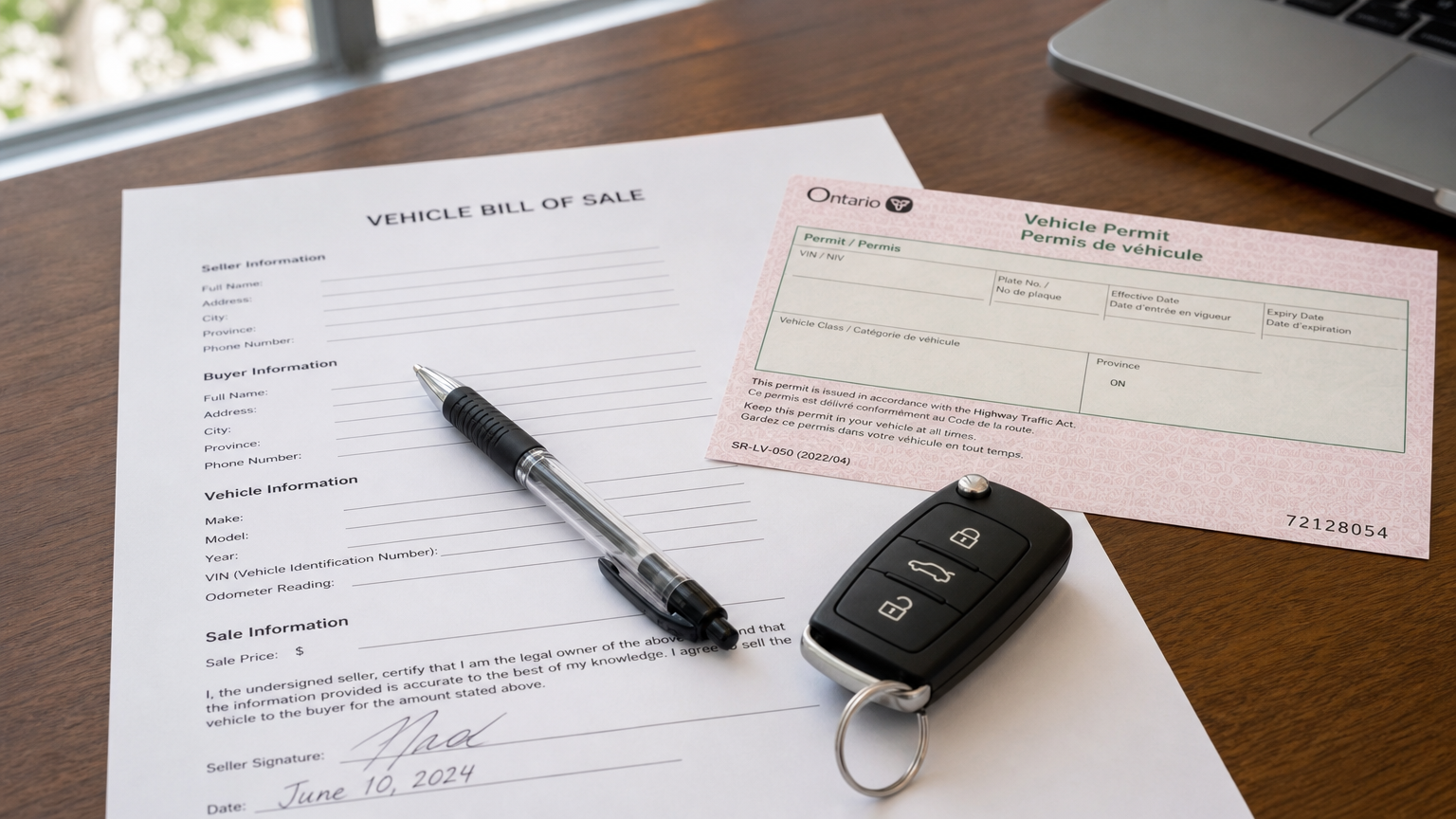
Essential vehicle transfer guidance for Ontario buyers and sellers, plus when notarization and statutory declarations are required.