
Introduction
If you need to use a Canadian public document abroad—for immigration, study, employment, or business—many foreign authorities will require proof that the document is genuine. Since January 2024 Canada began issuing apostilles, a simplified certification that confirms a document’s authenticity for use in countries that are members of the Hague Apostille Convention. This guide explains what an apostille does, who accepts it, which documents commonly need one, and the practical steps to obtain one in Canada.
What Is an Apostille?
Definition and purpose
An apostille is an official certificate attached to a public document that verifies the document’s origin. It confirms key formal elements—such as the validity of the signature, the authority of the official who signed the document, and any official seals or stamps—so the document can be recognized in another country without a separate embassy or consular legalization process.
Scope of verification
Important: an apostille does not evaluate or certify the content of the document itself. Its role is limited to attesting that the document is genuine and was issued by an authorized person or office.
Why the Apostille Matters
Countries that have joined the Hague Apostille Convention accept apostilles in place of cumbersome embassy legalizations. For Canadians and residents of Canada, the adoption of the apostille in January 2024 removed a significant administrative hurdle when sending documents abroad to Convention countries.
Which Countries Accept an Apostille?
Only countries that are parties to the Hague Apostille Convention accept apostilles in lieu of consular legalization. If the destination country is not a member, the traditional legalization process through the destination country’s embassy or consulate will usually still be necessary.
Common Documents That Require an Apostille
- Birth, marriage and divorce certificates
- Academic diplomas and transcripts
- Police certificates and criminal record checks
- Powers of attorney and notarized affidavits
- Corporate documents such as certificates of incorporation or meeting minutes
Who Issues Apostilles in Canada?
Apostilles are issued by designated Canadian authorities for documents originating within their jurisdiction. Depending on whether a document is a federal, provincial, territorial, or municipal public document, the appropriate competent authority will be responsible for attaching the apostille. The exact issuing office varies by document type and jurisdiction.
Step-by-Step: How to Obtain an Apostille in Canada
1. Identify the document type and issuing authority
Determine whether your document was issued by a federal agency, a provincial or territorial office, or a municipal body. The issuing authority affects where you must apply for the apostille.
2. Ensure the document is a public or notarized document
Apostilles apply to public documents and to notarized documents. If your document requires a notarized signature (for example, a power of attorney), have it notarized first by a licensed notary public.
3. Obtain any necessary certified copies
Some authorities require original documents, while others accept certified true copies. Check the issuing office’s requirements and obtain certified copies if needed.
4. Submit your document to the competent authority
Apply to the office designated to issue apostilles for your document type. Follow their submission guidelines, required forms, processing times, and fee schedule. Processing time and fees may vary by jurisdiction.
5. Translate if required by the destination country
Although an apostille confirms authenticity, many receiving authorities also require a translation into the official language of the destination country. Have translations completed by a certified translator when necessary.
Practical Tips
- Start early: allow extra time for notarizations, certified copies, processing, and translations.
- Confirm requirements with the receiving authority: different countries and agencies can have specific document and translation rules.
- Keep originals and certified copies organized: provide the exact documents required to avoid delays.
- Verify fees and acceptable payment methods before submitting an application to avoid rejections.
When an Apostille Is Not Enough
If the destination country is not a member of the Hague Apostille Convention, you will generally need traditional legalization through that country’s diplomatic mission. Additionally, some institutions may request further documentary checks or notarizations even after an apostille is attached.
Conclusion
The introduction of the apostille system in Canada in January 2024 streamlines the process of authenticating public documents for use in many countries around the world. By identifying the correct issuing authority, ensuring documents are properly notarized or certified, and following the application steps, you can secure an apostille that helps your Canadian documents be accepted abroad. Plan ahead and verify both issuing and receiving requirements to avoid delays.
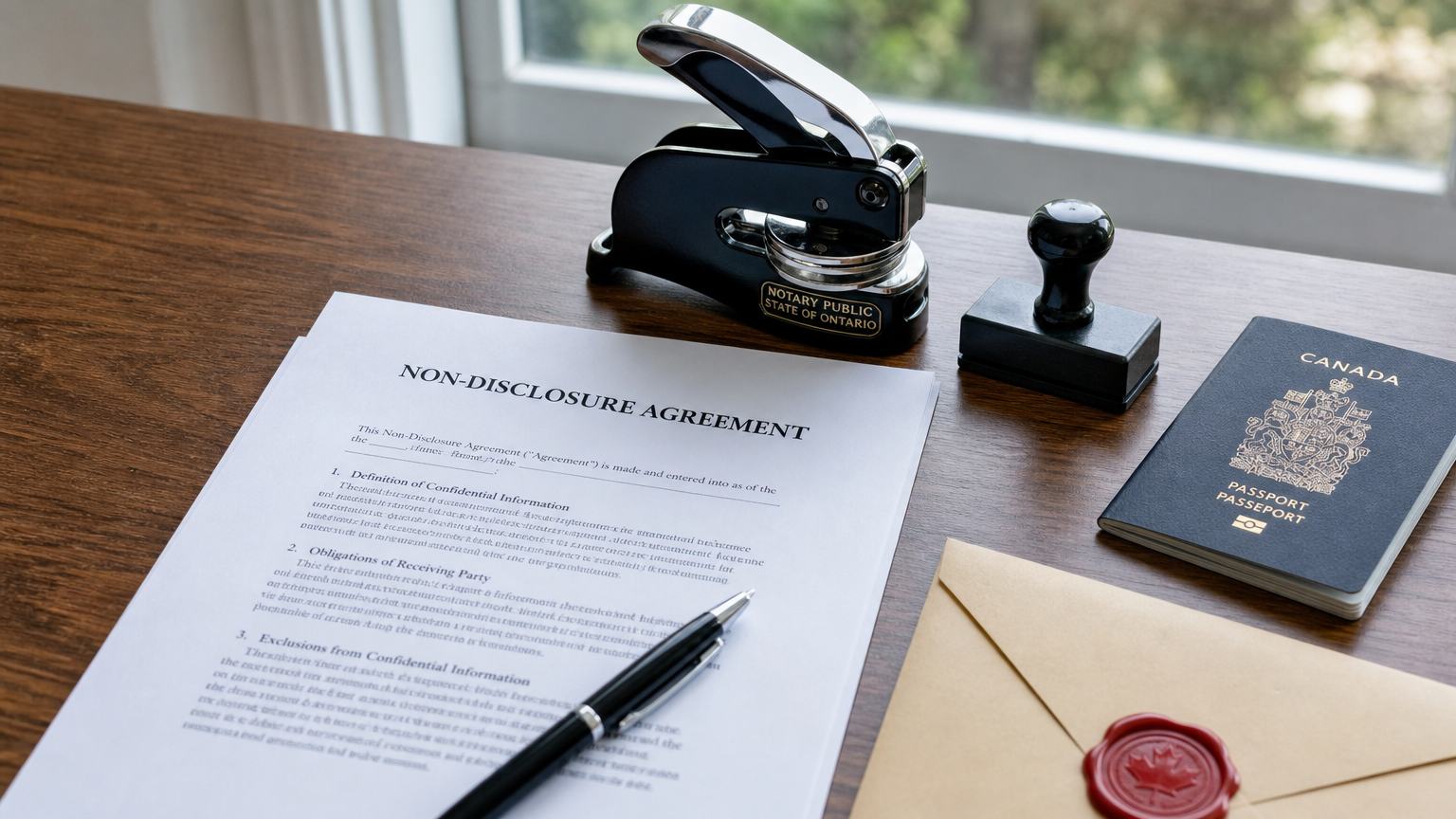
Essential guidance on NDA notarization in Ontario: when it’s required, how the process works, and how to prepare for a smooth notarization.
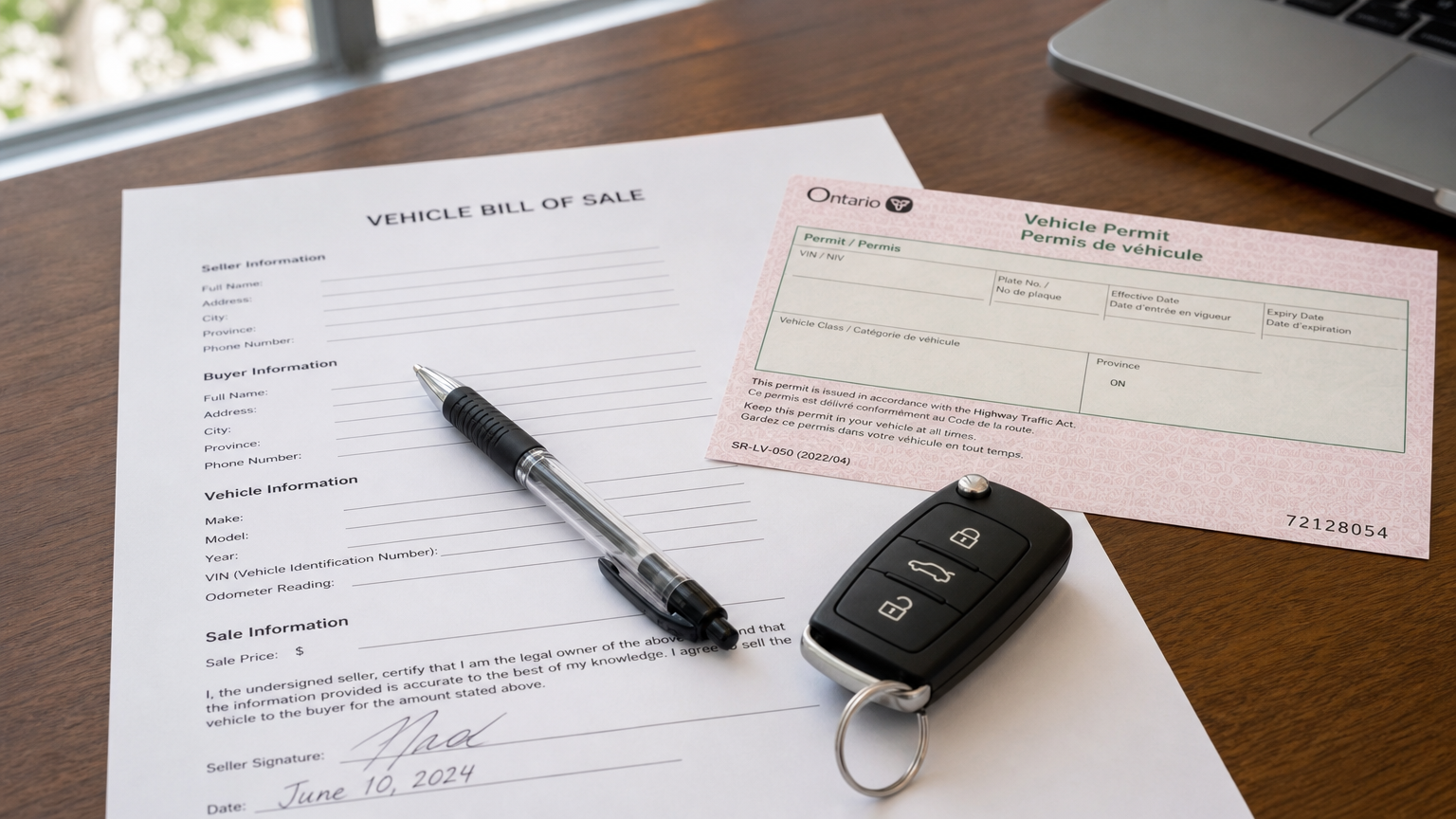
Essential vehicle transfer guidance for Ontario buyers and sellers, plus when notarization and statutory declarations are required.