
Introduction
Canada joined the Hague Apostille Convention on January 11, 2024, simplifying document certification for countries that are members of the Convention. However, many countries in regions such as the Middle East, Asia, Africa and parts of Latin America are not parties to the Convention. For those destinations, documents from Canada still require the older authentication and legalization process. This article explains the difference between an apostille and authentication/legalization, and walks you through the required three‑step chain so your Canadian documents will be accepted abroad.
Apostille vs Authentication and Legalization
Before you prepare any paperwork, determine whether the country where the document will be used is a Hague Convention member. If it is, one apostille issued by the designated Canadian authority validates a notarized document for use in that country and no further steps are needed.
For countries that are not members of the Hague Convention, the two‑stage authentication and legalization chain still applies. In that system, a Canadian government authority performs authentication and the destination country’s embassy or consulate in Canada completes the legalization. Both steps are required, and they must be done in the correct order.
If you are unsure whether the destination country accepts apostilles, confirm the country’s status through official lists maintained by international legal authorities or by contacting the destination country’s diplomatic mission in Canada.
The Three‑Step Process for Non‑Hague Destinations
Step 1: Notarization by a Canadian Notary Public
Every document that will follow the authentication and legalization chain must first be notarized by a Canadian notary public. This is mandatory; a commissioner of oaths does not have the same authority for international use. A notary public can verify identity, witness signatures, certify true copies of original documents and apply an official notarial seal. The authentication authority will verify this seal and signature in the next step, so proper notarization is essential.
Step 2: Authentication by a Canadian Government Authority
Once notarized, the document must be authenticated by the appropriate Canadian government authority. Depending on the nature of the document, authentication may be performed by a federal department responsible for foreign affairs or by a provincial authentication office. The authentication verifies the validity of the notary’s signature and seal, confirming that the document was properly notarized.
Step 3: Legalization by the Destination Country’s Embassy or Consulate
After authentication, the final step is legalization at the embassy or consulate of the country where the document will be used. The diplomatic mission attaches its own certificate or stamp to confirm that it recognizes the Canadian authentication. Only once legalization is completed is the document considered valid for official use in that non‑Hague country.
Checklist Before You Start
- Confirm whether the destination country is a Hague convention member.
- Obtain notarization from a Canadian notary public (not a commissioner of oaths).
- Determine whether authentication must be carried out at the federal or provincial level for your document type.
- Contact the destination country’s embassy or consulate to confirm legalization requirements, any required forms, and whether translations are needed.
Timing, Fees and Common Pitfalls
Processing times and fees vary by authority and by diplomatic mission. Authentication and legalization can take from a few days to several weeks depending on workload, whether documents require translation, and whether appointments are needed at an embassy or consulate. Fees are charged at each stage: notary fees, government authentication charges, and consular legalization fees. Verify current processing times and costs with the relevant authentication office and the destination mission before you begin.
Common mistakes that cause delays include using a commissioner of oaths instead of a notary public, submitting the steps out of order, failing to provide certified copies when required, and omitting translations where the receiving country requires them.
Practical Tips
- If you need multiple legalized copies, have them all notarized and authenticated together to save time.
- Ask the embassy whether they require original documents or whether certified true copies will suffice.
- Check ahead for any special wording or additional forms the receiving authority may require.
- Keep clear records of each stamp, signature and certificate attached to the document; these details are what authorities review abroad.
Conclusion
Although Canada’s accession to the Hague Apostille Convention on January 11, 2024, simplified certification for Convention countries, the traditional authentication and legalization chain remains in force for non‑Hague destinations. Follow the three mandatory steps—proper notarization by a Canadian notary public, authentication by the appropriate Canadian government authority, and final legalization at the destination country’s embassy or consulate—to ensure your documents are accepted abroad. When in doubt, confirm requirements and timelines with the relevant government office and the foreign mission before you submit any paperwork.

Essential guidance on NDA notarization in Ontario: when it’s required, how the process works, and how to prepare for a smooth notarization.
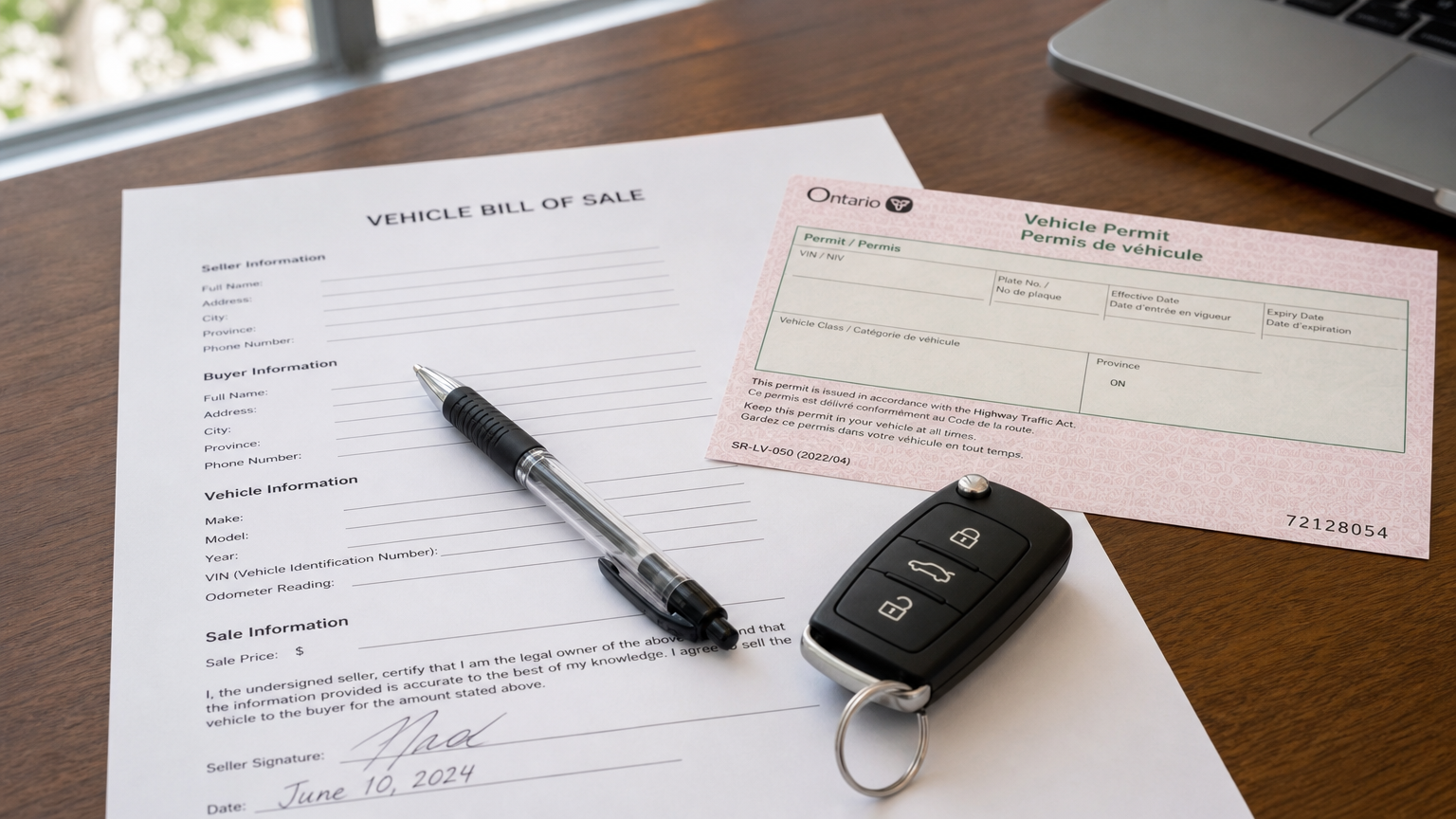
Essential vehicle transfer guidance for Ontario buyers and sellers, plus when notarization and statutory declarations are required.