
Introduction
Living outside Canada can make routine legal tasks—like notarizing documents—surprisingly complicated. Remote notary services let Canadians abroad complete many of these tasks without returning home or visiting a consulate. This guide explains the challenges of accessing Canadian notaries from overseas, how online notary services work, their advantages, and practical steps to complete a notarization from another country. Updated on January 19, 2026.
Key takeaways
- Remote notarization often removes travel, long waits, and scheduling hassles for Canadians living abroad.
- Procedures vary by document type and by the receiving country; some documents may still require embassy-level authentication.
- Successful online notarizations generally require verified ID, clear video verification, and following specific signing procedures.
- Keep originals, certified electronic copies, and any additional legalization paperwork organized for international use.
Difficulties accessing Canadian notary services abroad
When you are outside Canada, getting documents notarized traditionally means finding a local notary public, visiting a Canadian consulate or embassy, or returning to Canada. Each option has drawbacks:
- Local notaries in the host country may not be familiar with Canadian requirements or may not be able to certify documents intended for use in Canada.
- Consular services can have limited hours, lengthy appointment waiting times, and may be located far from where you live.
- Traveling back to Canada is costly and time-consuming, and not practical for routine paperwork.
These barriers can delay transactions such as estate administration, real estate matters, powers of attorney, and business agreements.
What is an online notary service?
An online notary service uses secure audiovisual technology to allow a commissioned notary public to witness and certify signatures remotely. During a virtual appointment, the notary verifies the signer’s identity, watches the document being signed, and applies a notarial certificate. The result may be a digitally certified document, a notarized electronic signature, or guidance for producing a wet-ink original that is later mailed or returned.
Remote notarization can take several forms depending on the jurisdiction and the notarial authority’s rules, including purely electronic notarial acts, supervised wet-signing, or hybrid approaches that combine digital witnessing with a later physical certification.
Benefits of online notary services for Canadians abroad
- Accessibility: Appointments can be scheduled across time zones without visiting a consulate or office in person.
- Speed: Many routine notarizations can be completed in a single online session, reducing turnaround time.
- Convenience: You can use a laptop, tablet, or smartphone from home, often outside normal business hours in Canada.
- Security: Reputable services use identity verification, secure video records, and tamper-evident documents to protect transactions.
- Cost-effectiveness: Online options often reduce travel and courier costs associated with overseas notarization.
How online notarizations typically work for Canadians overseas
1. Prepare your documents
Have the documents ready in the required format. For electronic notarizations, this usually means a PDF. If an original paper document is required, plan for secure mailing after the online session.
2. Verify identity
The notary will ask you to present valid government-issued identification via the camera. Commonly accepted IDs include passports and national identity cards. Some processes require additional identity checks, such as answering knowledge-based questions or providing a second form of ID.
3. Attend a live video appointment
During the appointment you will show your ID, review the document with the notary, and sign in view of the camera if required. The notary confirms the signer’s willingness and mental capacity before completing the notarial act.
4. Receive the notarized document
Depending on the notarial method and document type, you may receive a certified electronic file immediately, instructions for producing a certified paper original, or a sealed physical document sent by courier after the session.
5. Follow any additional legalization steps for international use
If the document is for use in another country, it may require further authentication or legalization. Canada does not participate in the Hague Apostille Convention; documents for use abroad may therefore need authentication by the appropriate federal authority and legalization by the destination country’s diplomatic mission. Check the receiving authority’s requirements before completing the notarization.
Tips for a smooth online notary appointment
- Check time zones and book an appointment that aligns with both parties’ availability.
- Use a reliable internet connection and test your camera and microphone beforehand.
- Gather all required identification and supporting documents in advance.
- Ensure good lighting so the notary can clearly see IDs and signatures.
- Ask in advance whether you will receive a digital certificate, an electronic seal, or a mailed original, and factor in courier times if necessary.
Meet with a Canadian notary online from overseas: a practical checklist
- Confirm the notary is commissioned in the Canadian jurisdiction appropriate for your documents.
- Verify the notary’s accepted forms of ID and any secondary identity checks.
- Clarify how the notarized document will be delivered and whether additional authentication or legalization is needed for the destination country.
- Arrange secure storage or courier service for any physical originals that must be returned to Canada or sent elsewhere.
Conclusion
Remote notary services offer a reliable, efficient alternative for Canadians living abroad who need notarizations. While not all documents will avoid additional embassy-level steps, many common transactions can be completed entirely online with proper preparation. Confirm identification requirements, clarify delivery and legalization needs in advance, and follow the checklist above to minimize delays and ensure your documents are accepted where they are needed.
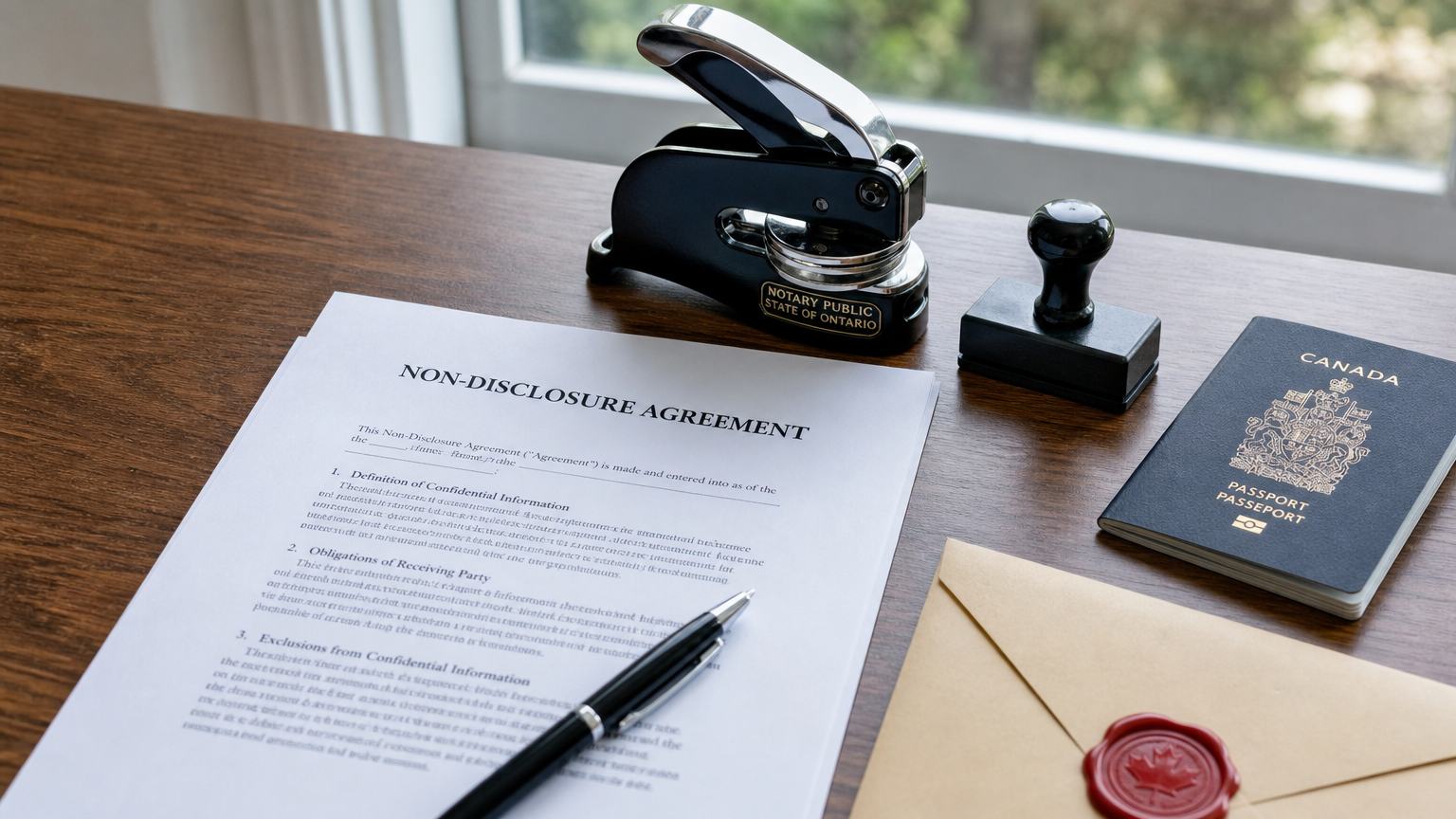
Essential guidance on NDA notarization in Ontario: when it’s required, how the process works, and how to prepare for a smooth notarization.
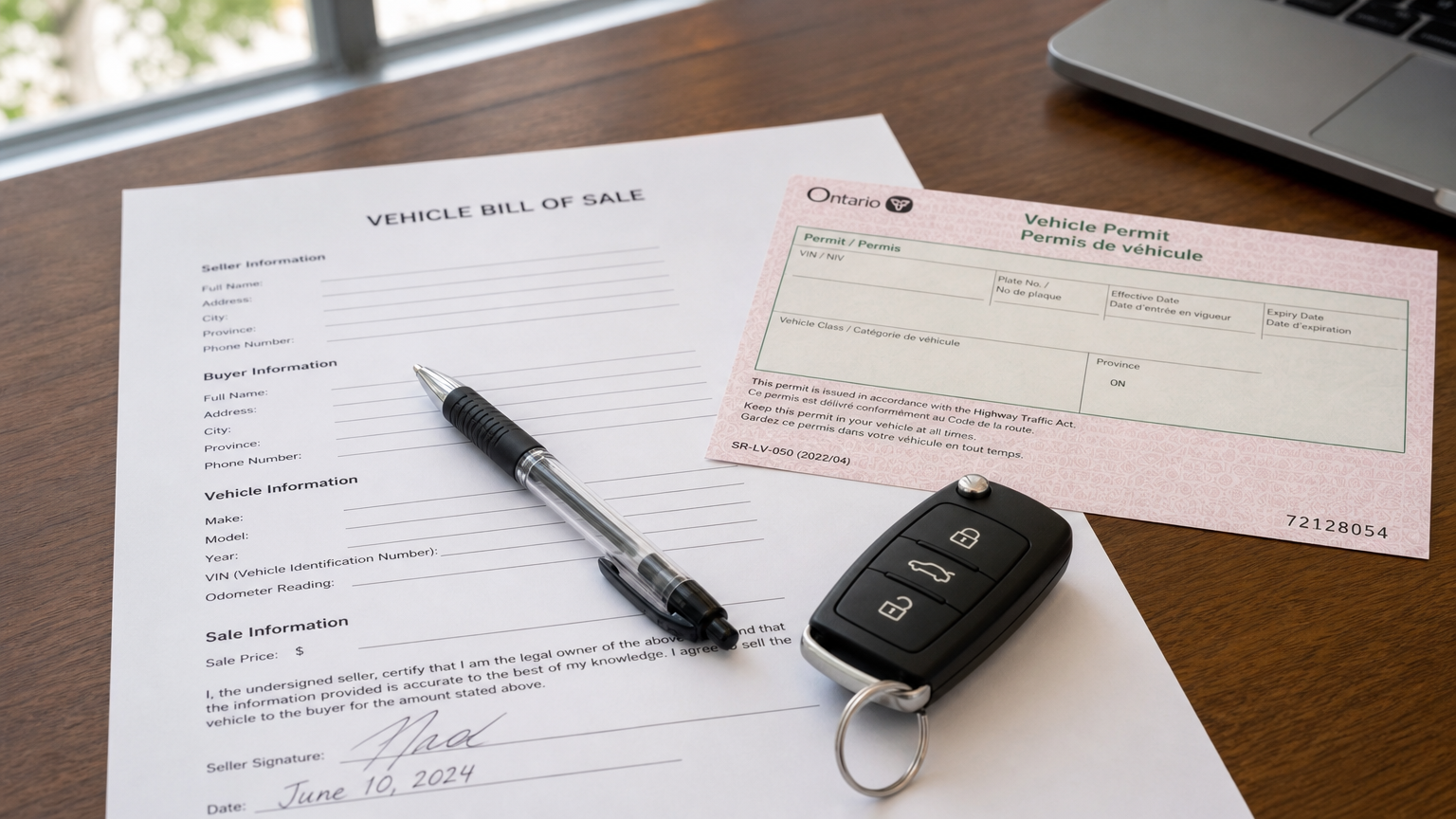
Essential vehicle transfer guidance for Ontario buyers and sellers, plus when notarization and statutory declarations are required.