
Introduction
Since Canada became a member of the Hague Apostille Convention on January 11, 2024, the pathway for using Canadian public documents abroad has been simplified. The old embassy-based “legalization” route has been replaced by a single internationally recognized Apostille certificate. That said, not every paper qualifies automatically. Eligibility depends on where the document was issued, its format, and whether required notarizations or certifications are in place.
What the Apostille Standard Means
The Apostille system creates a uniform method for one country to recognize the authenticity of another country’s public documents. For Canadians, this covers papers issued by federal or provincial authorities as well as documents certified by a licensed notary public where applicable. If your destination is one of the 125+ member nations of the Convention, obtaining an Apostille is typically the final step to ensure acceptance by foreign institutions such as banks, universities, immigration offices and courts.
Vital Statistics and Civil Status Records
Documents from provincial vital statistics registries are some of the most frequently Apostilled items. These records are commonly required for international marriages, citizenship applications, estate matters and other cross-border legal procedures.
- Eligible items generally include original long-form birth certificates, marriage certificates, death certificates, change of name certificates, and official marriage search letters.
- Only the long-form or officially certified versions issued by the provincial registrar are suitable for Apostille. Wallet-sized extracts, photocopies or uncertified versions are not acceptable for direct Apostille processing.
- These long-form or certified documents must bear the original signature of the Deputy Registrar (or equivalent official) to be considered valid for an Apostille.
Educational Credentials
Academic documents are commonly Apostilled when Canadians pursue work, study or professional licensing overseas. Degrees, diplomas and official transcripts are all potentially eligible, but preparation requirements vary by issuing institution.
Public Universities and Colleges
Documents issued by public universities and colleges will often proceed toward Apostille if the signatures on file match the registries used by the government authority verifying public documents. In some cases the government can authenticate these directly without an intermediate notarization.
Private Institutions and Secondary Schools
Certificates and transcripts from private colleges, language schools or high schools commonly require a notarial step before an Apostille can be applied. A licensed notary public will usually need to certify a copy of the document, witness signatures where required, and apply an embossed seal. Only after these notarial actions are completed will the document be eligible for Apostille processing.
Corporate and Commercial Records
Businesses expanding or operating internationally will frequently need Apostilles on corporate documents. Typical commercial items that may be eligible include:
- Certificates of incorporation or formation
- Articles of association or bylaws
- Resolutions and minutes officially certified by corporate officers
- Powers of attorney executed on behalf of the company
Corporate papers often require corporate seals, signatures of authorized officers and, in many cases, a notary public’s certification before an Apostille can be issued. Documents originating from provincial or federal corporate registries that bear official certification are generally acceptable for Apostille.
Notarial Acts and Affidavits
Notarial acts — including sworn affidavits, statutory declarations and notarized powers of attorney — are core categories covered by the Apostille Convention when completed by a licensed notary public. Ensure the notary’s signature and seal conform to the standards expected by the government authority that applies the Apostille.
Common Exceptions and Pitfalls
- Photocopies, uncertified extracts, and wallet-size or abbreviated certificates are usually not eligible for direct Apostille; an official long-form or an appropriately certified copy is required.
- Translations alone cannot be Apostilled as a substitute for the original public document. Some destination authorities require certified translations alongside an Apostilled document — check the foreign authority’s requirements in advance.
- Private internal records or commercial invoices that are not issued or certified by a public authority may need additional notary steps or different forms of legalization depending on the receiving country’s rules.
How to Prepare Documents for an Apostille
- Confirm that the document is an original long-form or an officially certified copy issued by the appropriate provincial or federal office.
- Where required, have the document notarized by a licensed notary public who will apply an embossed seal and signature.
- Verify the destination country is a Convention member (one of the 125+ nations) and check any additional documentary requirements they impose.
- Present the properly formatted and signed document to the authority authorized to issue Apostilles in Canada.
Conclusion
The Apostille system introduced on January 11, 2024, has simplified international use of many Canadian public documents by replacing embassy legalizations with a single, recognized certificate. Still, eligibility hinges on the document’s origin, format and any necessary notarial steps. Careful preparation — using long-form or certified originals, obtaining required notarizations, and confirming destination country requirements — will help ensure your paperwork is accepted abroad.

Essential guidance on NDA notarization in Ontario: when it’s required, how the process works, and how to prepare for a smooth notarization.
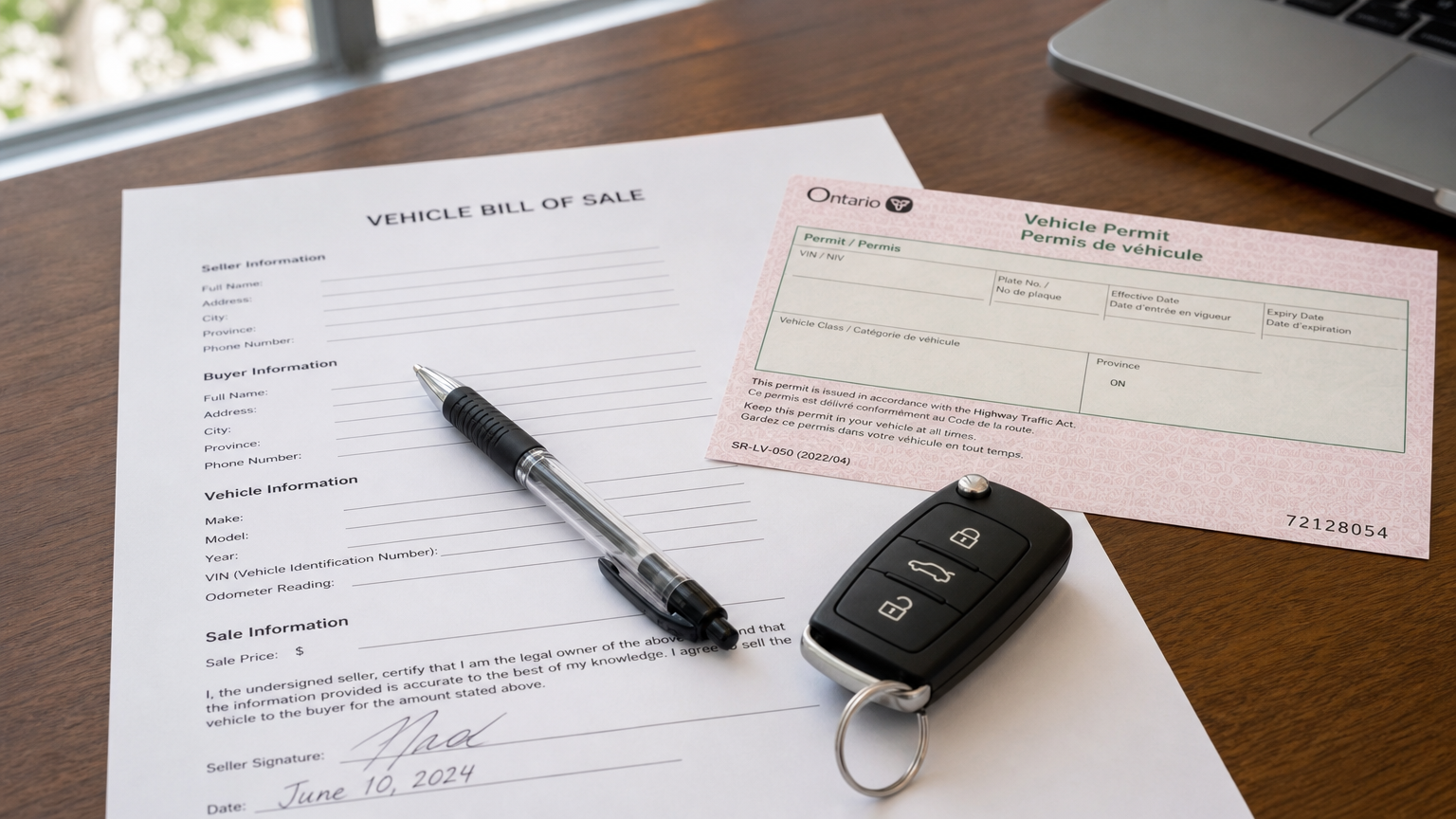
Essential vehicle transfer guidance for Ontario buyers and sellers, plus when notarization and statutory declarations are required.