
Introduction
This guide explains how to authenticate Canadian documents for use abroad following Canada’s accession to the Hague Apostille Convention in January 2024. It covers what an apostille is, when you need one, who issues them in Canada, step-by-step preparation advice, common pitfalls to avoid, and practical tips to speed up the process.
What is an Apostille?
An apostille is an official certificate that verifies the authenticity of a document so it can be accepted in countries that are parties to the Hague Apostille Convention. The certificate confirms three elements:
- The signature on the document
- The seal or stamp attached to it
- The authority of the person who signed or issued the document
In practice, an apostille is issued as a separate certificate and is attached to the original document or to a notarized copy. With Canada joining the Apostille Convention in January 2024, properly apostilled Canadian documents no longer require further embassy or consular legalization in member countries.
When Do You Need an Apostille?
You need an apostille when a Canadian-issued document must be legally recognized in a country that accepts apostilles. Common scenarios include:
- Using birth, marriage, or death certificates for civil registration or family law matters abroad
- Submitting academic transcripts or diplomas for study or professional licensing overseas
- Presenting corporate records, powers of attorney, or commercial contracts to foreign authorities or business partners
If the destination country is a party to the Apostille Convention, an apostille replaces consular legalization; if it is not, other legalization procedures may still apply.
Who Issues Apostilles in Canada?
Global Affairs Canada is the federal authority responsible for issuing apostilles for certain federal documents and for documents originating from specific provinces and territories. Eligibility depends on the type of document and the issuing jurisdiction. Some provincial or territorial documents may require preliminary steps such as notarization or authentication by a local authority before the federal apostille can be attached.
Which Documents Are Typically Eligible?
Common documents that are apostilled include:
- Vital records (birth, marriage, death certificates)
- Academic diplomas and transcripts
- Notarized powers of attorney and affidavits
- Corporate documents (articles of incorporation, certificates of status)
- Professional licenses and certifications
Eligibility varies by document type and issuing jurisdiction. Confirm that the document is either an original or a notarized copy, as the apostille is attached to the physical document presented for authentication.
Step-by-Step: Preparing and Submitting Documents
1. Confirm that the destination country accepts apostilles
Verify whether the receiving country is a member of the Hague Apostille Convention. If it is, an apostille will generally be sufficient for acceptance of the document.
2. Verify who must sign or certify the document
Determine whether the document must be an original or a notarized copy. Some documents need a signature from a specific official or a notarization before they can be apostilled.
3. Obtain required notarization or provincial authentication
Some documents issued by provincial or territorial authorities require preliminary authentication by the issuing province or a notary public. Ensure all local requirements are completed before submission to the federal authority.
4. Prepare certified translations when necessary
If the foreign authority requires documents in a language other than the original, provide a certified translation. Translations should be performed by a qualified translator and accompanied by a certification that the translation is accurate.
5. Submit to the federal authority
Once the document meets all prerequisites, submit the original or notarized copy to the federal office responsible for issuing apostilles. Include any required IDs, forms, and payment as specified by the office handling apostilles.
6. Receive and review the apostille
The apostille will be issued as a separate certificate and attached to the document. Check that the apostille accurately references the document and that names, dates, and signatures match the original.
Processing Timelines and Planning
Processing times can vary depending on workload, the type of document, and whether additional verification steps are required. Because timelines are unpredictable, start the apostille process well in advance of any deadlines. If you need documents for travel, visa applications, educational enrollment, or business matters, allow several weeks to complete all steps, including any required translations and provincial actions.
Common Mistakes to Avoid
- Submitting uncertified copies instead of originals or notarized copies
- Failing to complete required provincial authentication or notarization first
- Missing or illegible signatures, stamps, or seals on the document
- Assuming an apostille is unnecessary for certain document types without checking eligibility
- Not providing certified translations when the receiving authority requires them
Conclusion
Since Canada joined the Hague Apostille Convention in January 2024, the apostille has become the standard method for authenticating Canadian documents for use in member countries. Global Affairs Canada issues apostilles for federal documents and for certain provincial and territorial documents, but eligibility and preliminary steps can vary. Plan ahead, confirm requirements for your document and destination country, ensure any necessary notarizations or certified translations are in place, and review the apostille carefully when it is issued to avoid delays.
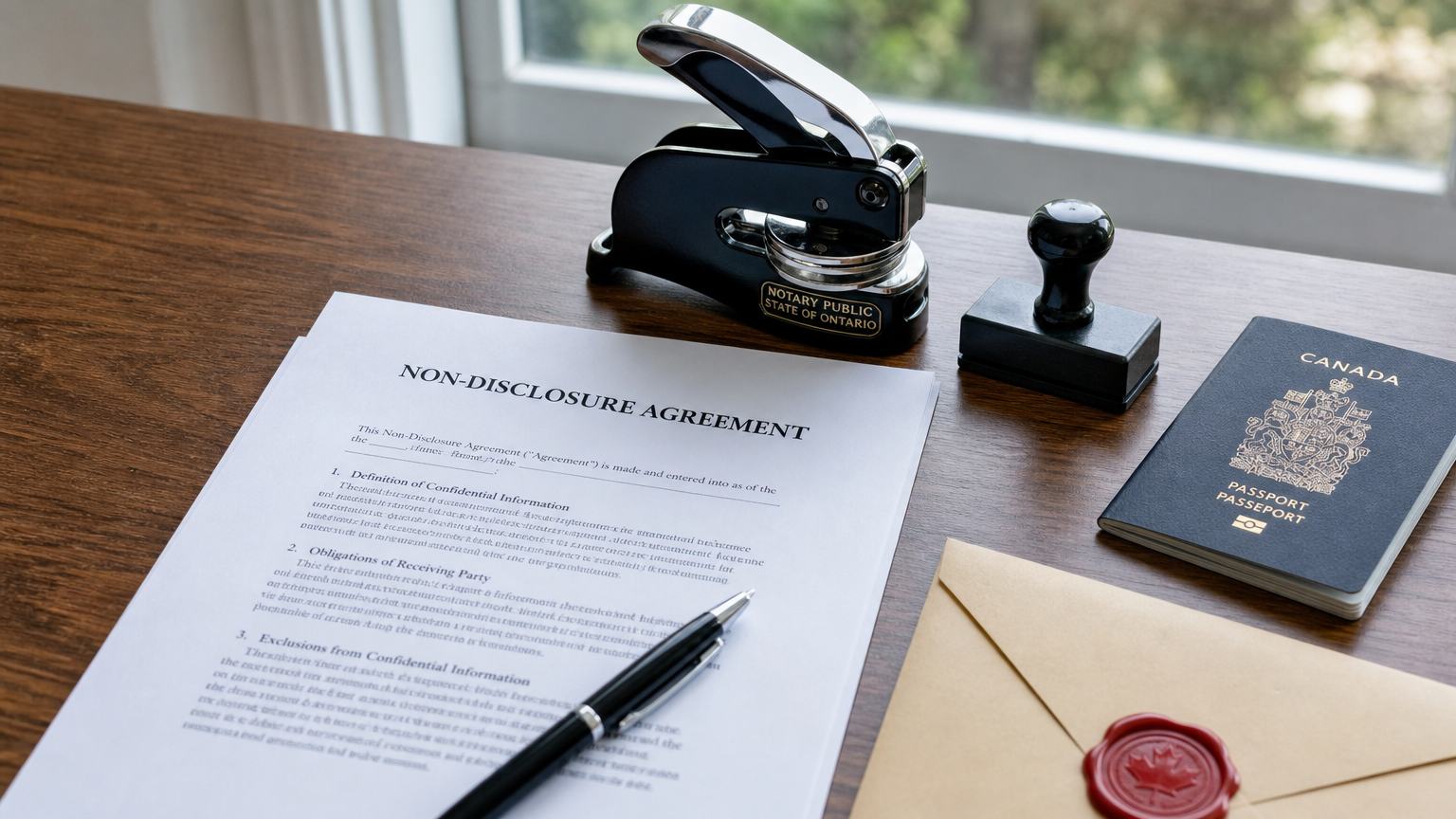
Essential guidance on NDA notarization in Ontario: when it’s required, how the process works, and how to prepare for a smooth notarization.
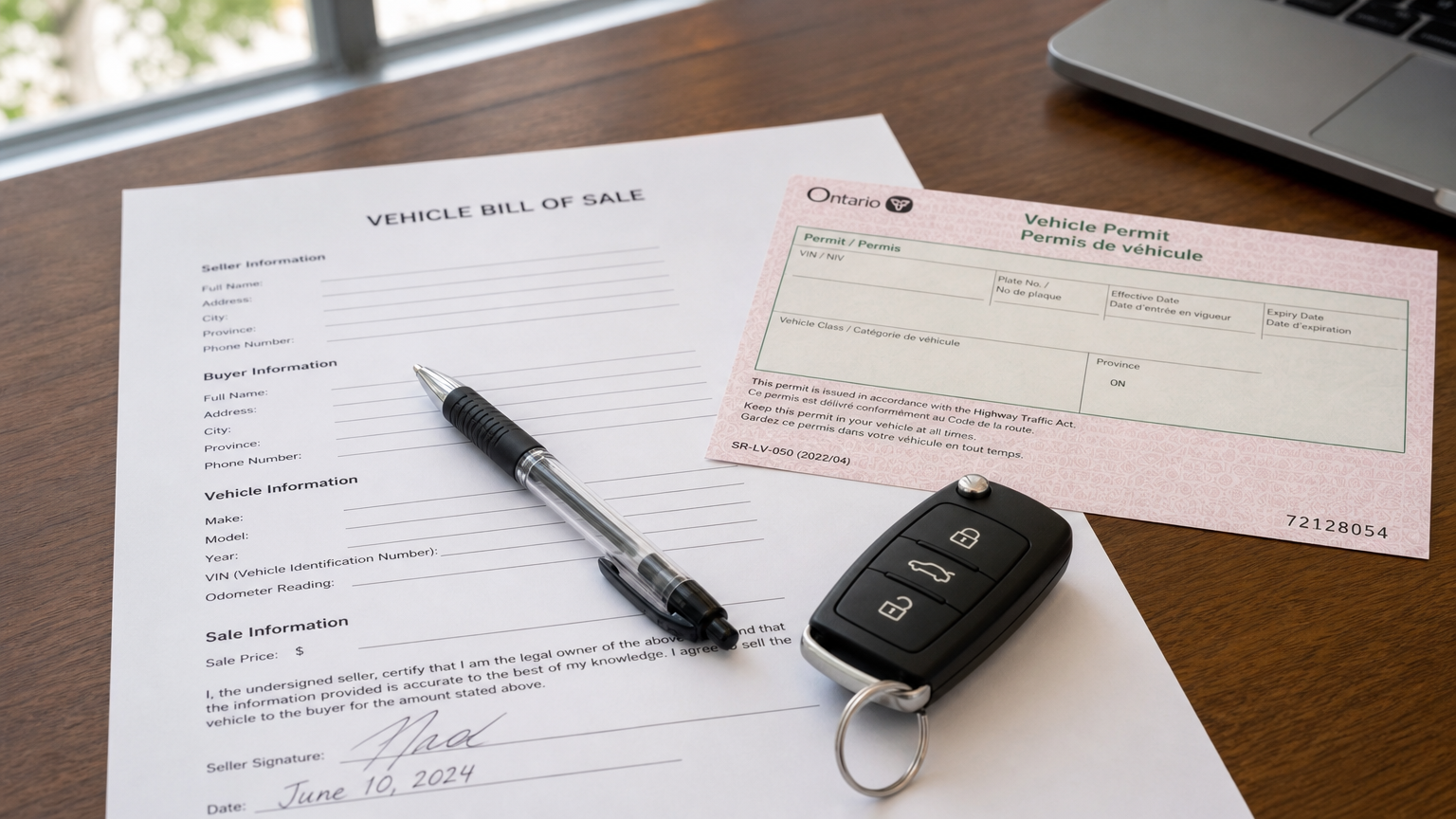
Essential vehicle transfer guidance for Ontario buyers and sellers, plus when notarization and statutory declarations are required.