
Introduction
When you need to use official documents abroad, one common obstacle is proving those documents are genuine. The apostille system, established by the Hague Apostille Convention, provides a single-step authentication recognized by participating countries. This article explains what an apostille is, why it matters, the recent change for Canada, and practical steps to prepare documents for international use.
What Is the Hague Apostille Convention?
The Hague Apostille Convention, adopted on October 5, 1961, created a simplified certificate — the apostille — to verify the authenticity of public documents for free circulation between member states. Instead of following a multi-stage legalization process at embassies and consulates, a single apostille confirms an issuing official’s signature and seal so the document will be accepted abroad.
Canada’s Adoption of the Apostille System
Canada began applying the apostille system on January 11, 2024. Under the updated process, federal and authorized provincial offices can issue apostilles for qualifying public documents. This change replaces the older, multi-step authentication and legalization route with a streamlined one-step certification for documents intended for use in other member countries.
What Documents Can Receive an Apostille?
An apostille can be attached to many types of public documents. Typical examples include:
- Birth certificates
- Marriage certificates and licences
- Death certificates
- Academic diplomas and transcripts
- Court orders and judgments
- Corporate records and certificates of incorporation
- Notarized contracts and powers of attorney (once notarized by a public notary)
Why and When an Apostille Is Needed
An apostille is required whenever a receiving country that is a convention member must trust the authenticity of a document issued abroad. Common situations include:
- Enrolling in an educational institution overseas
- Getting married or registering a civil union abroad
- Opening a business or completing cross-border corporate filings
- Filing documents in a foreign court or for immigration purposes
How the Apostille Process Works in Canada
The precise steps can vary by issuing office, but the general process follows these stages:
- Confirm the document type is eligible for an apostille and identify the competent issuing authority.
- If the document is a private instrument (for example, a contract), have it notarized by a public notary before seeking authentication.
- Submit the original document or a certified copy, as required by the issuing office.
- The designated federal or authorized provincial office verifies the issuing official’s signature and seal, then issues an apostille certificate attached to the document.
- Check the destination country’s additional requirements, such as certified translations or specific document formats.
Because countries may impose extra conditions even when they accept apostilles, verify whether a translation, notarized copy, or additional certification is needed. The apostille itself confirms the origin and authority behind the document, not the factual content.
Practical Tips for Preparing Documents
- Start early: processing times vary by office and can affect travel, study, or business timelines.
- Use originals or certified copies as specified by the issuing authority.
- Obtain any required notarizations before requesting an apostille for private documents.
- Arrange certified translations if the destination country requires them; translations are often accepted only when accompanied by the apostilled document.
- Confirm whether the receiving country is a member of the Hague Apostille Convention — the apostille is only applicable between member countries.
Conclusion
The apostille simplifies cross-border acceptance of public documents by replacing complex embassy legalization with a single, recognized certificate. Since Canada began issuing apostilles on January 11, 2024, many document exchanges with the more than 125 member countries have become faster and more reliable. To avoid delays, verify the specific requirements of the issuing office and the destination country before beginning the process.
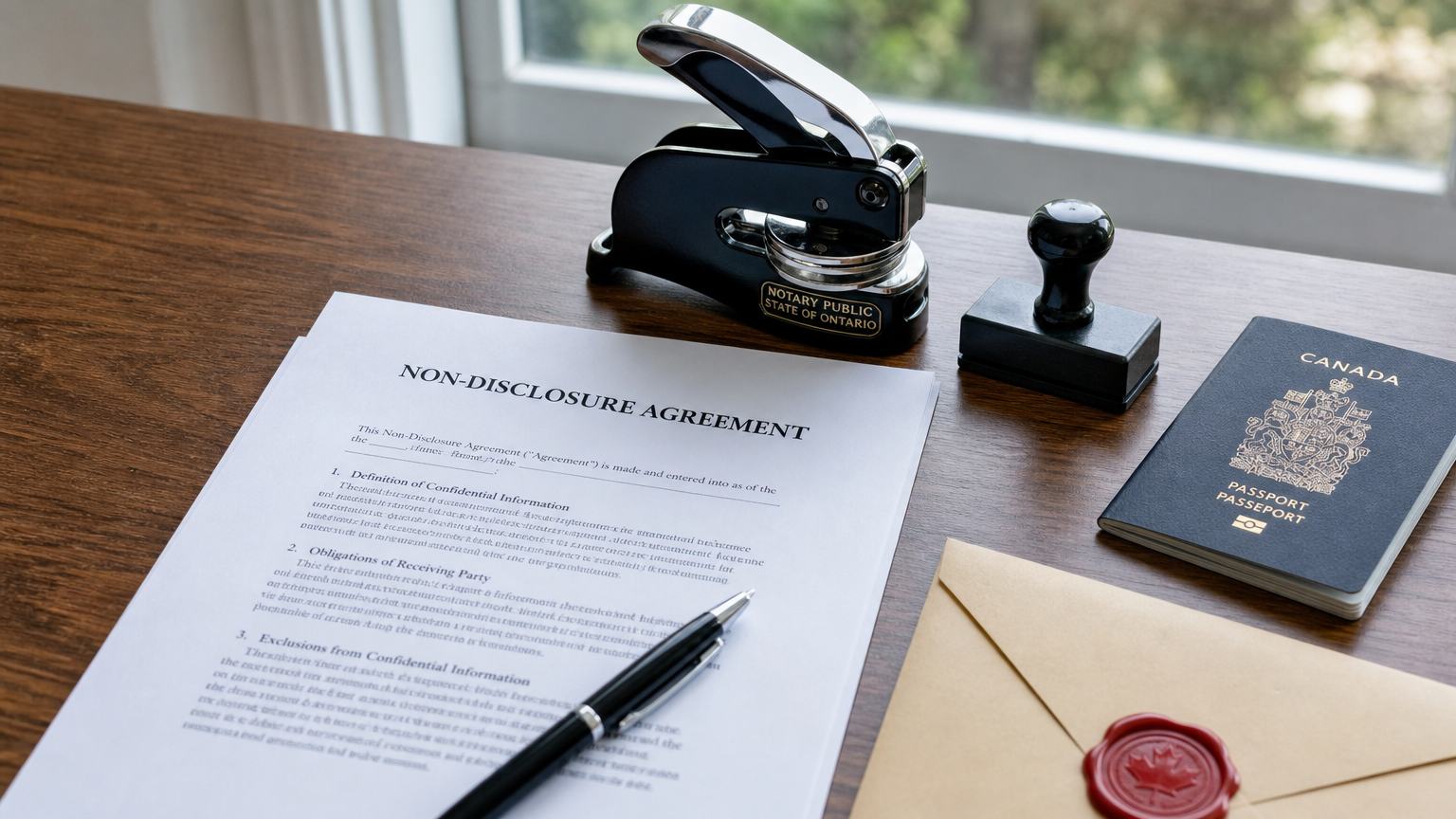
Essential guidance on NDA notarization in Ontario: when it’s required, how the process works, and how to prepare for a smooth notarization.
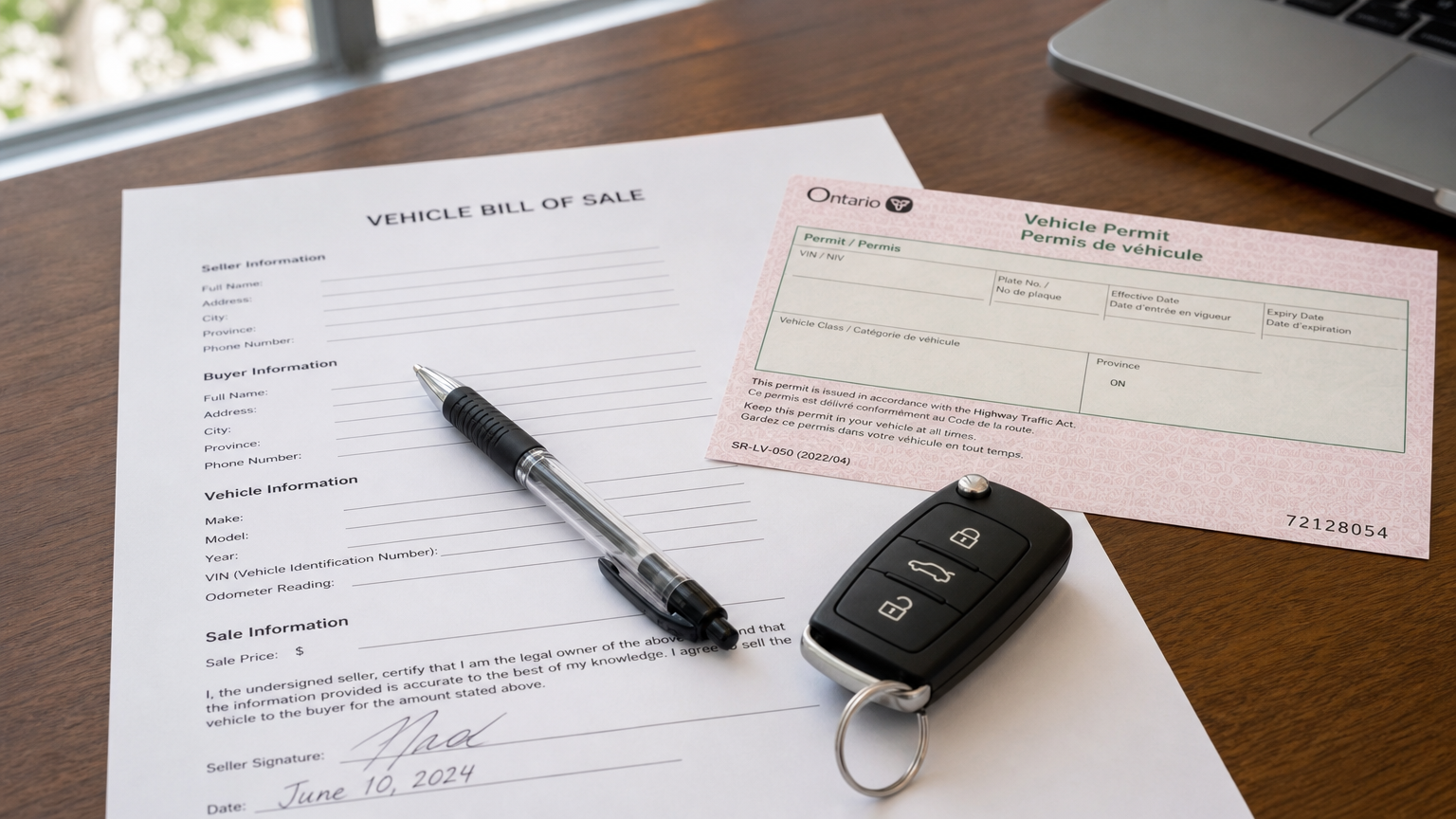
Essential vehicle transfer guidance for Ontario buyers and sellers, plus when notarization and statutory declarations are required.